


Turning off your HVAC system safely takes three steps: set the thermostat to off, flip the outdoor disconnect switch by the condenser, then shut the labeled breaker in your main electrical panel. Always work with dry hands and confirm the unit is silent before touching any components. This cuts power fully for maintenance, repairs, or a new thermostat install.
In west-central Minnesota, most homeowners shut down the outdoor AC condenser at the end of a humid summer and leave the furnace ready for the long, sub-zero heating season ahead. If a breaker feels stuck or the system keeps running after shutdown, the licensed technicians at Northern Services Today can step in.
Understanding the Need to Shut Down Your HVAC
Maintenance Needs
Shutting down your HVAC system is vital for maintenance. It’s like giving your car a tune-up. You wouldn’t change the oil with the engine running, and you shouldn’t service your HVAC with the power still on. The same goes for your heating and cooling unit.
To ensure safety and efficiency, turn off the heating and cooling system at the breaker box before any work starts. This might include cleaning coils or replacing filters in your heating and cooling furnace. By doing so, you prevent potential injuries or damage.
Energy Savings
Turning off your heating and cooling HVAC can also save energy when you’re away from home. Think about it as unplugging appliances before a vacation. It stops unnecessary power use.
If you plan to be gone for weeks or months, consider shutting down the heating system entirely. This step will cut down on electricity bills significantly.
Safety Precautions
Safety always comes first when dealing with electrical systems in your home. Before starting any electrical work or inspections, make sure to power down the HVAC.
This not only protects workers but also safeguards against accidental fires or shocks. Always remember that water and electricity are a dangerous mix during repairs involving heating elements.
Locating Your HVAC System’s Power Sources
Indoor Switch
Your HVAC system has both indoor and outdoor parts. For safety, find the indoor switch first. This is often on or near your furnace. It looks like a standard light switch. Flip it to cut power to the indoor equipment.
The switch might be marked for easy identification. If not, check your system’s manual or look around the unit for guidance.
Outdoor Disconnect
Next, focus on the outdoor part of your system, the condenser unit. Near this unit, you’ll find an outdoor disconnect switch. It’s there to ensure service people can turn off power safely when they work on it.
This disconnect may have a handle to pull down or a fuse box with switches inside. Always use care when handling these switches and follow any instructions present.
Turning off the Power to Your HVAC System Safely
Thermostat Shutdown
To begin, locate your HVAC thermostat. This device controls the temperature in your home and manages how your system operates. To turn off your HVAC system, simply adjust the settings on this panel. Look for an option that reads ‘off’ or similar wording.
Once you find it, switch the setting to ‘off’. This action stops your HVAC from heating or cooling until you change it back. Remember, this does not cut power entirely but halts operations.
Safety Switch Engagement
Next to consider is the external safety switch by your condenser unit outside. It’s a crucial step for ensuring total shutdown of power to the system.
Firstly, ensure that your hands are dry and free from any dirt or grease which could cause slippage when handling electrical components. Locate the switch near your outdoor unit; it should be housed in a metal box mounted on the wall. Flip this switch into its ‘off’ position to disengage power directly at source.
- Ensure complete safety before proceeding:
- Dry hands thoroughly.
- Clear area around switches of tools or debris.
Shutting off the AC Unit via the Circuit Breaker
Find Panel
To turn off your air conditioner, locate your home’s main electrical panel. This is often in a basement, garage, or utility room. It houses breakers that control your house’s electricity.
Once found, open the panel door. Look for labels next to each switch. You’re searching for one marked as ‘HVAC’, ‘AC unit’, or simply ‘air conditioning’. In some homes, it might be listed under ‘cooling system’.
Flip Switch
After identifying the correct breaker, flip it to the OFF position. This acts much like a light switch but controls power flow on a larger scale.
It’s important not just to slide the switch; make sure it clicks into place firmly. This ensures you’ve fully disengaged power to your cooling system.
Confirm Shutdown
Now check if you did shut down your air conditioner properly. Listen for any sounds – it should be silent if turned off correctly.
Also look at the unit itself; there should be no visual signs of operation such as spinning fans or active coils within its structure.
If unsure whether power is truly cut, revisit and double-check that breaker setting matches with other switched-off breakers in terms of direction and positioning.
Always ensure your hands are dry when operating switches, and never force a stubborn breaker. Contact a licensed electrician instead.
Steps to Follow After Installing a New Thermostat
Check Compatibility
After shutting off your AC unit via the circuit breaker, check if your new thermostat is compatible. This is crucial for proper function. Look at the manufacturer’s specifications. They should match your HVAC system’s requirements.
Compatibility ensures efficient operation and avoids damage. If unsure about compatibility, consult a professional or reference materials from both the thermostat and HVAC system manufacturers.
Power Test
Once you’ve confirmed compatibility, re-establish power to test functionality. Turn on the circuit breaker again. Observe if the display lights up and responds to input.
If it powers up correctly, proceed with testing basic functions such as setting temperature levels or switching modes between heating and cooling. A successful power test indicates correct installation so far.
Initial Programming
Finally, set up initial programming according to instructions provided by the manufacturer of your new thermostat:
- Set date and time.
- Program temperature settings for different times of day.
- Save preferred settings for automatic adjustments.
This step customizes your HVAC operation to suit personal preferences and schedule needs while aiming for energy efficiency.
Dealing with an AC That Won’t Stop Running
Power Supply
Check for a power issue first. A continuous power supply can keep your system running nonstop. Look at the circuit breaker or fuse box. Ensure they are in proper working order.
Sometimes, relays get stuck and cause the system to run continuously. Locate the relay connected to your HVAC unit and inspect it for damage or wear.
Thermostat Settings
Next, examine your thermostat settings. It might be set to have the fan on all the time. This setting is often labeled as ‘On’ rather than ‘Auto’. Switching it to ‘Auto’ should turn off the fan when it reaches temperature.
Remember, if you’ve just installed a new thermostat, check its manual too. Incorrect wiring or setup could lead to constant running of your HVAC system.
Professional Help
If these steps don’t solve the problem, call a technician. A professional can find issues that aren’t obvious at first glance. They have tools and knowledge that most homeowners do not possess.
Troubleshooting Thermostat and Condenser Issues
Thermostat Calibration
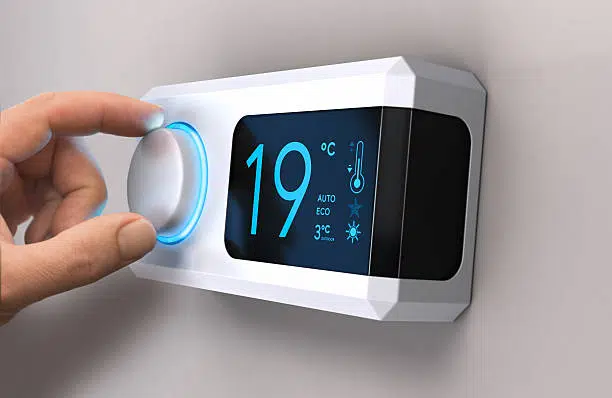
To ensure your HVAC system turns off properly, check the thermostat. It controls the temperature and commands the system to start or stop. First, make sure it’s set correctly; this might seem basic but is often overlooked. Next, perform a test on its calibration. If temperatures displayed are inaccurate, recalibration may be necessary.
If issues persist after checking settings and calibration, consider a reset. This can clear minor glitches that affect performance.
Condenser Examination
The condenser unit plays a crucial role in your HVAC system’s function. Begin by visually inspecting for any debris blockages which can impede airflow and cause malfunctions. Clear away leaves or refuse that could prevent proper operation.
Electrical issues are another potential culprit for an unresponsive condenser unit. Ensure all connections are secure and look out for signs of wear or damage to electrical components.
Sometimes, simply resetting both the thermostat and condenser can fix ongoing problems with turning off your HVAC system.
Summary
Turning off your HVAC system is straightforward once you know the steps. From identifying when a shutdown is needed to troubleshooting thermostat and condenser problems, this guide has covered the full process. You now know how to locate your power sources, shut down the AC unit safely, and handle a system that keeps running after you thought it was off.
If a breaker feels stuck, the system will not power down, or you are unsure which disconnect controls your equipment, do not force anything. Contact Northern Services Today and a licensed technician will handle the shutdown or repair safely for homeowners across west-central Minnesota.
Frequently Asked Questions
Why would I need to shut down my HVAC system?
You might need to power down your HVAC for maintenance, repairs, or when installing a new thermostat. Cutting the power lets you or a technician work on the system safely.
Where do I find the power source for my HVAC system?
Your HVAC power sources are typically in two spots: the outdoor disconnect near the condenser unit and the labeled breaker on your home’s main electrical panel.
How do I turn off my HVAC system safely?
To turn off your HVAC safely, flip the disconnect switch by the outdoor unit first, then go to your circuit breaker and cut power there as well. Always work with dry hands.
What should I do if my AC won’t stop running after turning it off?
If the AC keeps running even after you’ve tried shutting it down, check both the thermostat and the condenser for issues such as a stuck relay or a fan set to ‘On’ instead of ‘Auto’.
After installing a new thermostat, what are some next steps?
After installing the thermostat, restart your HVAC by flipping back on the switches you turned off earlier, and confirm all wiring connections are secure first.
How can I resolve issues with my thermostat or condenser that prevent shutdown?
Troubleshooting these parts may require resetting the thermostat or inspecting the wiring at the condenser. If the problem continues, a licensed technician can diagnose it further.