


Variable refrigerant flow (VRF) systems are ductless heat pumps that link one outdoor unit to many indoor units, letting a large home heat some rooms while cooling others at the same time. For west-central Minnesota families in Willmar, Hutchinson, and Spicer, that zoned control cuts energy use and evens out the hot-and-cold spots common in big, multi-level houses.
That said, VRF is not the right fit for every property. These systems cost more up front than a standard furnace-and-AC setup, and in our climate, where winters drop well below zero, heat-pump output can fall on the coldest nights, so a cold-climate model or backup heat matters. Northern Services Today sizes and installs VRF where it actually pays off for large rural and in-town homes.
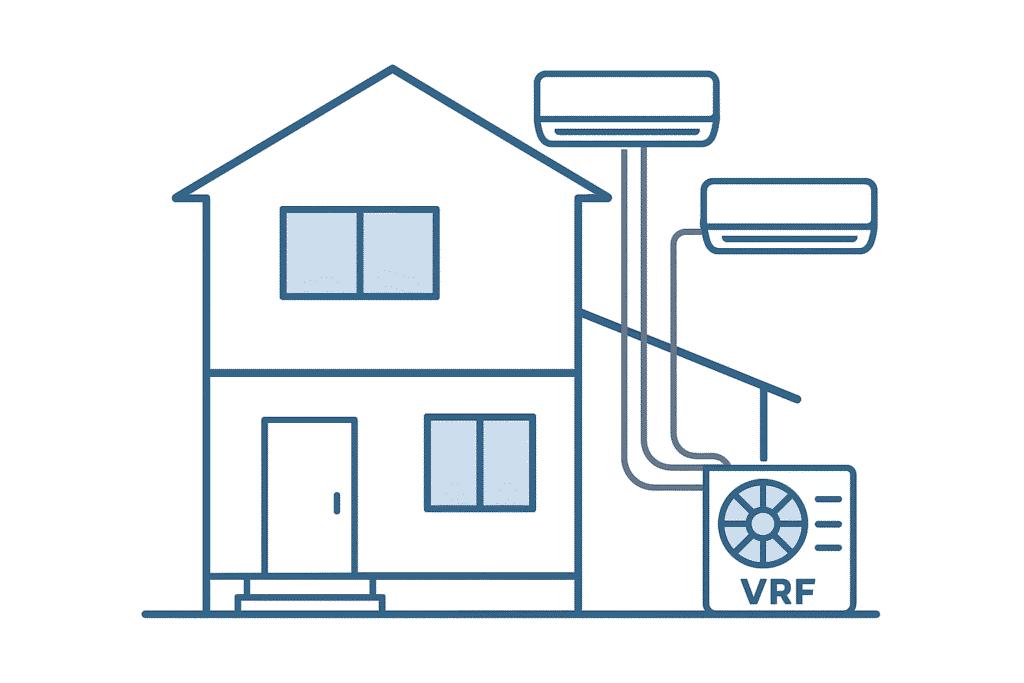
What Is a Variable Refrigerant Flow System?
A VRF system is essentially a larger, smarter version of the ductless heat pump many homeowners already know. One outdoor unit connects through insulated refrigerant lines to several indoor units, and each indoor unit serves its own zone. Instead of switching fully on and off the way a conventional furnace or air conditioner does, a VRF system uses a variable-speed (inverter) compressor that ramps up and down to match exactly how much heating or cooling each zone is calling for at that moment.
Electronic expansion valves meter refrigerant to each indoor unit on its own. That is what lets a sun-baked upstairs bedroom get cooling while a shaded walkout basement gets heat, all from the same equipment. The main parts of a VRF system are:
- A single outdoor unit with a variable-speed inverter compressor
- Multiple indoor units, each controlling its own room or zone
- Electronic expansion valves that fine-tune refrigerant flow to every zone
- A control network that ties the indoor and outdoor units together
- Insulated refrigerant piping connecting the whole system
Indoor units come in several styles, including wall-mounted heads, ceiling cassettes, floor-standing consoles, and short ducted runs, so they can fit almost any room. Wall-mounted heads are the most common choice and work much like the wall-mounted AC units homeowners already use in additions and bonus rooms, just tied into a whole-home system.

Why VRF Fits Large West-Central Minnesota Homes
Big houses are hard to keep evenly comfortable. A large farmhouse outside Bird Island, a two-story build in Willmar, or a rambler with a finished walkout in New London all share the same problem: one thermostat trying to satisfy rooms with very different needs. South-facing rooms overheat in the afternoon, bedrooms over the garage run cold, and the basement stays chilly year-round. A conventional single-zone system heats or cools the entire home at once, so someone is almost always too hot or too cold.
VRF solves that by treating each zone independently. Family members can set their own rooms, unused spaces can idle at a lower setting, and the system only sends conditioning where it is actually needed. In homes with additions, vaulted ceilings, or areas that were never easy to reach with ductwork, VRF often delivers comfort that a central system simply cannot match.
Energy Efficiency and Everyday Comfort
The efficiency advantage comes from how VRF runs. A variable-speed compressor spends most of its time at a low, steady output rather than blasting on at full power and shutting off again. That steady operation avoids the energy spikes and temperature swings of constant on-off cycling, and it holds rooms within a tighter comfort range. Because refrigerant lines carry the heating and cooling instead of ducted air, you also avoid the leakage and heat loss that rob many older duct systems in unconditioned attics and crawlspaces.
Many VRF systems can also run in heat-recovery mode, moving heat that is being removed from a warm, sunny room over to a cooler part of the house that needs it. During spring and fall, when one side of the home wants cooling and the other wants heat, that ability to do both at once is where VRF shines. The systems also tend to run quieter than a conventional condenser that cycles hard on hot afternoons.

VRF and Minnesota Winters: The Cold-Climate Question
This is the part west-central Minnesota homeowners should look at hardest. Because VRF is a heat pump, it pulls heat from the outdoor air to warm your home, and there is less heat to pull as the temperature drops. Standard heat pumps lose capacity quickly in real cold. Cold-climate VRF models are built to keep producing usable heat well below zero, but even they put out less on the coldest nights, exactly when your home needs the most.
That is why we rarely install VRF as the only heat source here. For most large homes, pairing VRF with a properly sized backup, such as a gas or propane furnace or electric heat, is part of sound heating system installation and maintenance. VRF carries the load efficiently through much of the heating season, and the backup takes over during deep cold snaps. Getting that balance right depends on a real load calculation for your specific house, not a rule of thumb, especially for rural properties on propane where fuel cost weighs into the decision.
What VRF Costs and When It Pays Off
There is no getting around it: VRF costs more up front than a standard furnace-and-AC replacement. You are paying for more indoor units, specialized refrigerant piping, and the extra labor to design and commission a multi-zone system correctly. The premium is easiest to justify when several factors line up:
- A large home, generally over 3,000 square feet, with several distinct zones
- Rooms with very different comfort needs from solar exposure, ceiling height, or use
- Additions or areas that are hard or expensive to reach with ductwork
- An aging heating and cooling system that is due for full replacement anyway
- High energy bills that a more efficient, zoned system can meaningfully reduce
Minnesota utilities and state programs frequently offer rebates for high-efficiency heat pumps, and federal tax credits may apply as well. Those incentives can take a real bite out of the up-front cost, so it is worth checking with your utility before you decide. We can point you toward the programs that fit the equipment we are quoting.
Is VRF Right for Your Home?
VRF is a strong option, but it is not the automatic answer. A smaller or simpler home with a straightforward layout is usually served just as well by a good conventional furnace and air conditioner, or by a single-zone ductless unit, at a lower cost. VRF also asks more of whoever installs and services it, so it is worth choosing a contractor who works with these systems regularly rather than treating them as a one-off. And some homeowners simply prefer ducted air to visible indoor heads, though ducted VRF options can address that.
The honest way to decide is a room-by-room load calculation and a clear-eyed look at your goals, your existing equipment, and your budget. That is the conversation we would rather have with you before any equipment is ordered.
Frequently Asked Questions
Will VRF keep my home warm in below-zero Minnesota winters?
Cold-climate VRF systems keep producing heat well below zero, but their output drops on the coldest nights. For that reason we typically design a large home with backup heat, such as a gas or propane furnace, so you stay comfortable through the deepest cold snaps.
Can a VRF system heat and cool different rooms at the same time?
Yes. Heat-recovery VRF systems can cool one part of the house while heating another, which is especially useful in spring and fall when different sides of a large home have opposite needs.
Is VRF the same as a ductless mini-split?
They are close relatives. A single-zone mini-split is the small version; VRF uses the same core technology but scales up to serve many zones from one outdoor unit, which is what makes it a good match for large homes.
Talk to Northern Services Today
Northern Services Today designs, installs, and services heating and cooling for homes across Olivia, Willmar, Hutchinson, Litchfield, Redwood Falls, Spicer, New London, and the surrounding west-central Minnesota communities. If you have a large or hard-to-heat home and want to know whether variable refrigerant flow is the right investment, call us at (320) 523-5862. We will run the load calculation, walk you through your options, and give you an honest recommendation, VRF or not.