


In an era defined by increasing energy costs and a growing emphasis on sustainability, the efficient operation of Heating, Ventilation, and Air Conditioning (HVAC) systems has become paramount. HVAC systems are not merely components of a building; they are its lungs, regulating indoor climate, air quality, and overall comfort. However, these vital systems are also significant energy consumers. Commercial buildings, for instance, consumed a staggering 36% of electricity in the United States in 2017, amounting to 1.35 trillion kilowatt-hours (kWh) [1]. Alarmingly, almost 30% of this energy was wasted due to inefficient HVAC operations [1]. This substantial waste underscores the critical need for advanced HVAC system monitoring.
HVAC system monitoring transcends traditional thermostat control, offering a sophisticated approach to managing energy consumption, optimizing performance, and extending equipment lifespan. By integrating smart technologies, such as IoT sensors and advanced analytics, monitoring systems provide real-time insights into system health, enabling proactive adjustments and predictive maintenance. This article delves into the multifaceted aspects of HVAC system monitoring, exploring its core principles, benefits, technological advancements, and economic implications. We will examine how these systems contribute to significant energy savings, improved indoor air quality, and enhanced occupant comfort, drawing upon authoritative research from government agencies, academic institutions, and industry experts.

Understanding the Fundamentals of HVAC Monitoring
At its core, HVAC monitoring involves the continuous collection and analysis of data from various points within a heating and cooling system. This data provides a comprehensive overview of the system’s operational status, identifying inefficiencies, potential malfunctions, and areas for optimization. The fundamental components of an effective HVAC monitoring system include:
Sensors: The Eyes and Ears of the System
Sensors are the primary data collection points in an HVAC monitoring system. These devices measure critical parameters such as temperature, humidity, pressure, airflow, and even indoor air quality (IAQ) metrics like CO2 levels and volatile organic compounds (VOCs). For example, Monnit air sensors are commonly used to track temperature and humidity levels accurately, providing the data necessary to maintain optimal indoor environments [2]. The precision and reliability of these sensors are crucial for accurate data collection and subsequent analysis.
Data Acquisition and Transmission
Once collected, sensor data must be efficiently acquired and transmitted to a central processing unit or cloud-based platform. This often involves wired or wireless communication protocols, with Wi-Fi and other IoT (Internet of Things) technologies playing a pivotal role. IoT integration has transformed remote temperature monitoring, allowing real-time data access from remote sites without physical presence [3]. This seamless data flow is essential for timely analysis and decision-making.
Analytics and Software Platforms
Raw data from sensors is of limited value without sophisticated analytics and user-friendly software platforms. These platforms process the vast amounts of data, identify trends, detect anomalies, and generate actionable insights. Advanced algorithms can predict equipment failures, optimize operational schedules, and even suggest energy-saving adjustments. The software often provides intuitive dashboards and reporting tools, enabling facility managers and homeowners to easily understand system performance and make informed decisions.
Actuators and Control Systems
Based on the insights derived from data analysis, control systems and actuators implement necessary adjustments to the HVAC system. This can range from simple thermostat adjustments to complex changes in fan speeds, damper positions, and chiller operations. Modern HVAC controllers ensure that the system uses only as much power as needed to maintain optimal conditions, leading to significant energy savings [4]. This closed-loop system of monitoring, analysis, and control is what defines a truly effective HVAC monitoring solution.
Key Benefits of Implementing HVAC Monitoring Systems
The adoption of HVAC monitoring systems offers a multitude of benefits, ranging from substantial energy savings to enhanced occupant comfort and extended equipment lifespan. These advantages collectively contribute to a more sustainable, cost-effective, and comfortable indoor environment.
Significant Energy Efficiency Gains
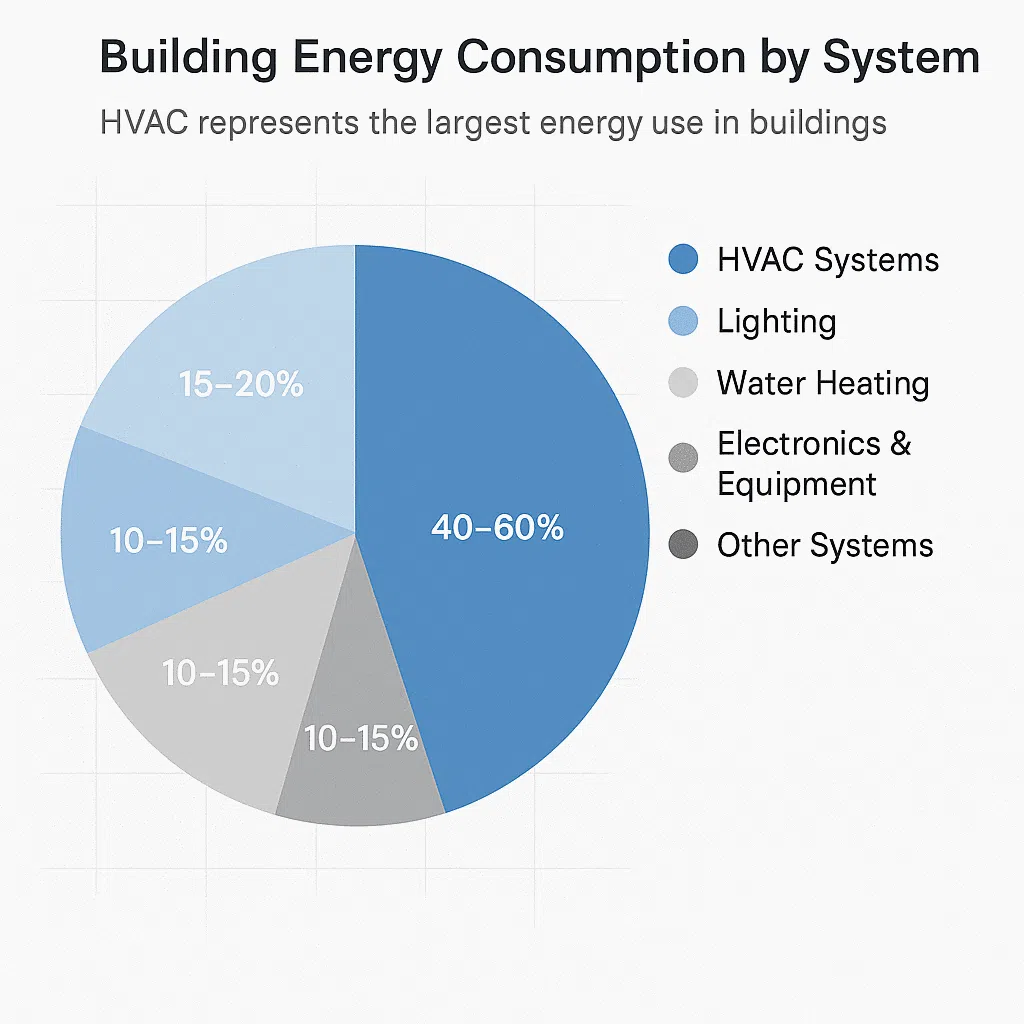
One of the most compelling benefits of HVAC monitoring is its direct impact on energy consumption. HVAC systems are notoriously energy-intensive, accounting for a substantial portion of a building’s total energy use, often ranging from 40% to 60% [5]. In the United States, HVAC consumes around 13% of all energy consumed nationally [6]. By continuously monitoring and optimizing system performance, these solutions can drastically reduce energy waste.
Studies have shown that even minor adjustments based on monitoring data can lead to significant savings. For instance, a study of over 432 commercial buildings demonstrated a median percentage energy savings of 1.6% from baseload reduction and 2.1% from HVAC rescheduling [1]. More broadly, smart thermostats, which are a key component of many monitoring systems, can save as much as 10% a year on heating and cooling bills by simply turning the thermostat back 7°-10°F for 8 hours a day from its normal setting [7]. Advanced smart thermostats with features like geofencing have documented energy savings ranging from 10% to 15% [8]. In highly optimized scenarios, broader temperature setpoint ranges can even lead to up to 73% of overall HVAC energy savings [9].

Extended Equipment Lifespan and Reduced Maintenance Costs
Proactive monitoring allows for the early detection of minor issues before they escalate into major, costly breakdowns. By identifying anomalies in performance, such as unusual vibrations, temperature fluctuations, or pressure drops, maintenance can be scheduled precisely when needed, rather than reactively after a failure occurs. This predictive maintenance approach extends the operational lifespan of HVAC equipment, reducing the frequency and expense of emergency repairs. A well-maintained system runs more smoothly and lasts longer, akin to regular car maintenance preventing engine failure [10].
Enhanced Occupant Comfort and Indoor Air Quality
Consistent climate control is a direct outcome of effective HVAC monitoring. By maintaining steady air temperatures and humidity levels, these systems create a more pleasant and productive indoor environment for occupants. This is particularly crucial in commercial settings where occupant comfort directly impacts productivity and well-being. Furthermore, monitoring systems that include indoor air quality sensors can actively manage ventilation and filtration, ensuring a healthier environment by mitigating pollutants and allergens. This focus on IAQ is increasingly important for public health and building certifications [11].
Technological Advancements Driving HVAC Monitoring
The evolution of HVAC monitoring has been significantly propelled by advancements in several key technological domains. These innovations have made sophisticated monitoring solutions more accessible, powerful, and integrated than ever before.
The Internet of Things (IoT) Integration
IoT has revolutionized remote monitoring by enabling real-time data collection from a vast network of interconnected sensors and devices. In HVAC, IoT sensors provide continuous streams of data on temperature, humidity, pressure, and equipment status, which are then transmitted over the internet to cloud-based platforms [3]. This allows facility managers to monitor HVAC systems in remote sites without physical presence, ensuring optimal conditions and rapid response to issues. The proliferation of IoT devices has made it possible to deploy highly granular monitoring networks, capturing data from every corner of a building.
Smart Thermostats: The User-Friendly Interface
Smart thermostats represent a significant leap forward from traditional programmable thermostats. These Wi-Fi enabled devices learn user preferences, occupancy patterns, and even local weather conditions to automatically adjust temperature settings for optimal efficiency and comfort [7]. Many smart thermostats offer features like geofencing, which uses a smartphone’s location to automatically adjust temperatures when residents are on their way home, further enhancing convenience and energy savings [12]. Their intuitive interfaces and remote control capabilities via smartphone apps have made them popular tools for residential HVAC monitoring.
Cloud Computing and Data Analytics
The massive amounts of data generated by HVAC monitoring systems require robust infrastructure for storage, processing, and analysis. Cloud computing provides the scalable and flexible platform necessary to handle this data. Cloud-based analytics platforms leverage advanced algorithms, including machine learning and artificial intelligence, to derive actionable insights from the data. These platforms can identify subtle trends, predict potential equipment failures, and optimize system performance in ways that would be impossible with manual analysis. Historical data analysis helps predict future needs and allows for proactive adjustments, setting thresholds for alerts if temperatures deviate from optimal ranges [3].
Predictive Maintenance and Fault Detection
One of the most impactful applications of advanced analytics in HVAC monitoring is predictive maintenance. Instead of relying on fixed maintenance schedules or reacting to equipment failures, predictive maintenance uses data to forecast when a component is likely to fail. This allows for maintenance to be performed precisely when needed, minimizing downtime, reducing repair costs, and extending equipment life. Fault Detection and Diagnostics (FDD) systems, often integrated into monitoring platforms, automatically identify and diagnose operational faults, providing specific recommendations for resolution [13].

Comparing Residential and Commercial HVAC Monitoring Needs
While the fundamental principles of HVAC monitoring apply to both residential and commercial settings, the scale, complexity, and regulatory requirements differ significantly, necessitating tailored solutions.
Scale and System Complexity
Residential HVAC systems typically serve a single family or dwelling, with simpler configurations and fewer zones. Monitoring needs are generally focused on comfort, energy savings, and basic system health. Commercial buildings, in contrast, are far more complex, often encompassing multiple floors, diverse occupancy zones, and a wider array of equipment, including chillers, boilers, air handlers, and large-scale ventilation units. These systems require detailed, granular monitoring across numerous points to manage airflow, temperature, and humidity effectively in each zone [14].
Regulatory Compliance and Reporting
Commercial buildings are often subject to stringent regulations regarding energy consumption, indoor air quality, and environmental impact. HVAC monitoring systems in these environments must be capable of collecting, storing, and reporting data in a manner that facilitates compliance with local, state, and federal mandates. This includes adherence to energy codes, ventilation standards, and sustainability certifications. Residential systems, while benefiting from energy efficiency, typically face fewer regulatory burdens.
User-Friendliness vs. Advanced Functionality
For homeowners, ease of use and intuitive interfaces are paramount. Residential monitoring solutions are designed to be simple to understand and operate daily without requiring expert knowledge. Smart thermostats, for example, offer straightforward controls and mobile app integration. Commercial systems, while still valuing user experience, prioritize advanced functionality, deep data analytics, and integration with broader building management systems (BMS). These systems cater to facility managers who require detailed insights and sophisticated control capabilities.
Cost and Return on Investment (ROI)
The initial investment for commercial HVAC monitoring systems is generally higher due to the scale and complexity of the installations. However, the potential for energy savings and operational efficiencies is also significantly greater, leading to substantial returns on investment. Payback periods for building automation systems, which often include comprehensive HVAC monitoring, can vary but studies suggest that some implementations can achieve payback in as little as one year, though typical lifespans are 10 years or more [15]. For residential users, the ROI is primarily driven by reduced utility bills and enhanced comfort.
Analyzing Cost and ROI for HVAC Monitoring Solutions
The decision to invest in HVAC monitoring solutions is often driven by the potential for cost savings and a favorable return on investment (ROI). Understanding the financial implications requires a holistic view of initial expenditures, operational savings, and long-term benefits.
Initial Investment Considerations
The upfront cost of an HVAC monitoring system can vary widely depending on the scale of the installation, the sophistication of the technology, and the number of sensors and control points. For residential applications, a smart thermostat might be a few hundred dollars, while a comprehensive commercial building automation system could involve tens of thousands to hundreds of thousands of dollars. Factors influencing initial investment include hardware (sensors, controllers, gateways), software licenses, installation labor, and integration with existing systems.
Operational Savings and Reduced Expenses
The primary driver of ROI in HVAC monitoring is the reduction in operational expenses, primarily energy costs. As previously discussed, optimized HVAC operations can lead to significant energy savings, ranging from 1.6% to over 70% depending on the level of optimization and system type [1, 7, 8, 9]. Beyond energy, monitoring also reduces maintenance costs by enabling predictive maintenance, minimizing emergency repairs, and extending equipment lifespan. Reduced downtime and improved occupant comfort also contribute to indirect savings, such as increased productivity in commercial settings.
Calculating Payback Period and ROI
The payback period is a common metric used to assess the financial viability of an investment, indicating the time it takes for the cumulative savings to equal the initial investment. The formula is straightforward: Payback Period = Initial Costs / Annual Savings [16]. For HVAC monitoring solutions, annual savings are derived from reduced energy consumption, lower maintenance costs, and other operational efficiencies. While some studies suggest payback periods as short as one year for certain building automation systems, the actual timeframe can vary based on the specific solution, building characteristics, and energy prices. Long-term ROI is also significant, as the benefits of optimized performance and extended equipment life continue for many years beyond the initial payback.
A comprehensive financial analysis should also consider potential incentives, such as utility rebates, tax credits, and government grants for energy-efficient upgrades. These incentives can significantly reduce the effective initial investment, accelerating the payback period and enhancing overall ROI.
Addressing Security in Remote HVAC System Monitoring
As HVAC monitoring systems increasingly rely on networked devices and cloud-based platforms, cybersecurity becomes a critical concern. Protecting sensitive operational data and preventing unauthorized access to building controls is paramount to ensure system integrity and occupant safety.
Data Encryption and Secure Communication
All data transmitted between sensors, controllers, and cloud platforms must be encrypted to prevent eavesdropping and tampering. This includes data in transit (during transmission) and data at rest (when stored on servers). Secure communication protocols, such as Transport Layer Security (TLS) and Virtual Private Networks (VPNs), should be employed to establish secure channels for data exchange. Robust encryption standards, like AES-256, are essential for safeguarding sensitive operational information and personal data.
Access Control and User Authentication
Implementing stringent access control mechanisms is vital to restrict system access to authorized personnel only. This involves multi-factor authentication (MFA), strong password policies, and role-based access control (RBAC), where users are granted permissions based on their specific responsibilities. Regular audits of user activity and access logs can help detect and deter unauthorized access attempts, ensuring accountability and system security.
Regular Software Updates and Patch Management
Software vulnerabilities are a common entry point for cyberattacks. Therefore, it is crucial to ensure that all components of the HVAC monitoring system—including firmware, operating systems, and application software—are regularly updated with the latest security patches. A robust patch management strategy, coupled with continuous vulnerability scanning, helps to mitigate known security risks and protect against emerging threats. Vendors should provide timely updates, and users should implement them promptly to maintain a secure environment.
Network Segmentation and Intrusion Detection
Network segmentation involves dividing the building’s network into isolated segments, limiting the potential impact of a security breach. By isolating HVAC control networks from general IT networks, organizations can contain attacks and prevent them from spreading across the infrastructure. Intrusion Detection Systems (IDS) and Intrusion Prevention Systems (IPS) can monitor network traffic for suspicious activities and automatically block malicious attempts, providing an additional layer of security against cyber threats.
Essential Features for Effective HVAC Monitoring
When selecting or implementing an HVAC monitoring solution, several key features are essential to ensure its effectiveness, usability, and long-term value. These features contribute to comprehensive system management, proactive problem-solving, and optimal performance.
Broad Compatibility and Integration Capabilities
An effective HVAC monitoring system should be compatible with a wide range of HVAC equipment, sensors, and building management systems (BMS) from various manufacturers. Open standards and API (Application Programming Interface) support are crucial for seamless integration, allowing the system to communicate with existing infrastructure and future upgrades. This broad compatibility ensures flexibility, avoids vendor lock-in, and maximizes the utility of the monitoring solution within a diverse building ecosystem.
Real-time Data Visualization and Alert Notifications
The ability to visualize real-time operational data through intuitive dashboards is fundamental for effective monitoring. Graphical representations of temperature trends, energy consumption, and system status enable quick comprehension and identification of anomalies. Equally important are customizable alert notifications, which immediately inform facility managers or homeowners of critical events, such as equipment malfunctions, significant energy spikes, or deviations from setpoint temperatures. These alerts, delivered via email, SMS, or mobile app, facilitate rapid response and minimize potential damage or waste.
Remote Control and Automation Capabilities
Beyond mere monitoring, the ability to remotely control HVAC system settings and implement automated responses is a powerful feature. This allows users to adjust temperatures, schedules, and operational modes from anywhere, using a smartphone or web interface. Automation rules, based on predefined conditions (e.g., occupancy, weather forecasts, energy prices), can optimize system performance autonomously, ensuring efficiency even when human intervention is not possible. This level of control enhances convenience and maximizes energy savings.
Historical Data Analysis and Reporting
Access to historical performance data is invaluable for long-term optimization and strategic decision-making. An effective monitoring system should store historical data and provide robust reporting tools that allow users to analyze trends, compare performance over time, and identify areas for continuous improvement. Comprehensive reports on energy consumption, equipment run-times, and maintenance activities support budgeting, compliance, and sustainability initiatives. This data-driven approach transforms reactive management into proactive optimization.
Future Outlook: The Evolution of HVAC Monitoring
The landscape of HVAC monitoring is continuously evolving, driven by advancements in artificial intelligence, machine learning, and interconnected smart building technologies. The future promises even more sophisticated, autonomous, and integrated solutions that will further redefine energy management and indoor comfort.
AI and Machine Learning for Predictive Optimization
Artificial intelligence (AI) and machine learning (ML) are poised to play an even greater role in HVAC monitoring. These technologies will move beyond simple anomaly detection to truly predictive optimization, where systems can anticipate future conditions (e.g., weather changes, occupancy shifts) and adjust proactively to maintain optimal performance with minimal human intervention. AI-powered systems will learn from historical data to fine-tune algorithms, continuously improving energy efficiency and comfort levels over time.
Enhanced Integration with Smart Building Ecosystems
HVAC monitoring will become increasingly integrated into broader smart building ecosystems. This means seamless communication and data exchange with other building systems, such as lighting, security, access control, and even renewable energy sources. This holistic approach will enable synergistic optimizations, where, for example, lighting schedules can inform HVAC operations, or security systems can trigger energy-saving modes when a building is unoccupied. The goal is a fully interconnected and intelligently managed building infrastructure.
Focus on Occupant-Centric Control and Personalization
Future HVAC monitoring systems will place a greater emphasis on occupant-centric control and personalization. This could involve individual zone control via personal devices, allowing occupants to fine-tune their immediate environment within predefined parameters. Advanced sensors might even detect individual preferences and adjust climate settings accordingly, creating highly personalized comfort zones. This shift will enhance user satisfaction and productivity, moving beyond a one-size-fits-all approach to building climate control.
Cybersecurity Resilience and Data Privacy
As systems become more interconnected and data-rich, cybersecurity resilience and data privacy will remain paramount. Future developments will focus on even more robust encryption, advanced threat detection, and secure-by-design architectures to protect against sophisticated cyberattacks. Emphasis will also be placed on transparent data handling practices and compliance with evolving data privacy regulations, ensuring that sensitive building and occupant data is protected.
Key Takeaways
- HVAC systems are major energy consumers, accounting for 40-60% of building energy use, with significant waste potential.
- HVAC monitoring systems offer substantial energy savings, ranging from 1.6% (median for commercial) to over 70% (optimized controls), and up to 10-15% from smart thermostats.
- Key components include smart sensors, IoT connectivity, cloud-based analytics, and automated control systems.
- Benefits extend beyond energy savings to include extended equipment lifespan, reduced maintenance costs, and enhanced occupant comfort and indoor air quality.
- Security measures like data encryption, access control, and regular software updates are crucial for protecting networked HVAC systems.
- Future trends include advanced AI/ML for predictive optimization, deeper integration with smart building ecosystems, and personalized occupant control.
References
- Khalilnejad, A., French, R. H., & Abramson, A. R. (2020). Data-driven evaluation of HVAC operation and savings in commercial buildings. Applied Energy, 280, 115950.
- Monnit. (n.d.). Air Quality Sensors. Retrieved from Monnit Website.
- Pang, Z., Chen, Y., Zhang, J., O’Neill, Z., Cheng, H., & Dong, B. (2021). How much HVAC energy could be saved from the occupant-centric smart home thermostat: A nationwide simulation study. Applied Energy, 281, 116042.
- ENERGY STAR. (n.d.). Smart Thermostats. Retrieved from ENERGY STAR Website.
- Attune IoT. (2025, July 14). Current Trends in HVAC Performance and Sustainability Guide. Retrieved from Attune IoT Website.
- Cornell University. (2019, March 13). Research on Monitoring System for Heating and Cooling Efficiency. Retrieved from Cornell University Sustainable Campus Website.
- U.S. Department of Energy. (n.d.). Programmable Thermostats. Retrieved from Energy Saver Website.
- Alanezi, A., Hallinan, K. P., & Elhashmi, R. (2021). Using Smart-WiFi Thermostat Data to Improve Prediction of Residential Energy Consumption and Estimation of Savings. Energies, 14(1), 187.
- Wang, L., & Zhang, Y. (2023). Quantifying Energy Savings from Optimal Selection of HVAC Systems for Residential Buildings. Buildings, 13(12), 2998.
- Northern Services. (n.d.). HVAC System Monitoring: Optimize Comfort & Efficiency. Retrieved from Northern Services Today Website.
- U.S. Environmental Protection Agency. (n.d.). Heating, Ventilation and Air-Conditioning Systems, Part of Indoor Air Quality Design Tools. Retrieved from EPA Website.
- ENERGY STAR. (n.d.). Smart Thermostats. Retrieved from ENERGY STAR Website.
- Wang, L., Greenberg, S., Fiegel, J., Rubalcava, A., & Earni, S. (2013). Monitoring-based HVAC commissioning of an existing office building for energy efficiency. Applied Energy, 112, 1020-1029.
- U.S. General Services Administration. (n.d.). Building energy security and efficiency. Retrieved from GSA Website.
- Computrols. (n.d.). ROI For Building Automation Systems. Retrieved from Computrols Website.
- Qviro. (2025, May 28). Calculating ROI of My Automation Projects. Retrieved from Qviro Blog.