


An HVAC flue pipe is the vent that safely carries combustion gases – carbon monoxide, nitrogen oxides, and water vapor – from a furnace or boiler to the outdoors. In west-central Minnesota, where furnaces run hard for months at temperatures well below 0 F, a correctly sized and corrosion-resistant flue is the difference between reliable heat and a dangerous carbon monoxide hazard.
This guide covers flue pipe materials, sizing, code compliance under NFPA 211 and the International Residential Code, and the maintenance that keeps a system safe. Some of it – AL29-4C stainless steel, draft calculations, condensate drainage – is best left to a licensed technician, but understanding the basics helps homeowners in Willmar, Hutchinson, and Litchfield spot warning signs before they turn into emergencies.
Understanding HVAC Flue Pipe Systems
HVAC flue pipes function as the respiratory system for fuel-burning heating equipment, creating a controlled pathway for combustion gases to exit buildings safely. The International Residential Code Chapter 24 defines these systems as integral components that must be designed, installed, and maintained according to specific engineering principles that account for draft requirements, temperature differentials, and structural considerations. Unlike simple exhaust systems, flue pipes must handle high-temperature gases while maintaining structural integrity and preventing condensation-related deterioration.
The fundamental operation of flue pipe systems relies on natural draft principles, where heated combustion gases rise through the pipe due to buoyancy differences between hot exhaust gases and cooler outside air. This natural draft effect must be carefully calculated and maintained to ensure adequate removal of carbon monoxide, nitrogen oxides, and other potentially harmful combustion byproducts. The EPA notes that average carbon monoxide levels in homes without gas appliances range from 0.5 to 5 parts per million, while levels near properly adjusted gas equipment typically measure 5 to 15 parts per million. However, poorly adjusted or malfunctioning systems can produce dangerous concentrations exceeding 30 parts per million.

Contemporary flue pipe systems must accommodate multiple appliance types, from traditional atmospheric venting systems to modern condensing furnaces that operate at lower exhaust temperatures. The National Fire Protection Association Standard 211 establishes comprehensive requirements for chimney, fireplace, vent, and solid fuel-burning appliance installations, emphasizing that proper flue sizing and material selection directly impact system safety and efficiency. These standards recognize that undersized flue pipes can create backdraft conditions, while oversized systems may not maintain adequate draft velocity for complete combustion gas removal.
The transition from older galvanized steel and clay tile flue systems to modern stainless steel and specialized alloy materials reflects both technological advancement and increased understanding of corrosion mechanisms in high-temperature, chemically aggressive environments. Advanced ferritic stainless steel alloys, particularly AL29-4C, have become industry standards for condensing appliance applications due to their superior corrosion resistance and thermal expansion characteristics compared to traditional materials. These material improvements have significantly extended system lifespan while reducing maintenance requirements and safety risks associated with flue pipe deterioration.
Material Standards and Specifications
The selection of appropriate flue pipe materials represents a critical decision that impacts both system longevity and occupant safety. The American Society for Testing and Materials (ASTM) and National Fire Protection Association have established comprehensive material standards that address corrosion resistance, temperature tolerance, and structural integrity requirements for various heating system applications. Modern flue pipe installations predominantly utilize stainless steel alloys specifically engineered to withstand the corrosive effects of combustion byproducts while maintaining structural stability across wide temperature ranges.
AL29-4C advanced ferritic stainless steel has emerged as the preferred material for condensing furnace and boiler applications, offering exceptional resistance to chloride-induced stress corrosion cracking and pitting corrosion that commonly affects lesser alloys. This superferritic stainless steel contains approximately 29% chromium and 4% molybdenum, providing superior performance in acidic condensate environments typical of high-efficiency heating systems. Manufacturing processes for AL29-4C flue pipes incorporate continuous laser welding techniques that create seamless joints with consistent metallurgical properties, eliminating potential failure points associated with traditional welding methods.
For all-fuel applications requiring broader chemical compatibility, 304 stainless steel provides reliable performance across diverse heating system types. The 304 alloy composition, containing 18% chromium and 8% nickel, offers excellent general corrosion resistance and maintains structural integrity at elevated temperatures typical of conventional furnace operations. However, 304 stainless steel may experience accelerated corrosion in condensing applications where acidic condensate accumulation occurs, making material selection dependent on specific system operating characteristics and local environmental conditions.
| Material Type | Chromium Content | Temperature Rating | Primary Application | Corrosion Resistance |
|---|---|---|---|---|
| AL29-4C Stainless Steel | 29% | 1400°F | Condensing Systems | Excellent |
| 304 Stainless Steel | 18% | 1600°F | All-Fuel Applications | Good |
| 316L Stainless Steel | 16% | 1600°F | Marine/Coastal Areas | Superior |
| Galvanized Steel | 0% | 500°F | Legacy Systems | Limited |
The thermal expansion characteristics of flue pipe materials significantly influence installation requirements and long-term system reliability. Stainless steel alloys exhibit relatively low thermal expansion coefficients compared to alternative materials, reducing stress concentrations at connection points and minimizing the risk of joint separation during thermal cycling. This thermal stability becomes particularly important in systems experiencing frequent startup and shutdown cycles, where repeated expansion and contraction can compromise joint integrity in materials with higher expansion rates.
Installation specifications for modern flue pipe materials require careful attention to support spacing, expansion joint placement, and connection details that accommodate thermal movement while maintaining structural stability. The International Residential Code mandates specific support intervals based on material properties and pipe diameter, with stainless steel systems typically requiring supports every 6 to 8 feet depending on wall thickness and operating temperature conditions. These support requirements ensure that thermal expansion forces are properly distributed throughout the system without creating excessive stress concentrations that could lead to premature failure.
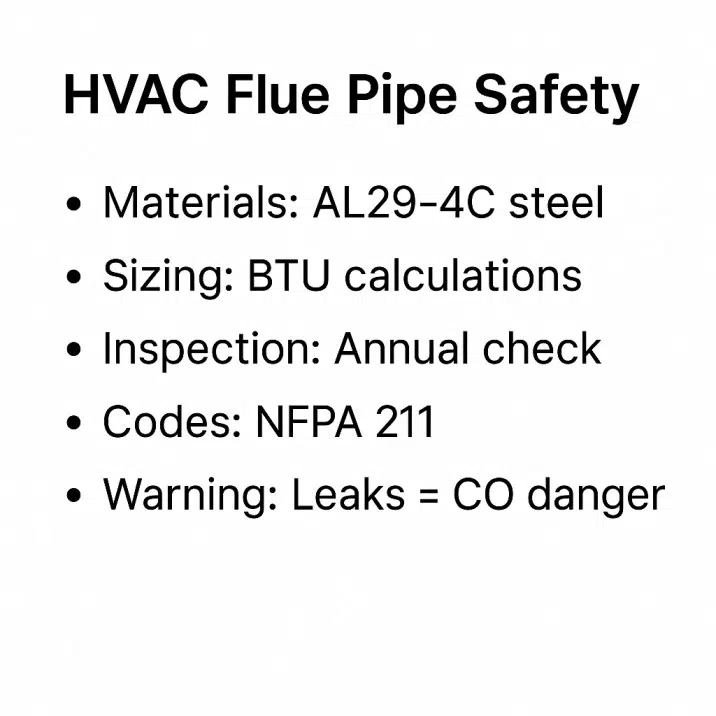
- Material selection must match specific heating system requirements and operating conditions
- Proper support spacing prevents thermal stress and maintains structural integrity
- Corrosion resistance directly impacts system lifespan and safety performance
- Installation compliance with NFPA 211 standards ensures code conformity
- Regular inspection identifies potential issues before they compromise safety
Sizing and Installation Requirements
Proper flue pipe sizing represents one of the most technically demanding aspects of HVAC system design, requiring precise calculations that account for appliance heat input, total system height, and environmental factors that influence draft characteristics. The International Residential Code Chapter 24 provides comprehensive sizing tables that correlate appliance BTU ratings with minimum flue pipe diameters, but these baseline requirements must be adjusted for specific installation conditions including horizontal run lengths, elevation changes, and local climate factors. Undersized flue pipes create insufficient draft velocity, leading to incomplete combustion gas removal and potential carbon monoxide accumulation within occupied spaces.
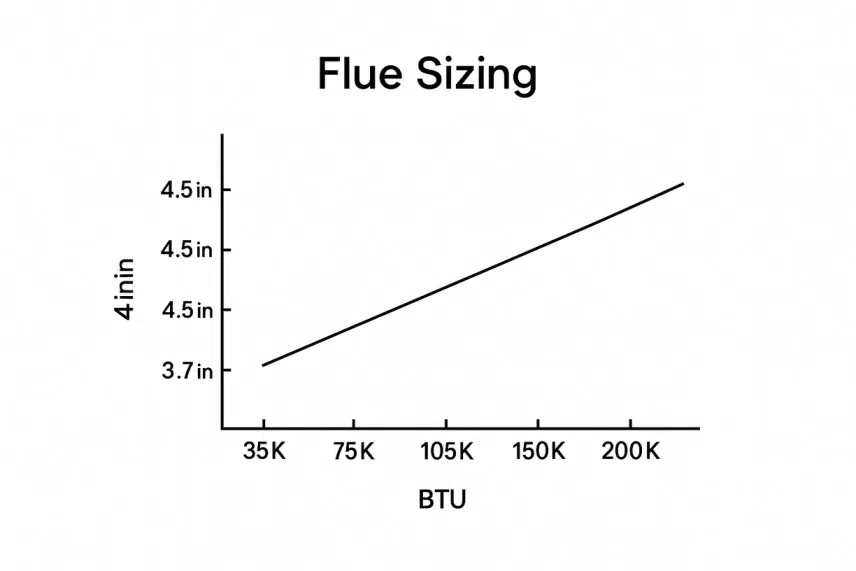
The fundamental sizing calculation begins with determining the total heat input of all appliances connected to the flue system, measured in British Thermal Units per hour (BTU/hr). For single-appliance installations, this calculation is straightforward, but multiple-appliance configurations require careful analysis of simultaneous operating conditions and diversity factors that account for typical usage patterns. The National Fire Protection Association Standard 54 (National Fuel Gas Code) provides detailed procedures for calculating equivalent lengths of horizontal runs, fittings, and other components that contribute to system resistance and influence required flue pipe diameter.
| Appliance BTU Rating | Minimum Flue Diameter (15-foot height) | Minimum Flue Diameter (30-foot height) | Maximum Horizontal Run |
|---|---|---|---|
| 35,000 BTU/hr | 4 inches | 3 inches | 75% of vertical height |
| 75,000 BTU/hr | 5 inches | 4 inches | 75% of vertical height |
| 105,000 BTU/hr | 6 inches | 5 inches | 75% of vertical height |
| 150,000 BTU/hr | 6 inches | 6 inches | 75% of vertical height |
| 200,000 BTU/hr | 7 inches | 6 inches | 75% of vertical height |
Installation requirements extend beyond basic sizing calculations to encompass clearance specifications, support requirements, and termination details that ensure safe operation throughout the system’s service life. The National Fire Protection Association Standard 211 mandates specific clearances from combustible materials, typically requiring 2 inches of clearance for single-wall flue pipes and 1 inch for double-wall insulated systems. These clearance requirements prevent heat transfer to adjacent building materials that could create fire hazards or accelerate structural deterioration in surrounding construction elements.
The complexity of modern heating systems often requires professional engineering analysis to ensure proper flue pipe sizing and installation compliance with applicable codes. Condensing furnaces and boilers operate at significantly lower exhaust temperatures than conventional systems, potentially requiring different sizing criteria and specialized venting materials designed for acidic condensate environments. The reduced buoyancy of lower-temperature exhaust gases may necessitate larger flue pipe diameters or mechanical draft assistance to maintain adequate combustion gas removal rates.
Installation procedures must address thermal expansion accommodation, particularly in systems with significant vertical runs or temperature differentials between operating and ambient conditions. Expansion joints, flexible connections, and proper support spacing prevent thermal stress accumulation that could compromise joint integrity or create structural failures. The International Mechanical Code requires that flue pipe installations include provisions for thermal movement while maintaining gas-tight connections throughout all operating conditions. These requirements become increasingly important in geographic regions experiencing wide temperature variations that create substantial thermal cycling in flue pipe systems.
Quality control during installation involves comprehensive inspection of all joints, supports, and clearances before system commissioning. Professional installation typically includes pressure testing to verify system integrity and draft testing to confirm adequate combustion gas removal under various operating conditions. The Occupational Safety and Health Administration emphasizes that proper installation procedures are essential for preventing carbon monoxide exposure risks that pose serious health threats to building occupants. Documentation of installation compliance provides important reference information for future maintenance and inspection activities.
Safety Protocols and Code Compliance
Comprehensive safety protocols for HVAC flue pipe systems encompass installation standards, operational monitoring, and maintenance procedures designed to prevent carbon monoxide exposure and fire hazards associated with improper combustion gas management. The National Fire Protection Association Standard 211 establishes the foundational safety framework that governs flue pipe system design, installation, and maintenance across residential and commercial applications. These protocols recognize that flue pipe failures can have catastrophic consequences, making rigorous adherence to established safety standards essential for protecting building occupants and property.
Carbon monoxide detection and prevention strategies form the cornerstone of flue pipe safety protocols, given that this odorless, colorless gas can reach lethal concentrations without obvious warning signs. The Environmental Protection Agency reports that carbon monoxide poisoning symptoms begin with fatigue and chest pain at low concentrations, progressing to impaired vision, headaches, dizziness, and confusion at moderate levels, with potentially fatal outcomes at high concentrations. The insidious nature of carbon monoxide exposure makes prevention through proper flue pipe design and maintenance far more effective than relying on detection systems alone.
Code compliance requirements vary by jurisdiction but typically incorporate NFPA standards as minimum acceptable practices. Local building codes may impose additional requirements based on regional climate conditions, seismic considerations, or specific safety concerns identified through historical incident analysis. The International Residential Code Chapter 24 provides comprehensive guidance for fuel gas installations, including detailed specifications for flue pipe materials, sizing, and installation procedures that ensure safe operation under normal and adverse conditions. Compliance verification typically requires professional inspection and testing before system commissioning.
Regular inspection protocols play a crucial role in maintaining flue pipe system safety throughout the operational lifespan. The Environmental Protection Agency recommends annual professional inspection of heating systems, including thorough examination of flue pipes, connections, and termination points for signs of corrosion, blockage, or structural deterioration. These inspections should include visual assessment of all accessible components, draft testing to verify adequate combustion gas removal, and carbon monoxide testing in occupied spaces to confirm system integrity.
Emergency response procedures for suspected flue pipe failures require immediate action to protect building occupants from carbon monoxide exposure. Initial response involves evacuating affected areas, shutting down heating equipment, and providing adequate ventilation to dissipate accumulated gases. Professional assessment and repair must be completed before resuming system operation, as temporary fixes or partial repairs may create false confidence while leaving underlying safety hazards unaddressed. The Consumer Product Safety Commission emphasizes that carbon monoxide incidents often result from seemingly minor flue pipe defects that compromise system integrity.
Documentation requirements for flue pipe systems include installation records, inspection reports, and maintenance logs that provide comprehensive system history for future reference. This documentation proves essential for warranty claims, insurance investigations, and regulatory compliance verification. Professional contractors typically provide detailed installation documentation that includes material specifications, sizing calculations, and compliance certifications required by local building authorities. Maintaining accurate records facilitates effective maintenance planning and helps identify recurring issues that may indicate systemic problems requiring comprehensive system evaluation.
Maintenance and Inspection Guidelines
Systematic maintenance and inspection of HVAC flue pipe systems requires comprehensive protocols that address both routine monitoring and detailed periodic assessments designed to identify potential safety hazards before they compromise system integrity. The Environmental Protection Agency emphasizes that trained professional inspection, cleaning, and tune-up of central heating systems, including furnaces, flues, and chimneys, should be performed annually to maintain safe operation and prevent carbon monoxide exposure risks. This recommendation reflects the critical importance of proactive maintenance in preventing system failures that could have serious safety consequences for building occupants.
Visual inspection procedures form the foundation of effective flue pipe maintenance, requiring systematic examination of all accessible system components for signs of corrosion, physical damage, or improper installation conditions. Professional inspectors utilize specialized equipment including borescopes for internal pipe examination, draft gauges for airflow measurement, and electronic combustion analyzers for exhaust gas composition testing. These tools enable comprehensive assessment of system condition and performance characteristics that may not be apparent through visual inspection alone.
Corrosion assessment represents a particularly critical aspect of flue pipe inspection, as material deterioration can create dangerous conditions including gas leakage, structural failure, and inadequate draft performance. Stainless steel systems generally exhibit superior corrosion resistance compared to traditional materials, but localized corrosion can still occur at connection points, areas of mechanical stress, or locations where dissimilar metals create galvanic corrosion conditions. The inspection process must identify early signs of corrosion including surface discoloration, pitting, or structural thinning that could compromise system integrity.
Draft testing procedures verify that flue pipe systems maintain adequate airflow velocity to ensure complete removal of combustion gases under various operating conditions. Professional testing equipment measures draft pressure differentials, exhaust gas temperatures, and flow rates that indicate proper system performance. Inadequate draft conditions can result from flue pipe blockages, improper sizing, or structural changes that alter system aerodynamics. The National Fire Protection Association Standard 211 provides specific testing procedures and acceptance criteria for draft performance evaluation.
Cleaning procedures for flue pipe systems must address both routine maintenance requirements and corrective actions needed to restore proper system function. Professional cleaning typically involves mechanical removal of accumulated debris, chemical treatment of corrosion products, and thorough inspection of cleaned surfaces for underlying damage. The cleaning process may reveal hidden defects including cracks, joint separation, or internal corrosion that requires immediate attention to maintain system safety. Specialized cleaning equipment and techniques are often necessary to access internal pipe surfaces without damaging system components.
Documentation of maintenance and inspection activities provides essential records for tracking system condition over time and identifying trends that may indicate developing problems. Professional service providers typically maintain detailed records including inspection findings, test results, corrective actions performed, and recommendations for future maintenance. This documentation proves valuable for warranty claims, insurance requirements, and regulatory compliance verification. Property owners should maintain copies of all service records and ensure that recommended maintenance actions are completed promptly to maintain system safety and reliability.
Preventive maintenance scheduling should account for system age, operating conditions, and manufacturer recommendations to optimize maintenance effectiveness while minimizing unnecessary service costs. High-efficiency condensing systems may require more frequent inspection due to acidic condensate effects on system components, while conventional systems in mild climates may operate reliably with standard annual maintenance. Environmental factors including air quality, humidity levels, and seasonal temperature variations can influence maintenance requirements and should be considered in developing appropriate service schedules.
Troubleshooting Common Issues
Effective troubleshooting of HVAC flue pipe systems requires systematic diagnostic approaches that identify root causes of performance problems while ensuring continued safety during the evaluation process. Common issues including inadequate draft, condensation problems, and structural deterioration can manifest through various symptoms that may not immediately indicate the underlying problem source. Professional diagnosis typically involves comprehensive system evaluation using specialized testing equipment and established diagnostic procedures that methodically eliminate potential causes until the actual problem is identified.
Inadequate draft conditions represent one of the most serious flue pipe problems, as insufficient airflow can result in incomplete combustion gas removal and potential carbon monoxide accumulation in occupied spaces. Symptoms of draft problems include visible exhaust spillage at appliance connections, unusual odors during system operation, and carbon monoxide detector activation. Diagnostic procedures for draft issues involve measuring system pressures, evaluating flue pipe sizing adequacy, and identifying potential blockages or restrictions that impede proper airflow. The International Residential Code provides specific criteria for acceptable draft performance that guide troubleshooting efforts.
Condensation-related problems frequently occur in modern high-efficiency heating systems where lower exhaust temperatures can create moisture accumulation within flue pipe systems not designed for condensing applications. Visible water staining, corrosion at connection points, and structural deterioration often indicate condensation issues that require immediate attention. Troubleshooting condensation problems involves evaluating system operating temperatures, assessing insulation adequacy, and determining whether existing flue pipe materials are appropriate for condensing applications. Solutions may require complete system replacement with condensing-rated materials and proper drainage provisions.
Structural integrity issues can develop gradually through normal thermal cycling, corrosion processes, or mechanical stress that eventually compromises flue pipe performance. Warning signs include visible sagging, joint separation, surface cracking, or unusual noise during system operation. Diagnostic evaluation of structural problems requires careful assessment of support adequacy, thermal expansion accommodation, and material condition throughout the system. Professional evaluation may reveal that apparent localized problems actually indicate systemic issues requiring comprehensive system replacement rather than partial repairs.
Blockage conditions can result from various sources including animal intrusion, debris accumulation, ice formation, or structural collapse that restricts airflow through flue pipe systems. Symptoms typically include poor heating system performance, unusual operating sounds, and visible exhaust spillage during system operation. Diagnostic procedures involve visual inspection of accessible system components, internal examination using specialized equipment, and airflow testing to quantify restriction severity. Blockage removal must be performed carefully to avoid damaging system components or creating additional problems.
Safety considerations during troubleshooting activities require that building occupants be protected from potential carbon monoxide exposure while diagnostic work is performed. Initial response to suspected flue pipe problems should include shutting down heating equipment, providing adequate ventilation, and evacuating affected areas if carbon monoxide exposure is suspected. Professional troubleshooting should not resume system operation until all identified problems are corrected and comprehensive testing confirms safe operation. The Consumer Product Safety Commission emphasizes that partial repairs or temporary fixes can create false confidence while leaving serious safety hazards unaddressed.
Future Considerations and Technology Trends
The evolution of HVAC flue pipe technology continues to advance through materials science innovations, regulatory developments, and integration with smart building systems that enhance safety monitoring and operational efficiency. Emerging materials including advanced ceramic composites and specialized polymer systems offer potential advantages in specific applications, while digital monitoring technologies provide unprecedented capabilities for real-time system performance assessment and predictive maintenance scheduling. These technological developments promise to improve both safety and reliability of flue pipe systems while reducing long-term maintenance requirements.
Smart monitoring systems represent a significant advancement in flue pipe safety technology, incorporating sensors that continuously monitor carbon monoxide levels, draft conditions, and system temperatures to provide early warning of developing problems. These systems can integrate with building automation platforms to provide remote monitoring capabilities and automatic safety responses including equipment shutdown and emergency notifications. The integration of artificial intelligence and machine learning algorithms enables predictive analysis that can identify potential problems before they compromise system safety or performance.
Regulatory trends indicate increasing emphasis on carbon monoxide prevention and detection requirements that may mandate enhanced safety systems for new construction and major renovations. The Federal Register documents ongoing development of safety standards for residential gas furnaces and boilers that focus on preventing dangerous carbon monoxide production and leakage. These regulatory developments may require upgraded flue pipe systems, enhanced monitoring capabilities, and more stringent installation and maintenance requirements that exceed current minimum standards.
Environmental considerations increasingly influence flue pipe system design as building codes evolve to address energy efficiency and emissions reduction objectives. High-efficiency heating systems require specialized venting approaches that accommodate lower exhaust temperatures and acidic condensate conditions while maintaining safety and reliability. The transition toward renewable energy sources and hybrid heating systems creates new challenges for flue pipe design that must accommodate variable operating conditions and multiple fuel types within integrated system configurations.
Professional training and certification requirements continue to evolve as flue pipe technology becomes more sophisticated and safety standards become more stringent. Technician education programs increasingly emphasize comprehensive system analysis, advanced diagnostic techniques, and integration with building automation systems that require specialized knowledge and skills. The complexity of modern heating systems makes professional expertise essential for proper installation, maintenance, and troubleshooting activities that ensure continued safety and performance throughout system operational life.
Key Takeaways
- HVAC flue pipe systems are critical safety components that require professional installation, regular maintenance, and compliance with NFPA 211 and International Residential Code standards to prevent carbon monoxide exposure risks.
- Material selection significantly impacts system longevity and safety, with AL29-4C stainless steel providing superior performance for condensing applications and 304 stainless steel offering reliable service for conventional heating systems, while proper sizing calculations based on BTU ratings and system height ensure adequate draft performance.
- Annual professional inspection and maintenance are essential for identifying potential problems including corrosion, blockages, and structural deterioration before they compromise system safety, with comprehensive documentation providing important reference information for future service activities.
- Emerging smart monitoring technologies and evolving regulatory requirements promise enhanced safety capabilities and more stringent installation standards that will improve carbon monoxide prevention and system reliability in future HVAC applications.