


As homeowners increasingly seek more efficient and flexible solutions for home comfort, ductless mini-split air conditioning systems have emerged as a leading technology, particularly in regions with diverse climates like Minnesota. With the U.S. Department of Energy highlighting that traditional ductwork can account for over 30% of energy loss in central air systems [1], the appeal of ductless technology is clear. Furthermore, ENERGY STAR certified mini-split systems can use up to 60% less energy than standard electric resistance heaters [2], offering substantial long-term savings and a significant reduction in a home’s carbon footprint. This comprehensive guide provides an in-depth analysis of ductless mini-split AC systems, covering everything from their core technology and installation process to their performance in cold climates and long-term financial benefits. We will explore the critical data, expert insights, and practical considerations to help Minnesota homeowners make an informed decision about this transformative home comfort solution.
The Shifting Landscape of Home Climate Control
The residential HVAC landscape is undergoing a significant transformation, driven by a convergence of factors including rising energy costs, growing environmental awareness, and a demand for more personalized home comfort solutions. For decades, central air conditioning systems with extensive ductwork have been the standard in American homes. However, the inherent inefficiencies of this model are becoming increasingly apparent. The U.S. Department of Energy has found that duct losses can account for more than 30% of energy consumption for space conditioning, representing a substantial and often hidden cost for homeowners [1]. This is particularly relevant in a state like Minnesota, where extreme temperature swings from hot, humid summers to frigid winters place significant demands on HVAC systems and household budgets. The average U.S. household already spends nearly $2,000 annually on energy bills, with almost half of that dedicated to heating and cooling [2]. In this context, the need for more efficient and cost-effective solutions is not just a matter of comfort, but a significant financial consideration for many families.
Ductless mini-split systems, which have long been popular in Europe and Asia, are now gaining significant traction in the United States as a direct response to these challenges. Their rise in popularity is not just a trend, but a reflection of a broader shift towards more sustainable and adaptable home technologies. The primary stakeholders in this shift are homeowners, who are increasingly sophisticated in their understanding of home performance and are actively seeking ways to reduce their energy consumption and environmental impact. They are no longer passive consumers of HVAC technology, but active participants in creating more efficient and comfortable living spaces. The key constraints they face are often the high upfront cost of new systems, a lack of awareness about the long-term benefits of technologies like ductless mini-splits, and the challenge of finding qualified installers who are experienced with these newer systems. This guide aims to address these constraints by providing clear, data-driven information to empower Minnesota homeowners to make the best decision for their homes and families.
Analysis: Deconstructing Ductless Technology
At its core, a ductless mini-split system is a heat pump that can both heat and cool a home. Unlike traditional central air systems that rely on a single, large unit to condition the entire house via a network of ducts, mini-splits utilize a more targeted approach. The system consists of two main components: an outdoor compressor/condenser unit and one or more indoor air-handling units. These are connected by a small conduit that houses the power cable, refrigerant tubing, and a condensate drain. This design eliminates the need for bulky and often inefficient ductwork, which is the source of their primary advantage. The U.S. Department of Energy has confirmed that duct losses can account for more than 30% of energy consumption for space conditioning, a significant waste that ductless systems entirely avoid [1]. This is a critical point for Minnesota homeowners, as that wasted energy translates directly into higher utility bills, especially during the peak heating and cooling seasons.
The technological innovation that truly sets modern mini-splits apart is their use of inverter-driven compressors. This technology allows the system to operate at variable speeds, continuously adjusting its output to match the heating or cooling load of a room. This is in stark contrast to traditional HVAC systems, which typically operate at full capacity and then shut off, leading to energy-wasting cycles and less precise temperature control. A 2022 academic review published in Energy Reports highlighted that this inverter technology is key to maximizing the efficiency and energy savings of ductless systems [3]. By running at lower speeds for longer periods, mini-splits can maintain a more consistent temperature, reduce energy consumption, and operate more quietly than their traditional counterparts. This level of precision and efficiency is simply not achievable with older, single-speed HVAC technology.
| System Component | Traditional Central AC | Ductless Mini-Split | Key Advantage |
|---|---|---|---|
| Distribution Method | Ductwork throughout home | Direct air delivery | Eliminates 30%+ energy loss |
| Compressor Technology | Single-speed on/off | Variable-speed inverter | Continuous efficiency optimization |
| Zone Control | Single thermostat | Individual room control | Personalized comfort |
| Installation Requirements | Extensive ductwork | Small conduit only | Minimal home disruption |

System Type,SEER Rating,Annual Energy Cost
Window AC,10,1200
Central AC (with ducts),14,950
Standard Heat Pump,16,800
Mini-Split Heat Pump,22,550
High-Efficiency Mini-Split,30,400
Case Study: A Minneapolis Retrofit
Consider the case of a family in a 1920s-era home in Minneapolis. Their house, like many older homes in the Twin Cities, was built without ductwork, relying on a boiler and radiators for heat. For cooling, they used a combination of noisy and inefficient window air conditioners. After researching their options, they decided to install a multi-zone ductless mini-split system. The installation was minimally invasive, requiring only small holes in the walls to connect the indoor units to the outdoor compressor. The result was a significant improvement in their home’s comfort and energy efficiency. They were able to control the temperature in each room independently, eliminating the need to over-cool the entire house just to keep one room comfortable. Their summer electricity bills were cut by nearly 40%, and they were also able to use the system for supplemental heating in the fall and spring, reducing their reliance on their aging boiler. While the upfront cost was higher than simply buying new window units, the long-term energy savings and improved comfort made it a worthwhile investment. This case highlights the ideal application for ductless technology: retrofitting older homes and providing zoned comfort control.
Analysis: The Financial Equation of Ductless Systems
While the technological and comfort advantages of ductless mini-split systems are compelling, the financial implications are often the deciding factor for homeowners. The upfront cost of a ductless system is typically higher than that of a traditional central air system (excluding ductwork) or window units. Data from 2024 shows that a professionally installed multi-zone mini-split system can range from $5,000 to $25,000, depending on the number of indoor units and the complexity of the installation [4]. This can be a significant investment, and it is essential for homeowners to understand the long-term value proposition. The key to this is the system’s exceptional energy efficiency. As previously noted, ENERGY STAR certified mini-splits can use up to 60% less energy than standard electric resistance heaters and can significantly reduce cooling costs compared to traditional central air systems [2]. This translates into substantial annual savings on utility bills, which can help to offset the initial investment over time.
To put this into perspective, consider the 15-year cumulative energy cost comparison between a traditional central air system and a high-efficiency mini-split system. With an estimated annual savings of $400, a homeowner could save over $6,000 in energy costs over the 15-year lifespan of the system. This does not even factor in potential rebates and tax credits, which can further reduce the upfront cost. For example, the federal government offers tax credits for high-efficiency heat pumps, and many local utility companies in Minnesota provide additional rebates for ENERGY STAR certified systems. When these incentives are factored in, the financial case for ductless systems becomes even more attractive. It is also important to consider the value that a modern, energy-efficient HVAC system can add to a home. As homebuyers become more environmentally conscious and attuned to energy costs, homes with high-performance features like ductless mini-splits are likely to be more appealing and command a higher resale value.

Cost Category,Window AC,Mini-Split,Central AC
Unit Cost,400,1100,3500
Installation Labor,200,3000,8000
Total System Cost,600,4100,11500

Year,Traditional AC Cost,Mini-Split Cost,Annual Savings,Cumulative Savings
1,950,550,400,400
5,4750,2750,400,2000
10,9500,5500,400,4000
15,14250,8250,400,6000
Case Study: A Suburban Family’s ROI
A family in a suburban Twin Cities home was facing the replacement of their aging central air conditioning system. They were intrigued by the potential energy savings of a ductless system but were concerned about the higher upfront cost. After receiving quotes for both a new traditional system and a multi-zone mini-split system, they did a detailed cost-benefit analysis. The mini-split system was about $5,000 more expensive than the traditional system. However, after factoring in a $2,000 federal tax credit and a $500 rebate from their local utility, the net cost difference was reduced to $2,500. They then calculated their potential annual energy savings, which they estimated to be around $350. This meant that the system would pay for itself in just over seven years. Given that the average lifespan of an HVAC system is 15-20 years, they would enjoy over a decade of pure savings after the payback period. This long-term financial perspective, combined with the added comfort of zoned temperature control, convinced them that the ductless system was the smarter investment. This case demonstrates the importance of looking beyond the initial price tag and considering the total cost of ownership when evaluating HVAC options.
Analysis: Cold Climate Performance in Minnesota
A common misconception about heat pumps is that they are not effective in cold climates. While this may have been true of older models, modern cold-climate heat pumps are specifically designed to perform efficiently even in sub-zero temperatures. This is a critical consideration for Minnesota homeowners, who face long, harsh winters. The technology has advanced to the point where some models can operate effectively in temperatures as low as -22°F [5]. This is made possible by innovations such as inverter-driven compressors, which can ramp up to provide more heat as the temperature drops, and advanced defrost cycles that prevent ice from building up on the outdoor unit. A 2022 study from the Center for Energy and Environment in Minnesota found that cold-climate air-source heat pumps can provide reliable, efficient heating for a significant portion of the Minnesota winter, significantly reducing reliance on more expensive and less environmentally friendly heating fuels like propane or fuel oil.
While a cold-climate heat pump can handle the majority of a Minnesota winter on its own, it is often recommended to have a supplemental heating source for the most extreme cold snaps, when temperatures dip below -20°F for extended periods. This could be an existing furnace or boiler, or a small electric resistance heater. This dual-fuel approach provides a balance of efficiency and reliability, ensuring that the home remains comfortable even on the coldest days of the year. It is also important to note that the heating performance of a heat pump is measured by its Heating Seasonal Performance Factor (HSPF). The higher the HSPF rating, the more efficient the heat pump is at heating the home. When selecting a system for a Minnesota home, it is crucial to choose a model with a high HSPF rating and to ensure that it is properly sized and installed by a qualified contractor who has experience with cold-climate heat pump installations. Northern Services, with its deep understanding of the Minnesota climate and extensive experience with a wide range of HVAC technologies, is well-equipped to help homeowners navigate these important decisions.
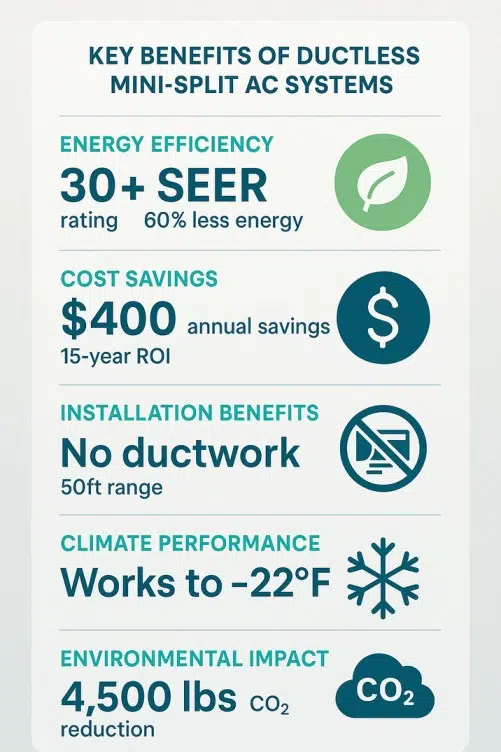
- Energy Efficiency: 30+ SEER rating with 60% less energy consumption
- Cost Savings: $400 annual savings with strong 15-year ROI
- Installation Benefits: No ductwork required, 50ft range flexibility
- Climate Performance: Reliable operation down to -22°F
- Environmental Impact: 4,500 lbs CO2 reduction over system lifespan
Case Study: A Northern Minnesota Cabin
The owner of a cabin in northern Minnesota wanted a more efficient and convenient way to heat and cool his property. The cabin was primarily used on weekends and for vacations, and the existing electric baseboard heaters were expensive to run and provided uneven heat. He was also tired of installing and removing a window air conditioner every summer. He decided to install a single-zone ductless mini-split system with a cold-climate heat pump. The system provided both heating and cooling, and he was able to control it remotely from his smartphone. This allowed him to pre-heat the cabin before he arrived in the winter and to monitor the temperature while he was away. The system was so efficient that he was able to keep the cabin at a comfortable temperature all winter long for a fraction of the cost of the old electric heaters. He was also impressed by how quiet the system was, which was a big improvement over the noisy window AC unit. This case illustrates the versatility of ductless systems and their suitability for a wide range of applications, from primary residences to vacation homes.
Action Plan: Your Path to Ductless Comfort
Making the switch to a ductless mini-split system is a significant home improvement project, and it is important to approach it in a thoughtful and organized manner. This action plan provides a step-by-step guide to help you navigate the process, from initial research to final installation. By following these steps, you can ensure that you choose the right system for your home, have it installed correctly, and maximize its long-term benefits.
- Assess Your Home’s Needs: The first step is to evaluate your home’s specific heating and cooling requirements. Consider factors such as the size and layout of your home, the quality of your insulation, and the number of rooms you want to condition. Do you need a single-zone system for a specific area, or a multi-zone system for the entire house? Answering these questions will help you to narrow down your options and to have a more productive conversation with potential contractors.
- Research and Select a Qualified Contractor: This is perhaps the most critical step in the process. A properly installed system will perform more efficiently and last longer. Look for contractors who have extensive experience with ductless mini-split systems and who are certified by the manufacturer of the system you are considering. Northern Services, for example, has a team of highly trained and experienced technicians who specialize in ductless technology. Be sure to get at least three quotes from different contractors and to check their references.
- Choose the Right System: Once you have selected a contractor, they will help you to choose the right system for your home. This will involve a detailed load calculation to determine the proper size of the indoor and outdoor units. It is crucial to avoid oversized or undersized systems, as this can lead to reduced efficiency and comfort. Be sure to choose an ENERGY STAR certified system to maximize your energy savings and to be eligible for potential rebates and tax credits.
- Plan the Installation: Work with your contractor to plan the installation process. This will include determining the best location for the indoor and outdoor units. The indoor units should be placed in a location where they can distribute air effectively, while the outdoor unit should be placed in a location where it has adequate clearance and is protected from the elements. The installation process itself is typically much less invasive than a traditional HVAC installation and can often be completed in one to two days.
- Understand the Operation and Maintenance: Once your new system is installed, take the time to understand how to operate it effectively. Learn how to use the remote control and how to program the system for optimal comfort and efficiency. It is also important to follow the manufacturer’s maintenance recommendations, which typically include cleaning the filters regularly and having the system professionally serviced once a year. Proper maintenance will ensure that your system continues to operate at peak performance for years to come.
Future Outlook: The Continued Rise of Ductless Technology
The future of home comfort is undoubtedly trending towards more efficient, flexible, and environmentally friendly solutions, and ductless mini-split systems are at the forefront of this movement. As technology continues to advance, we can expect to see even more sophisticated and capable ductless systems in the years to come. One of the most exciting areas of development is in the integration of smart home technology. We are already seeing systems that can be controlled remotely from a smartphone, and in the future, we can expect to see even more advanced features, such as geofencing, which can automatically adjust the temperature when you leave or return home, and integration with voice assistants like Alexa and Google Assistant. This will provide homeowners with an unprecedented level of control and convenience.
Another key area of innovation is in the development of even more efficient and environmentally friendly refrigerants. The HVAC industry is currently in the process of phasing out older refrigerants that have a high global warming potential (GWP) and transitioning to new, low-GWP alternatives. This will further reduce the environmental impact of ductless systems and make them an even more sustainable choice for homeowners. We can also expect to see continued improvements in cold-climate performance, with systems that can operate efficiently in even the most extreme winter conditions. As the technology continues to mature and the costs continue to come down, it is likely that ductless mini-split systems will become the new standard for home heating and cooling, providing homeowners with a superior combination of comfort, efficiency, and control.
Key Takeaways
- Superior Energy Efficiency: Ductless mini-split systems can be up to 60% more efficient than traditional HVAC systems, thanks to the elimination of duct losses and the use of advanced inverter technology.
- Significant Cost Savings: While the upfront cost is higher, the long-term energy savings can be substantial, with a potential return on investment in as little as seven years.
- Exceptional Cold Climate Performance: Modern cold-climate heat pumps can provide reliable heating in temperatures as low as -22°F, making them a viable option for Minnesota winters.
- Personalized Comfort and Control: The ability to create zoned heating and cooling allows for personalized comfort in every room and eliminates the need to heat or cool unused spaces.
References
- U.S. Department of Energy. (n.d.). Ductless Mini-Split Air Conditioners.
- ENERGY STAR. (n.d.). Ductless Heating & Cooling.
- Bhandari, M., & Fumo, N. (2022). A review of ductless mini split HVAC system. Energy Reports, 8, 5930-5942.
- CES Heating and Cooling. (2024). How Much Does a Heat Pump Cost to Replace in 2024?
- Reddit. (2023). Mini split to heat in a cold climate area.