


A dual HVAC system, also called a zoned system, divides a home into separate climate zones, each with its own thermostat and set of dampers so rooms can be heated or cooled independently. For west-central Minnesota homes that face sub-zero winters and humid summers, zoning holds steadier comfort across floors and can trim heating energy by over 10 percent and cooling energy by more than a third.
Those savings hinge on getting the design right. An oversized or poorly balanced zoned system can raise energy use instead of lowering it, so the payoff comes from an honest load calculation, sealed ductwork, and correctly calibrated dampers. The sections below explain how zoning, dual-fuel setups, and smart controls work, what they typically cost, and how to judge whether one fits your house.
The Growing Need for Zoned Climate Control
The modern home is no longer a monolithic space with uniform heating and cooling needs. Factors such as multi-story construction, open-concept floor plans, large window installations, and varied occupancy patterns create complex thermal environments. A single thermostat, often located in a central hallway, cannot adequately manage these diverse conditions, leading to uncomfortable temperature imbalances and significant energy waste. For instance, a south-facing room with large windows may become overheated from solar gain, while a north-facing bedroom remains too cool. Similarly, upper floors are often warmer than lower levels due to natural heat rise, a phenomenon that a single-zone system struggles to mitigate effectively.
The U.S. Department of Energy (DOE) highlights that improper HVAC installation and poorly designed systems can reduce efficiency by up to 30%, leading to higher utility bills and a shorter equipment lifespan. This inefficiency is compounded in homes with significant temperature stratification. Residential multizone systems are specifically designed to address these challenges by enabling homeowners to set different temperatures for various areas of the house. This capability is particularly beneficial in larger homes, where it is common for certain rooms or entire floors to be unoccupied for extended periods. By not heating or cooling these unused spaces, homeowners can achieve significant energy savings without sacrificing comfort in the areas they are using.
Furthermore, the increasing focus on home energy efficiency, driven by both rising energy costs and environmental concerns, has made technologies like dual HVAC systems more attractive. The Minnesota Department of Commerce found that residential multizone systems can reduce space heating energy consumption by over 10% and cooling energy consumption by over 35%. These savings are achieved through a combination of strategic temperature setbacks in individual zones and the elimination of over- and under-heated areas. As building codes and energy efficiency standards, such as those from ASHRAE, become more stringent, the adoption of advanced HVAC solutions like dual-zone systems is expected to grow. For homeowners in regions with significant temperature fluctuations, such as Minnesota, the ability to precisely control the indoor environment is not just a matter of comfort but also a critical component of a comprehensive energy management strategy.
The Mechanics of Dual HVAC Systems
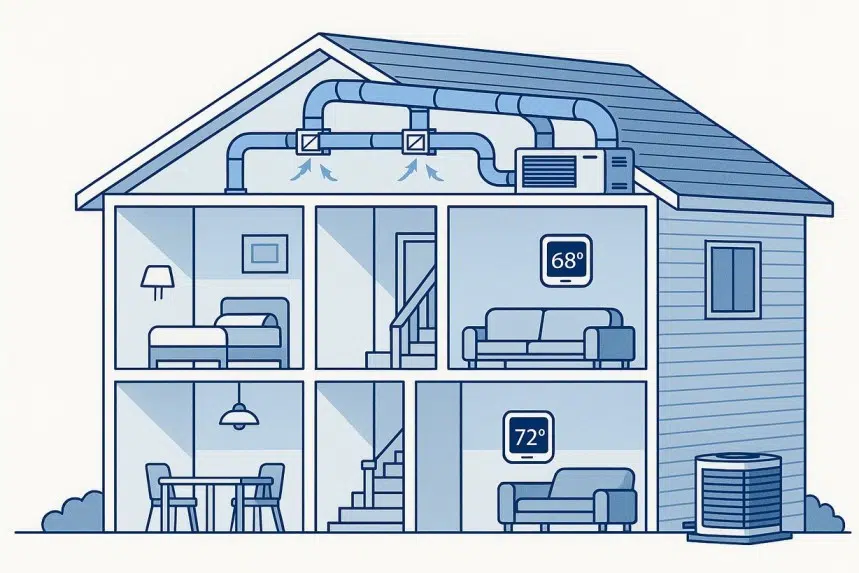
A dual HVAC system operates on a simple yet powerful principle: dividing a home into multiple zones that can be heated or cooled independently. This is achieved through a combination of specialized hardware and intelligent controls that work together to deliver customized comfort and optimize energy use. The core components of a typical dual-zone system include multiple thermostats, a central control panel, and a series of dampers installed within the ductwork.
Zone Control and Thermostats
Each zone is equipped with its own thermostat, which constantly monitors the temperature in that specific area. When the temperature deviates from the setpoint, the thermostat sends a signal to the central control panel. This panel, the brain of the system, then directs the HVAC unit to deliver conditioned air only to the zone that requires it. This is a significant departure from a single-zone system, where the entire house is heated or cooled based on the reading of a single thermostat. The ability to have different temperature setpoints in different zones is the primary advantage of a dual HVAC system. For example, the bedrooms can be kept cooler during the day and warmer at night, while the living areas are maintained at a comfortable temperature only when they are occupied.
Dampers and Airflow Management
The magic of a dual-zone system lies in its ability to direct airflow precisely where it is needed. This is accomplished using a series of dampers, which are essentially valves installed within the ductwork. These dampers are controlled by the central panel and can open or close to regulate the flow of conditioned air to each zone. When a zone calls for heating or cooling, the dampers for that zone open, while the dampers for other zones remain closed. This ensures that energy is not wasted on conditioning unoccupied or already comfortable areas of the house. The National Renewable Energy Laboratory (NREL) has found that typical duct systems can lose 25-40% of their energy through air leakage and conduction, making efficient airflow management a critical component of an energy-efficient home.
Dual Fuel Integration
For even greater efficiency, some dual HVAC systems are integrated with dual-fuel technology. A dual-fuel system combines an electric heat pump with a gas furnace, automatically switching between the two fuel sources based on outdoor temperatures and energy costs. The heat pump, which is highly efficient in moderate climates, is used for both heating and cooling. However, when the outdoor temperature drops to a point where the heat pump can no longer operate efficiently, the system automatically switches to the gas furnace for more powerful heating. This intelligent integration ensures that the most cost-effective and energy-efficient heating source is used at all times, further enhancing the savings potential of a dual HVAC system.
Energy Efficiency and Cost Savings
The primary motivation for many homeowners to invest in a dual HVAC system is the potential for significant energy savings and lower utility bills. By eliminating the need to heat or cool an entire house to a single temperature, zoned systems can dramatically reduce energy consumption. The Minnesota Department of Commerce study provides compelling evidence of this, with findings of over 10% savings in heating and 35% in cooling energy use in homes with multizone systems. These savings are not just theoretical; they are the result of a more intelligent and targeted approach to climate control.
Quantifying the Savings
The energy savings from a dual HVAC system are derived from several factors. First, by creating multiple zones, homeowners can implement strategic temperature setbacks in unoccupied areas. For example, if the bedrooms are only used at night, the temperature in that zone can be allowed to drift during the day, eliminating the need for constant heating or cooling. Second, zoned systems prevent the over- and under-heating of different areas of the house, a common problem in multi-story homes. By maintaining a consistent temperature in each zone, the HVAC system does not have to work as hard to compensate for temperature imbalances. Third, the use of a smart thermostat can further enhance savings by learning the homeowner’s schedule and preferences and automatically adjusting the temperature settings accordingly. Energy Star estimates that a smart thermostat can save homeowners approximately $100 per year.

Installation Quality and Long-Term Performance
While the potential for energy savings is significant, it is crucial to recognize that the performance of a dual HVAC system is highly dependent on the quality of its installation. The DOE warns that improper installation can reduce system efficiency by as much as 30%, effectively negating any potential savings. This is why it is essential to work with a qualified and experienced HVAC contractor who understands the complexities of zoned systems. A professional installation will ensure that the ductwork is properly sealed, the dampers are correctly installed and calibrated, and the thermostats are strategically placed for accurate temperature readings. Regular maintenance, including changing air filters and having the system tuned up annually, is also critical for maintaining peak performance and maximizing energy savings over the life of the system.

Benefits Beyond Energy Savings
While the financial benefits of a dual HVAC system are a major selling point, the improvements in comfort and indoor air quality are equally important. By providing personalized temperature control for different areas of the house, zoned systems can eliminate the hot and cold spots that are common in single-zone homes. This is particularly beneficial for families with diverse comfort preferences, as each member can set the temperature in their own space to their liking. For example, a home office can be kept cooler for focused work, while a nursery is maintained at a warmer, more comfortable temperature for a sleeping baby.
Enhanced Comfort and Indoor Air Quality
In addition to personalized comfort, dual HVAC systems can also improve indoor air quality. By running the fan more frequently to circulate air, even when the heating or cooling is not engaged, these systems can help to reduce the buildup of dust, allergens, and other airborne pollutants. This is especially beneficial for individuals with allergies or respiratory conditions. Furthermore, some advanced zoned systems can be integrated with whole-house humidifiers, dehumidifiers, and air purifiers, providing a comprehensive solution for managing the indoor environment.

Is a Dual HVAC System Right for You?
Deciding whether to invest in a dual HVAC system requires a careful evaluation of your home’s specific needs and your long-term goals. Here is a step-by-step checklist to help you determine if a zoned system is the right choice for your property:
- Assess Your Home’s Layout and Occupancy Patterns: Do you have a multi-story home? Are there rooms that are rarely used? Do you have large windows that cause significant solar gain? If you answered yes to any of these questions, your home is a good candidate for a dual HVAC system.
- Evaluate Your Current Comfort Levels: Are there hot or cold spots in your home? Do you find yourself constantly adjusting the thermostat? Do family members have different temperature preferences? If you are not satisfied with your current comfort levels, a zoned system can provide a significant improvement.
- Review Your Energy Bills: Are your heating and cooling costs higher than you would like? Are you looking for ways to reduce your energy consumption? A dual HVAC system can provide a significant return on investment through lower utility bills.
- Consult with a Qualified HVAC Contractor: A professional HVAC contractor can assess your home’s specific needs and recommend the best solution for you. They can perform a load calculation to determine the proper size for your HVAC equipment and design a zoned system that will provide optimal comfort and efficiency. Be sure to get multiple quotes and check references before selecting a contractor.
- Consider the Upfront Costs and Long-Term Savings: A dual HVAC system will have a higher upfront cost than a single-zone system. However, the long-term energy savings can often offset the initial investment. Ask your contractor for an estimate of the potential savings and calculate the payback period to determine if the investment makes financial sense for you.
The Evolution of Smart Climate Control
The trend towards smarter, more efficient homes is only expected to accelerate in the coming years. As technology continues to evolve, we can expect to see even more advanced and integrated climate control solutions. The dual HVAC systems of the future will likely be even more intelligent, with the ability to learn and adapt to a homeowner’s lifestyle in real-time. They may be able to anticipate when a room will be occupied and pre-cool or pre-heat it accordingly. They may also be able to integrate with other smart home devices, such as lighting and window shades, to create a truly holistic and energy-efficient home environment.
Furthermore, as the cost of renewable energy continues to decline, we may see a greater integration of solar and other renewable energy sources with dual HVAC systems. This could lead to even greater energy savings and a further reduction in the carbon footprint of our homes. The future of home climate control is one of greater personalization, efficiency, and sustainability, and dual HVAC systems are at the forefront of this evolution.
Key Takeaways
- Significant Energy Savings: Dual HVAC systems can reduce heating energy use by over 10% and cooling energy use by over 35%.
- Enhanced Comfort: Zoned systems eliminate hot and cold spots by providing personalized temperature control for different areas of the house.
- Improved Indoor Air Quality: By circulating air more frequently, dual HVAC systems can help to reduce the buildup of dust, allergens, and other airborne pollutants.
- Professional Installation is Critical: Improper installation can reduce system efficiency by up to 30%, so it is essential to work with a qualified HVAC contractor.