


A well-maintained central air conditioning system is not just a luxury; it’s a critical component of a healthy, energy-efficient home. Neglecting regular maintenance can lead to a cascade of problems, from soaring energy bills to premature system failure. According to the U.S. Department of Energy, homeowners can reduce their air conditioner’s energy consumption by 5% to 15% simply by cleaning or replacing dirty filters regularly [1]. Furthermore, a study by the Houston School District revealed that a staggering 50% of HVAC repairs are a direct result of neglecting routine maintenance [2]. This guide provides homeowners with a comprehensive, expert-backed framework for central air maintenance, empowering you to protect your investment, improve indoor air quality, and ensure your home remains a comfortable sanctuary during the hottest months.
Context: Why Central Air Maintenance Matters Now More Than Ever
In an era of rising energy costs and growing environmental awareness, the efficiency of our home appliances has never been more important. Central air conditioning systems, in particular, represent a significant portion of a household’s energy consumption. A poorly maintained system not only inflates utility bills but also contributes to a larger carbon footprint. The U.S. Environmental Protection Agency (EPA) has been actively phasing out older, less efficient refrigerants like HCFC-22 (R-22) in favor of more environmentally friendly alternatives such as R-410A [3]. As of 2025, new regulations will mandate the use of A2L refrigerants with a lower Global Warming Potential (GWP), further emphasizing the industry’s shift towards sustainability. For homeowners, this evolving landscape underscores the importance of proactive maintenance. A well-maintained system not only operates more efficiently but is also more likely to be compatible with newer, greener technologies. Furthermore, the health implications of a neglected HVAC system are significant. The EPA warns that poor indoor air quality can lead to a range of health issues, from allergies and asthma to more serious respiratory conditions [4]. A clean, well-maintained central air system plays a vital role in filtering out dust, allergens, and other pollutants, creating a healthier living environment for you and your family.
Analysis: Maximizing Efficiency and Savings Through Proactive Maintenance
The financial benefits of regular central air maintenance are substantial and well-documented. Industry data consistently shows that proactive care is far more cost-effective than reactive repairs. A study by Design Comfort found that well-maintained HVAC systems operate at 95% efficiency or higher, while neglected units can see their efficiency plummet to as low as 75% [5]. This 20% difference can translate into hundreds of dollars in wasted energy costs over a single cooling season. The chart below illustrates the significant energy savings that can be achieved through various maintenance tasks.

label,value
Clean Air Filters,15
Coil Cleaning,12
Thermostat Calibration,3
Electrical Connections,8
Lubrication,5
Overall Maintenance,20
Beyond energy savings, proactive maintenance also helps homeowners avoid the high cost of emergency repairs. According to Angi, the average HVAC repair can cost anywhere from $130 to $2,000, with most homeowners paying around $350 [6]. A catastrophic failure, such as a burnt-out compressor, can set you back $2,500 to $5,000 or more. In contrast, the average cost of an annual HVAC maintenance plan is a mere $75 to $150. This small investment can save you thousands of dollars in the long run by preventing major breakdowns and extending the life of your system.
Analysis: The Financial Impact of Neglecting HVAC Maintenance
The old adage “an ounce of prevention is worth a pound of cure” is particularly true when it comes to HVAC systems. The cost of neglecting maintenance extends far beyond higher energy bills. As minor issues are left unaddressed, they can snowball into major problems that require expensive repairs or even a full system replacement. The chart below provides a stark comparison of the costs associated with proactive maintenance versus reactive repairs.

label,value
Annual Maintenance,112
Minor Repair,350
Major Repair,1000
Compressor Replacement,3750
Full System Replacement,6000
A well-maintained HVAC system can last 15 to 20 years, while a neglected unit may fail in as little as 10 years [7]. This premature failure not only forces homeowners into an unexpected and costly replacement but also means they miss out on years of efficient, reliable service. Furthermore, a system that is struggling to perform due to a lack of maintenance is more likely to break down during periods of extreme weather, leaving you and your family without cooling when you need it most. The inconvenience and discomfort of a mid-summer breakdown, coupled with the high cost of emergency service, make a compelling case for the value of regular, professional maintenance.
Analysis: Extending System Lifespan and Preserving Efficiency
The longevity of your central air conditioning system is directly tied to the quality of its maintenance. Just like a car, an HVAC system requires regular tune-ups to perform at its best and last for its full intended lifespan. The chart below illustrates the dramatic impact that different levels of maintenance can have on both the lifespan of your system and its efficiency at the end of its service life.

label,value,value2
No Maintenance,10,60
Basic Maintenance,15,80
Regular Professional Maintenance,20,90
As the data clearly shows, a system with no maintenance not only has its lifespan cut in half but also operates at a significantly lower efficiency in its final years. This means that not only will you have to replace the system sooner, but you’ll also be paying higher energy bills for years leading up to its failure. In contrast, a system that receives regular professional maintenance can provide two decades of reliable, efficient service. This long-term perspective is crucial for homeowners who want to maximize their return on investment and minimize their environmental impact. By investing in regular maintenance, you are not just preserving your current system; you are also ensuring a future of comfortable, efficient, and cost-effective home cooling.
Action Plan: Your Comprehensive Central Air Maintenance Checklist
Now that you understand the critical importance of central air maintenance, it’s time to put that knowledge into action. This comprehensive checklist, based on guidelines from ENERGY STAR [8] and the Department of Energy [9], outlines the essential tasks that homeowners should perform themselves, as well as the services that should be left to a qualified HVAC professional. The infographic below provides a visual summary of the recommended maintenance schedule.
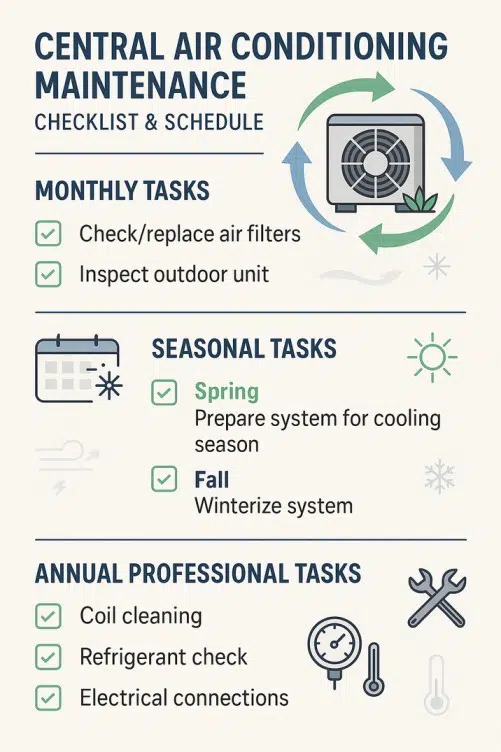
Monthly Homeowner Tasks:
- Inspect and Replace Air Filters: This is the single most important maintenance task you can perform. A dirty filter restricts airflow, reduces efficiency, and can lead to costly repairs. Check your filter every month and replace it if it’s dirty, or at least every three months.
- Inspect the Outdoor Unit: Keep the area around your condenser unit clear of debris, leaves, and overgrown vegetation. Ensure there is at least two feet of clearance on all sides to allow for proper airflow.
Seasonal Homeowner Tasks:
- Spring Preparation: Before you turn on your AC for the first time, make sure the outdoor unit is clean and free of any covers you may have placed on it for the winter. Check the condensate drain to ensure it is clear.
- Fall Winterization: After the cooling season is over, turn off the power to your outdoor unit to prevent it from turning on during a warm winter day. You can also cover the top of the unit to protect it from winter weather and debris.
Annual Professional Maintenance:
While there are many maintenance tasks that homeowners can perform themselves, there are some that should always be left to a qualified HVAC professional. An annual tune-up from a certified technician will ensure that your system is operating safely and efficiently. According to ACCA (Air Conditioning Contractors of America) and ASHRAE (American Society of Heating, Refrigerating and Air-Conditioning Engineers), a professional maintenance visit should include the following:
- Coil Cleaning: The evaporator and condenser coils can become dirty over time, which reduces their ability to transfer heat. A professional will have the tools and expertise to clean them safely and effectively.
- Refrigerant Check: An undercharged or overcharged system will not operate efficiently. A technician will check the refrigerant level and adjust it if necessary.
- Electrical Connections: Loose or faulty electrical connections can be a fire hazard and can damage your system. A technician will inspect and tighten all electrical connections.
- Lubrication: Moving parts that are not properly lubricated will create friction and increase energy consumption. A technician will lubricate all moving parts to ensure smooth operation.
- Condensate Drain Inspection: A clogged condensate drain can cause water damage and affect indoor humidity levels. A technician will inspect and clear the drain to ensure it is functioning properly.
Future Outlook: The Evolving Landscape of Home Cooling
The world of HVAC is constantly evolving, driven by advancements in technology, a growing emphasis on energy efficiency, and a heightened awareness of environmental concerns. For homeowners, staying informed about these trends is key to making smart decisions about their central air conditioning systems. The continued phase-out of older refrigerants and the introduction of new, more environmentally friendly alternatives will require homeowners to work with certified technicians who are trained in the latest technologies. The rise of smart thermostats and other connected home devices will offer new opportunities for homeowners to optimize their energy usage and control their home’s climate with unprecedented precision. As building codes and energy efficiency standards become more stringent, we can expect to see a new generation of ultra-efficient HVAC systems that are not only better for the environment but also more affordable to operate. By embracing these changes and committing to regular, professional maintenance, homeowners can ensure that their central air conditioning system remains a reliable, efficient, and sustainable asset for years to come.
Key Takeaways
- Regular central air maintenance can reduce energy consumption by 5-15% and cut repair costs by up to 50%.
- A well-maintained HVAC system can last 15-20 years, while a neglected system may fail in as little as 10 years.
- Homeowners should inspect and replace air filters monthly and keep the outdoor unit clear of debris.
- Annual professional maintenance should include coil cleaning, refrigerant checks, and electrical connection inspections.
References
- Air Conditioner Maintenance | Department of Energy
- 50 Percent of HVAC Repairs Are a Result of No Maintenance | Zack Hammonds
- Purchasing and Repairing Home Air-Conditioners or Heat Pumps | US EPA
- Heating, Ventilation and Air-Conditioning Systems, Part of Indoor Air Quality Design Tools for Schools | US EPA
- Studies Show HVAC Maintenance Pays for Itself | Design Comfort
- 2025 HVAC Repairs Cost: A Comprehensive Price Guide | Angi
- The True Price of Ignoring HVAC Maintenance | ClimaTemp
- Maintenance Checklist | ENERGY STAR
- Air Conditioner Maintenance | Department of Energy