

Sanitary sewer overflows (SSOs) represent a significant and costly challenge for homeowners and municipalities across the United States. The U.S. Environmental Protection Agency (EPA) estimates that between 23,000 and 75,000 SSOs occur annually, releasing billions of gallons of untreated wastewater into the environment [1]. A primary driver of these overflows is sewer line blockages, with approximately 47% of all blockages attributed to the buildup of fats, oils, and grease (FOG) [2]. The economic consequences are substantial, with an estimated $25 billion required annually for sewer maintenance and repairs related to FOG issues alone [3]. Understanding the root causes of these clogs—from FOG and tree root intrusion to aging infrastructure—is the first step toward effective prevention and management. This article provides a comprehensive analysis of sewer line blockages, offering expert guidance on prevention, detection, and repair for homeowners in Olivia, MN, and beyond.
The Broader Context: Why Sewer Line Health Matters
The reliability of our underground sewer infrastructure is often taken for granted until a failure occurs. A blockage in a sewer line is more than just a plumbing inconvenience; it is a critical event with far-reaching consequences for public health, environmental quality, and local economies. For homeowners, a sewer backup can lead to significant property damage, costly emergency repairs, and exposure to harmful pathogens. For municipalities like those in Renville County, MN, frequent sewer overflows strain public resources, increase operational costs, and can lead to regulatory penalties from agencies like the EPA. The environmental impact is equally severe, as untreated sewage contaminates local waterways, harms aquatic ecosystems, and can impact drinking water sources. As our infrastructure ages and weather patterns shift, the importance of proactive sewer line maintenance has never been greater. Northern Services, a trusted local provider serving the Olivia, MN area since 1981, is committed to helping homeowners and businesses understand and mitigate these risks through expert service and education.
Analysis: A Deep Dive into Sewer Line Blockages
Primary Causes of Sewer Line Blockages
Sewer line blockages are complex phenomena with multiple contributing factors. While many homeowners associate clogs with simple drain issues, the reality is that most significant blockages are caused by a combination of factors that build up over time. According to extensive research and municipal data, the leading causes of sewer line blockages can be categorized into several key areas.
Fats, Oils, and Grease (FOG) Deposition
The single largest contributor to sewer blockages is the improper disposal of fats, oils, and grease (FOG). While these substances may be liquid when warm, they quickly solidify as they cool in the sewer lines, creating thick, sticky deposits that trap other debris. Over time, these FOG deposits can grow into massive “fatbergs” that completely obstruct the flow of wastewater. Research published in the journal *Science of The Total Environment* highlights that approximately 50% of all sewer blockages in the USA are linked to FOG deposition [3]. This issue is particularly prevalent in areas with a high concentration of food service establishments, but residential kitchens are also a significant source.
Tree Root Intrusion
Tree roots are a natural and persistent threat to sewer lines. Roots are naturally drawn to the moisture and nutrients in sewer pipes, and they can infiltrate even the smallest cracks or loose joints. Once inside, they can grow into dense root balls that capture debris and cause severe blockages. The USDA Forest Service has reported that tree roots are responsible for over 50% of all sewer blockages in some areas [4]. Older homes with clay or concrete sewer lines are particularly vulnerable to tree root intrusion, as these materials are more prone to cracking over time.
Non-Flushable Materials
The flushing of non-flushable materials is another major cause of sewer blockages. Items such as wet wipes, paper towels, feminine hygiene products, and cotton swabs do not break down in the sewer system and can accumulate to form stubborn clogs. Even products marketed as “flushable” can contribute to blockages, as they often do not disintegrate as readily as toilet paper. A 2024 study in *Water Practice & Technology* analyzed open data from the City of Toronto and found that non-flushable materials were a significant factor in reported sewer blockages [5].

Cause,Percentage
FOG/Grease Buildup,47
Tree Root Intrusion,25
Non-Flushable Materials,12
Pipe Defects/ Aging,8
System Overload,5
Other Causes,3
Comprehensive Comparison of Blockage Causes and Solutions
| Blockage Cause | Frequency (%) | Typical Repair Cost | Prevention Method | Detection Method | Repair Complexity |
|---|---|---|---|---|---|
| FOG Buildup | 47% | $150-$500 | Proper grease disposal, grease traps | Video inspection, flow monitoring | Low to Moderate |
| Tree Root Intrusion | 25% | $300-$1,500 | Strategic tree planting, root barriers | Video inspection, acoustic sensors | Moderate to High |
| Non-Flushable Materials | 12% | $200-$800 | Education, bathroom trash cans | Video inspection, manual inspection | Low to Moderate |
| Pipe Defects/Aging | 8% | $800-$7,500 | Regular inspections, pipe lining | Video inspection, pressure testing | High |
| System Overload | 5% | $1,000-$5,000 | Flow management, system upgrades | Flow monitoring, pressure sensors | High |
| Other Causes | 3% | $100-$2,000 | Varies by cause | Comprehensive inspection | Variable |
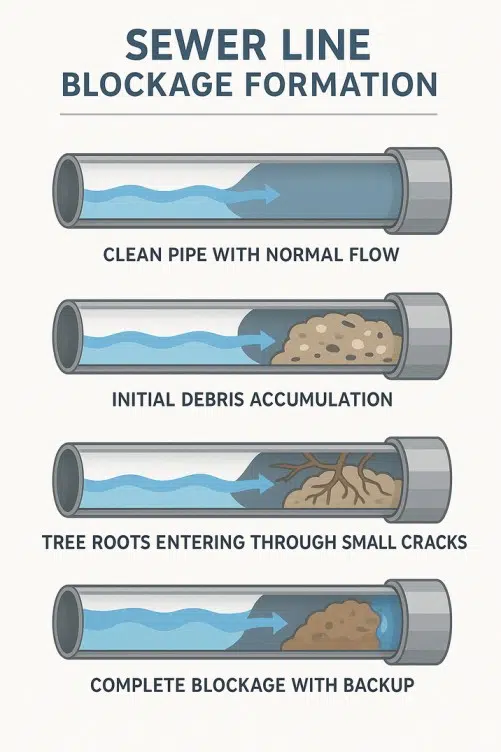
The Science Behind Blockage Formation
Understanding the scientific mechanisms behind sewer blockage formation is crucial for developing effective prevention strategies. FOG blockages, for instance, form through a complex process of cooling, solidification, and saponification. When hot grease enters the cooler sewer environment, it undergoes a phase change from liquid to solid. Over time, the grease can react with calcium and magnesium ions in the wastewater to form soap-like compounds that are even more difficult to remove. This process, known as saponification, can create rock-hard deposits that require specialized equipment to remove.
Tree root intrusion follows a different but equally predictable pattern. Roots are attracted to sewer lines by the moisture, warmth, and nutrients they contain. Even the smallest crack or loose joint can provide an entry point for microscopic root hairs. Once inside, the roots can grow rapidly in the nutrient-rich environment, expanding and creating larger openings in the pipe. The roots also act as a net, catching debris and accelerating the formation of blockages. Research has shown that certain tree species, particularly willows and poplars, are more aggressive in their root growth and pose a higher risk to sewer lines.
Regional Considerations for Minnesota Homeowners
Homeowners in Olivia, MN, and the broader Renville County area face unique challenges when it comes to sewer line maintenance. The region’s clay soil, while excellent for agriculture, can be problematic for sewer lines. Clay soil expands and contracts significantly with changes in moisture content, which can put stress on buried pipes and create cracks that allow root intrusion. The area’s cold winters also present challenges, as freeze-thaw cycles can exacerbate existing pipe damage and lead to more frequent blockages.
Additionally, the prevalence of mature trees in established neighborhoods means that tree root intrusion is a particularly common problem in the area. Northern Services has extensive experience dealing with these regional challenges and has developed specialized techniques for addressing the unique conditions found in central Minnesota. This local expertise is invaluable for homeowners who want to ensure that their sewer maintenance strategy is tailored to the specific risks and conditions of their area.
A recent case in Renville County, MN, illustrates the compounding nature of sewer blockages. A homeowner was experiencing slow drains and occasional backups for several months. A video inspection by Northern Services revealed a partial blockage caused by a combination of grease buildup and tree root intrusion from a large oak tree in the front yard. The grease had created a sticky surface that trapped debris and allowed the tree roots to gain a stronger foothold. The situation was resolved through high-pressure hydro-jetting to clear the grease and a root-cutting treatment to remove the intrusive roots. This case highlights the importance of regular inspections and proactive maintenance to address multiple contributing factors before they lead to a complete and costly overflow.
Economic Impact and Repair Costs
The financial consequences of sewer line blockages are substantial, affecting both individual homeowners and municipal budgets. Understanding the costs associated with sewer repairs is crucial for appreciating the value of preventive maintenance. The costs can vary widely depending on the cause, severity, and location of the blockage, as well as the chosen repair method.
Residential Repair and Replacement Costs
For homeowners, the cost of a sewer line repair can range from a few hundred dollars for a simple clog to tens of thousands of dollars for a full line replacement. According to 2025 data from HomeAdvisor, the average sewer line replacement cost is $3,319, with a typical range between $1,388 and $5,323 [6]. However, costs can escalate significantly if the sewer line is located under a concrete slab, with prices reaching $300-$350 per linear foot [7]. Tree root intrusion is a particularly costly issue, with repairs often ranging from $1,500 to $4,000 for a main drain line. These figures do not include the additional costs of landscaping repairs or the restoration of any property damage caused by a sewer backup.
Municipal and Environmental Costs
At the municipal level, the costs of managing and maintaining public sewer systems are immense. The EPA has estimated that municipalities across the U.S. spend billions of dollars annually on sewer maintenance and repairs. A significant portion of these costs is directly attributable to preventable blockages. For example, the city of Madison, WI, reported that the average residence paid $417 in 2023 for wastewater treatment services, a cost that is influenced by the overall health of the sewer system [8]. Furthermore, the environmental costs of sewer overflows, while difficult to quantify, are substantial. They include the costs of water quality monitoring, ecosystem restoration, and potential fines from regulatory agencies.

Repair Type,Average Cost,Min Cost,Max Cost
FOG Cleaning,325,150,500
Root Removal,900,300,1500
Pipe Repair,1650,800,2500
Full Replacement,5250,3000,7500
Emergency Service,1250,500,2000
Case Example: The High Cost of Neglect
A commercial property in the Minneapolis area provides a stark example of the financial risks of neglecting sewer maintenance. The property owner had deferred regular inspections and grease trap maintenance for several years. A massive FOG blockage eventually led to a major sewer overflow, causing extensive damage to the property and forcing the business to close for several days. The total cost of the incident, including emergency plumbing services, property restoration, and lost revenue, exceeded $50,000. This case underscores the fact that proactive maintenance is not just a best practice but a critical investment in protecting property and ensuring business continuity.
Prevention Strategies and Best Practices
The most effective way to manage the risks and costs associated with sewer line blockages is through a proactive approach to prevention. By implementing a combination of best practices at home and engaging in regular professional maintenance, homeowners can significantly reduce their risk of experiencing a costly sewer overflow. The following strategies are based on recommendations from the EPA, municipal water authorities, and industry experts.
At-Home Prevention: A First Line of Defense
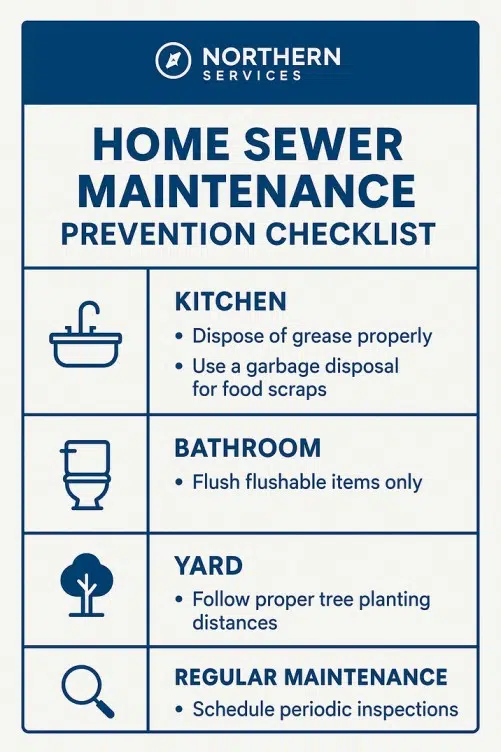
Effective sewer maintenance begins in the home. Simple changes in daily habits can have a major impact on the health of your sewer lines. The most critical at-home prevention measures include:
- Proper Grease Disposal: Never pour fats, oils, or grease down the drain. Instead, collect them in a container and dispose of them in the trash once they have solidified.
- Mindful Flushing: Only flush human waste and toilet paper. All other items, including so-called “flushable” wipes, should be disposed of in the trash.
- Use of Drain Screens: Install drain screens in sinks, showers, and tubs to catch hair, food particles, and other debris before they enter the sewer lines.
Proactive Maintenance: The Role of Professionals
While at-home practices are essential, they are not a substitute for professional maintenance. Regular inspections and cleanings by a qualified plumber are the best way to identify and address potential problems before they escalate. Key professional maintenance services include:
- Video Camera Inspections: A video inspection can provide a detailed view of the inside of your sewer lines, allowing for the early detection of cracks, root intrusion, and debris buildup.
- High-Pressure Hydro-Jetting: Hydro-jetting is a highly effective method for cleaning sewer lines and removing even the most stubborn blockages, including grease and tree roots.
- Grease Trap Maintenance: For commercial properties, regular grease trap cleaning and maintenance are essential for preventing FOG-related blockages.

Prevention Method,Effectiveness %,Annual Cost $
Regular Inspections,85,200
Grease Trap Maintenance,78,150
Proper Tree Planting,92,50
Drain Education,65,25
Flow Monitoring,88,300
Case Example: A Community-Wide Prevention Program
A successful FOG management program in a major U.S. city demonstrates the power of a comprehensive prevention strategy. The city implemented a program that combined public education, mandatory grease trap inspections for restaurants, and a rebate program for homeowners who installed new, efficient plumbing fixtures. Within five years, the city reported a 40% reduction in FOG-related sewer blockages and a significant decrease in municipal maintenance costs. This case illustrates that a combination of public awareness and proactive maintenance can lead to substantial improvements in sewer system performance.
Detection and Early Warning Systems
In addition to preventive maintenance, modern technology offers a range of solutions for the early detection of potential sewer line problems. By leveraging these technologies, homeowners and municipalities can identify and address issues before they lead to a full-blown blockage or overflow. The use of advanced detection and monitoring systems is a key component of a modern, proactive approach to sewer management.
The Power of Video Inspection
Video camera inspection is one of the most valuable tools in the plumber’s arsenal. A flexible, waterproof camera is inserted into the sewer line, providing a real-time, high-resolution view of the pipe’s interior. This allows for the precise identification of a wide range of issues, including:
- Cracks and breaks in the pipe
- The extent and location of tree root intrusion
- The severity of grease and debris buildup
- The presence of sags or bellies in the pipe
By providing a clear and accurate diagnosis, video inspections enable targeted repairs and eliminate the guesswork that was once common in sewer line maintenance.
Advanced Monitoring and Sensor Technology
At the municipal level, a new generation of sensor technology is revolutionizing sewer system management. Flow monitors, acoustic sensors, and even AI-powered predictive models are being used to provide real-time data on the performance of sewer networks. A 2024 study in the journal *Water Research* explored the use of data-driven models to predict and prevent sewer overflows in combined sewer systems [9]. These systems can detect subtle changes in flow patterns that may indicate a developing blockage, allowing for preemptive maintenance before an overflow occurs. While these technologies are primarily used by municipalities, the data they generate can also help to identify areas with a high risk of residential backups, allowing for more targeted public education and outreach.
Key Performance Indicators for Sewer Health
The performance of a sewer system can be measured by a range of key performance indicators (KPIs). For homeowners, the most obvious KPI is the frequency of slow drains or backups. However, municipalities track a much wider range of metrics to assess the health of their sewer networks. The NYC State of the Sewers report for 2024, for example, includes data on the number of sewer backups per 100 miles of pipe, the volume of combined sewer overflows, and the response time for maintenance crews [10]. By tracking these KPIs over time, municipalities can identify trends, measure the effectiveness of their maintenance programs, and make data-driven decisions about infrastructure investments.
Case Example: Predictive Maintenance in Action
A large water utility in the United States recently implemented a predictive maintenance program based on a network of acoustic sensors. The sensors were placed in manholes throughout the sewer system and were trained to detect the acoustic signature of a developing blockage. In the first year of the program, the utility reported a 30% reduction in emergency call-outs and a significant decrease in the number of sewer overflows. The program allowed the utility to shift from a reactive to a proactive maintenance model, saving money and improving service for its customers. This case demonstrates the transformative potential of advanced sensor technology in the management of sewer systems.
Action Plan for Homeowners
Protecting your home from the risks of a sewer line blockage requires a proactive and informed approach. The following action plan provides a clear, step-by-step guide for homeowners to follow, from simple at-home practices to knowing when to call in the professionals at Northern Services.
Immediate At-Home Actions:
- Implement a strict “no grease down the drain” policy in your kitchen.
- Place trash cans in all bathrooms and educate your family about what not to flush.
- Install drain screens in all sinks, showers, and tubs.
- If you have a garbage disposal, use it sparingly and always run cold water for at least 30 seconds after use.
Annual and Long-Term Planning:
- Schedule a professional video camera inspection of your sewer lines every 1-2 years, especially if you have an older home or large trees on your property.
- If you are planning new landscaping, consult with a professional to ensure that trees are planted a safe distance from your sewer lines.
- Consider a high-pressure hydro-jetting service every 3-5 years as a preventive cleaning measure.
When to Call Northern Services:
It is important to recognize the early warning signs of a developing sewer line problem. Contact Northern Services immediately if you experience any of the following:
- Multiple slow drains in your home
- Gurgling sounds coming from your drains or toilets
- Unpleasant odors coming from your drains
- Water backing up in your shower or tub when you flush the toilet
Early intervention is the key to preventing a minor issue from becoming a major and costly emergency.
Future Outlook: The Evolution of Sewer Management
The field of sewer management is constantly evolving, driven by technological innovation, regulatory changes, and a growing awareness of the importance of our underground infrastructure. In the coming years, we can expect to see several key trends that will shape the future of sewer maintenance. The continued development of AI-powered predictive maintenance tools will allow for even more precise and proactive management of sewer networks. New, more durable pipe materials will reduce the risk of cracks and root intrusion. And a growing emphasis on green infrastructure and sustainable water management will lead to new approaches to wastewater treatment and reuse. For homeowners, these trends will mean more reliable sewer service, lower long-term costs, and a healthier environment. As a forward-thinking company, Northern Services is committed to staying at the forefront of these developments and bringing the latest and most effective solutions to our customers in Olivia, MN, and beyond.
Key Takeaways
- Sewer line blockages are a major national problem, with up to 75,000 overflows occurring annually in the U.S.
- Fats, oils, and grease (FOG) are the leading cause of blockages, responsible for approximately 47% of all incidents.
- The average cost of a sewer line replacement can exceed $3,000, but proactive maintenance can save homeowners thousands of dollars in the long run.
- A combination of at-home best practices and regular professional inspections is the most effective strategy for preventing sewer line blockages.
References
- U.S. Environmental Protection Agency. (2025, April 22). *Sanitary Sewer Overflows (SSOs)*.
- Wastewater Digest. (2024, February 1). *What is FOG (fats, oils and grease)?*
- Science of The Total Environment. (2023, December 15). *Tackling fat, oil, and grease (FOG) build-up in sewers: Insights into…*
- USDA Forest Service. (n.d.). *Tree root intrusion in sewer systems: A review of extent and costs*.
- IWA Publishing. (2024, August 21). *Analysis of sewer blockage causes using open data*.
- HomeAdvisor. (2025, June 21). *How Much Does It Cost to Replace a Sewer Line? [2025 Data]*.
- This Old House. (n.d.). *How Much Does a Sewer Line Replacement Cost?*
- Madison Metropolitan Sewerage District. (n.d.). *Service Charges*.
- Water Research. (2024, June 15). *The effect of green infrastructure on resilience performance in combined sewer systems under climate change*.
- NYC Department of Environmental Protection. (2024). *State of the Sewers 2024*.