


Modern buildings can achieve significant energy savings and operational improvements by integrating a Building Management System (BMS) with their HVAC infrastructure. The U.S. Department of Energy reports that high-performance control systems can reduce HVAC energy consumption in commercial buildings by up to 30% [1]. This not only translates to substantial cost savings but also represents a major step towards greater sustainability and reduced environmental impact. A well-implemented BMS acts as the central nervous system of a building, orchestrating heating, cooling, ventilation, and other critical systems to achieve optimal comfort and peak energy efficiency. For facility managers and building owners, understanding the capabilities and benefits of a BMS is essential for maximizing building performance and achieving long-term operational goals.
The Evolving Role of Building Management Systems in Modern Facilities
The concept of centralized building control has evolved dramatically from simple thermostats to sophisticated, data-driven platforms that are integral to the operation of modern commercial and industrial facilities. Initially developed to manage large, complex HVAC systems in skyscrapers and industrial plants, Building Management Systems (BMS) have become increasingly accessible and essential for a wide range of building types and sizes. The primary driver for this evolution has been the growing demand for energy efficiency, driven by rising energy costs, stricter environmental regulations, and a greater awareness of corporate social responsibility. The U.S. Department of Energy’s research underscores the significant impact of these systems, highlighting that nationwide adoption of advanced building controls could reduce total U.S. energy consumption by over 3% [1], a figure comparable to the combined energy output of all U.S. solar and hydropower in 2021.
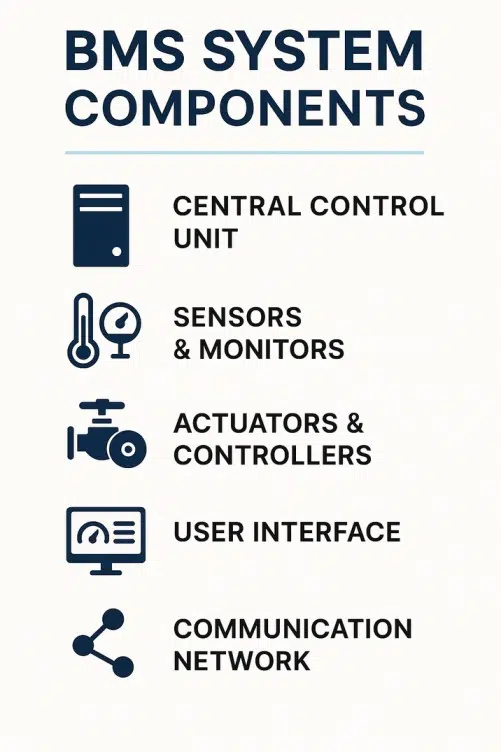
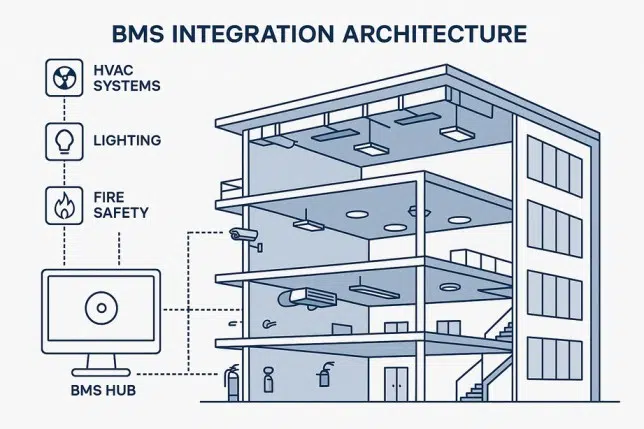
Beyond energy savings, the role of a BMS has expanded to encompass a broader range of building functions, including lighting control, security systems, fire safety, and even water management. This integration of disparate systems into a single, cohesive platform provides facility managers with unprecedented visibility and control over their buildings’ operations. The ability to monitor and manage these systems from a central interface not only improves operational efficiency but also enhances occupant comfort and safety. As the technology continues to advance, with the integration of artificial intelligence (AI) and machine learning, the capabilities of BMS are poised to expand even further, enabling predictive maintenance, automated fault detection, and even more granular control over building environments. This evolution is transforming the way buildings are managed, moving from a reactive, manual approach to a proactive, data-driven strategy that optimizes performance across all aspects of a facility’s operation.
Core Benefits of BMS in HVAC Operations
The integration of a Building Management System (BMS) with HVAC operations offers a multitude of benefits that extend beyond simple temperature control. These systems provide a holistic approach to building management, delivering significant improvements in energy efficiency, operational effectiveness, and occupant comfort. The most widely recognized benefit is the substantial reduction in energy consumption. As confirmed by the U.S. Department of Energy, a well-implemented BMS can reduce HVAC energy use by as much as 30% in commercial buildings [1]. This is achieved through a combination of automated control strategies, real-time monitoring, and data-driven optimization. For example, a BMS can automatically adjust temperature setpoints based on occupancy schedules, dim or turn off lights in unoccupied areas, and optimize the operation of chillers and boilers to match the building’s actual heating and cooling loads. These automated actions eliminate the manual guesswork and inefficiencies that are common in buildings without a centralized control system, leading to immediate and measurable energy savings.
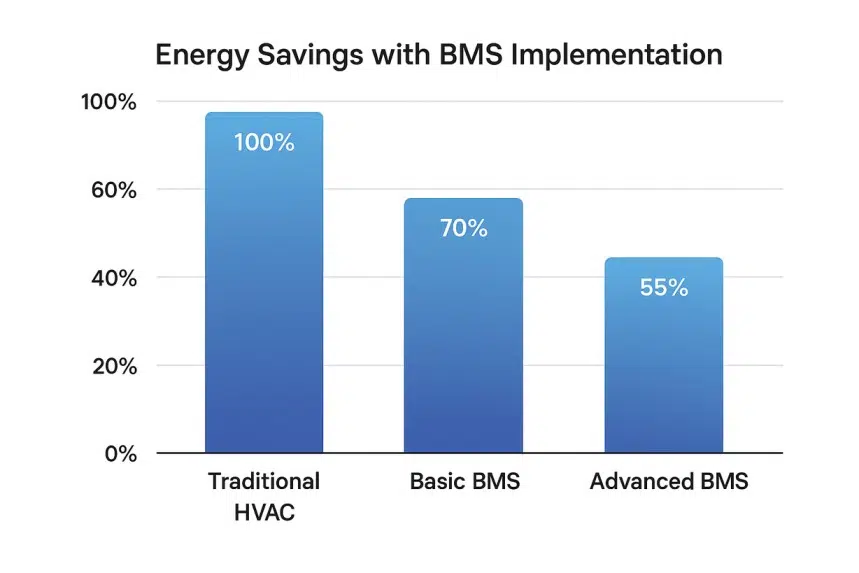
label,value
Traditional HVAC,100
Basic BMS,70
Advanced BMS,55
Key Benefits of BMS Integration
| Benefit | Description | Impact |
|---|---|---|
| Energy Efficiency | Optimizes HVAC and lighting systems based on real-time data and occupancy. | Reduces energy consumption by up to 30%, leading to significant cost savings. |
| Centralized Control | Provides a single interface to monitor and manage all building systems. | Improves operational efficiency and simplifies facility management. |
| Improved Occupant Comfort | Maintains consistent temperature, humidity, and air quality levels. | Enhances the productivity and well-being of building occupants. |
| Predictive Maintenance | Monitors equipment performance and identifies potential issues before they fail. | Reduces maintenance costs and minimizes equipment downtime. |
| Enhanced Safety and Security | Integrates with fire safety, access control, and surveillance systems. | Improves building security and ensures a rapid response to emergencies. |
Case Study: Mid-Sized Office Building Retrofit
A 10-story, 100,000-square-foot office building in a major metropolitan area was struggling with high energy bills and frequent occupant complaints about comfort. The building’s HVAC system was over 20 years old and lacked any form of centralized control. After a comprehensive energy audit, the building owner decided to invest in a BMS retrofit. The project involved installing new sensors, controllers, and a central management platform to control the existing HVAC equipment. The total cost of the project was approximately $250,000, or $2.50 per square foot. Within the first year of operation, the new BMS reduced the building’s energy consumption by 25%, resulting in annual savings of over $80,000. The payback period for the investment was just over three years. In addition to the financial benefits, the BMS also significantly improved occupant comfort, with a 50% reduction in temperature-related complaints. This case study illustrates the compelling return on investment that a BMS can deliver, even in older buildings with legacy equipment.
Navigating the Challenges of BMS Implementation
While the benefits of a Building Management System (BMS) are clear, the path to successful implementation is not without its challenges. Facility managers and building owners must navigate a complex landscape of technical, financial, and operational hurdles to realize the full potential of their investment. One of the most significant barriers is the initial cost of deployment. A comprehensive BMS installation can represent a substantial capital expenditure, with costs ranging from $2.50 to $7.00 per square foot, depending on the size and complexity of the building [2]. These costs include not only the hardware and software but also the labor-intensive process of installation, configuration, and commissioning. While the long-term return on investment is often compelling, the upfront cost can be a significant deterrent for many organizations, particularly those with limited capital budgets.

year,savings
0,0
1,-100
2,-10
3,90
4,230
5,350
Key Implementation Challenges
| Challenge | Description | Mitigation Strategy |
|---|---|---|
| High Initial Cost | Significant capital investment required for hardware, software, and installation. | Conduct a thorough ROI analysis, explore financing options, and consider a phased implementation approach. |
| System Integration | Ensuring seamless communication between different manufacturers and legacy systems. | Select open-protocol systems, work with experienced integrators, and conduct thorough compatibility testing. |
| Cybersecurity Risks | Internet-connected systems are vulnerable to cyberattacks that can disrupt operations. | Implement a multi-layered security strategy, including firewalls, access controls, and regular security audits. |
| Data Management | Collecting, analyzing, and acting on the vast amounts of data generated by a BMS. | Invest in data visualization and analytics tools, and train staff to interpret and use the data effectively. |
| Lack of Skilled Personnel | Finding and retaining staff with the expertise to manage and maintain a complex BMS. | Provide ongoing training for in-house staff, and consider outsourcing management to a specialized service provider. |
Cybersecurity: A Critical Consideration
As building systems become increasingly interconnected, cybersecurity has emerged as a critical concern for facility managers. A recent study by Claroty found that 75% of organizations have building management systems affected by known exploited vulnerabilities [3]. A successful cyberattack on a BMS could have devastating consequences, ranging from a loss of environmental control to a complete shutdown of building operations. In a worst-case scenario, a malicious actor could even use a compromised BMS to cause physical damage to equipment or endanger the safety of occupants. To mitigate these risks, it is essential to adopt a proactive and multi-layered approach to cybersecurity. This includes implementing robust access controls, encrypting all network communications, and regularly patching and updating all system components. It is also crucial to conduct regular security audits and vulnerability assessments to identify and address potential weaknesses before they can be exploited. By making cybersecurity a top priority, building owners can protect their investment and ensure the safe and reliable operation of their facilities.
Action Plan for BMS Implementation
Implementing a Building Management System (BMS) is a strategic investment that requires careful planning and execution. To ensure a successful project, it is essential to follow a structured approach that covers all phases of the implementation lifecycle, from initial assessment to ongoing optimization. The following checklist provides a step-by-step guide for facility managers and building owners who are considering a BMS implementation.
BMS Implementation Checklist
- 1. Conduct a Comprehensive Assessment: Before embarking on a BMS project, it is crucial to conduct a thorough assessment of your building’s existing infrastructure, operational needs, and energy consumption patterns. This assessment should identify areas for improvement, define clear project goals, and establish a baseline for measuring success.
- 2. Develop a Detailed Project Plan: Based on the findings of your assessment, develop a detailed project plan that outlines the scope, schedule, and budget for the implementation. The plan should also identify key stakeholders, define roles and responsibilities, and establish a clear communication strategy.
- 3. Select the Right Technology and Partners: Choosing the right BMS technology and implementation partner is critical to the success of your project. Look for open-protocol systems that offer flexibility and scalability, and select a partner with a proven track record of successful BMS implementations in similar facilities.
- 4. Prioritize Cybersecurity: From the outset of the project, make cybersecurity a top priority. Work with your implementation partner to design and implement a multi-layered security strategy that protects your system from cyber threats.
- 5. Ensure Proper Commissioning and Training: Once the system is installed, it is essential to conduct thorough commissioning to ensure that all components are functioning correctly and that the system is meeting your operational requirements. It is also crucial to provide comprehensive training for your staff to ensure that they have the skills to operate and maintain the system effectively.
- 6. Monitor, Analyze, and Optimize: A BMS is not a “set it and forget it” solution. To realize the full benefits of your investment, you must continuously monitor system performance, analyze the data it generates, and use that information to optimize your building’s operations.
The Future of Building Management: AI, IoT, and the Cloud
The field of building management is on the cusp of a major transformation, driven by the convergence of artificial intelligence (AI), the Internet of Things (IoT), and cloud computing. These technologies are enabling a new generation of smart building solutions that are more intelligent, more efficient, and more responsive to the needs of occupants. AI and machine learning algorithms are being used to analyze the vast amounts of data generated by building systems, enabling predictive maintenance, automated fault detection, and real-time optimization of energy consumption. IoT sensors are becoming smaller, cheaper, and more ubiquitous, providing a more granular view of building conditions and enabling more precise control over environmental systems. Cloud-based platforms are making it easier and more cost-effective to deploy and manage BMS, providing remote access to building data and enabling new services and applications.
As these technologies continue to mature, we can expect to see even more innovative and powerful building management solutions emerge. We will see buildings that can learn and adapt to the preferences of their occupants, that can predict and prevent equipment failures before they occur, and that can interact with the electric grid to help balance supply and demand. The future of building management is a future of intelligent, connected, and sustainable buildings that are not only more efficient to operate but also healthier and more comfortable for the people who live and work in them.
Advanced BMS Technologies and Integration Strategies
The evolution of Building Management Systems has been marked by the continuous integration of advanced technologies that enhance their capabilities and expand their scope of control. Modern BMS platforms leverage sophisticated algorithms, machine learning, and artificial intelligence to deliver unprecedented levels of automation and optimization. These advanced systems go beyond simple scheduling and setpoint control to provide predictive analytics, fault detection and diagnostics, and adaptive control strategies that continuously improve building performance. The integration of IoT sensors throughout a building creates a comprehensive network of data collection points that provide real-time insights into every aspect of building operation, from energy consumption patterns to occupant behavior and equipment performance.
One of the most significant advancements in BMS technology is the development of cloud-based platforms that enable remote monitoring and management of building systems. These platforms provide facility managers with the ability to access and control their buildings from anywhere in the world, using web-based interfaces or mobile applications. Cloud-based BMS also offer enhanced data storage and analytics capabilities, allowing for the collection and analysis of vast amounts of historical data to identify trends, optimize performance, and predict future maintenance needs. The scalability of cloud platforms makes them particularly attractive for organizations with multiple buildings or facilities, as they can manage all their properties from a single, centralized interface.
Integration with Smart Grid Technologies
As the electric grid becomes increasingly intelligent and responsive, Building Management Systems are playing a crucial role in enabling buildings to participate in demand response programs and grid stabilization efforts. Smart grid integration allows buildings to automatically adjust their energy consumption in response to grid conditions, peak demand periods, or fluctuating energy prices. This capability not only helps building owners reduce their energy costs but also contributes to the overall stability and efficiency of the electric grid. For example, during periods of high demand, a BMS can automatically reduce lighting levels, adjust temperature setpoints, or shift the operation of energy-intensive equipment to off-peak hours. These actions can be performed transparently to occupants, ensuring that comfort levels are maintained while reducing the building’s impact on the grid.
The integration of renewable energy sources, such as solar panels and wind turbines, with BMS creates additional opportunities for energy optimization and cost savings. A BMS can monitor the output of renewable energy systems and automatically adjust building operations to maximize the use of clean, on-site generated power. For instance, when solar panels are producing excess electricity, the BMS can increase the operation of energy storage systems, pre-cool the building to reduce afternoon cooling loads, or schedule energy-intensive tasks such as water heating or equipment maintenance. This intelligent coordination of renewable energy generation and building energy consumption can significantly reduce a building’s reliance on grid electricity and lower its overall carbon footprint.
Selecting and Implementing the Right BMS Solution
The selection of an appropriate Building Management System is a critical decision that can have long-lasting implications for a building’s performance, operational costs, and occupant satisfaction. The process begins with a comprehensive assessment of the building’s current systems, operational requirements, and future growth plans. This assessment should evaluate the existing HVAC infrastructure, lighting systems, security and fire safety equipment, and any other building systems that could benefit from centralized control and monitoring. It is also important to consider the building’s occupancy patterns, energy consumption profiles, and any specific operational challenges or goals that the BMS should address.
When evaluating BMS options, it is essential to prioritize systems that use open communication protocols, such as BACnet, LonWorks, or Modbus. Open protocols ensure that the BMS can communicate with equipment from multiple manufacturers, providing greater flexibility in equipment selection and reducing the risk of vendor lock-in. This interoperability is particularly important in retrofit applications, where the BMS must integrate with existing equipment from various manufacturers. Additionally, open protocols facilitate future system expansions and upgrades, as new equipment can be easily added to the system without requiring proprietary interfaces or costly integration work.
Phased Implementation Approach
For many organizations, a phased implementation approach can be an effective strategy for managing the cost and complexity of a BMS deployment. This approach allows building owners to prioritize the most critical systems and areas for initial implementation, while planning for future phases that will expand the system’s scope and capabilities. A typical phased approach might begin with the HVAC system, as this typically represents the largest opportunity for energy savings and operational improvements. Subsequent phases could include lighting control, security systems, and other building systems. This approach not only spreads the capital investment over time but also allows the organization to gain experience with the system and refine their operational procedures before expanding to additional systems.
The success of a phased implementation depends on careful planning and the selection of a BMS platform that can accommodate future expansion. The initial system architecture should be designed with scalability in mind, ensuring that additional controllers, sensors, and devices can be easily integrated as the system grows. It is also important to establish clear performance metrics and success criteria for each phase, allowing the organization to measure the benefits of the system and make informed decisions about future investments. Regular reviews and assessments should be conducted to evaluate system performance, identify opportunities for optimization, and plan for subsequent phases of the implementation.
Maintenance and Optimization Strategies
The long-term success of a Building Management System depends not only on proper installation and commissioning but also on ongoing maintenance and optimization efforts. A BMS generates vast amounts of data about building operations, equipment performance, and energy consumption, but this data is only valuable if it is properly analyzed and acted upon. Effective maintenance and optimization strategies require a combination of automated monitoring, regular system reviews, and proactive maintenance practices that ensure the system continues to operate at peak performance throughout its lifecycle.
Predictive maintenance is one of the most valuable capabilities of a modern BMS, as it can identify potential equipment failures before they occur, allowing for planned maintenance that minimizes downtime and reduces repair costs. By continuously monitoring equipment parameters such as temperature, pressure, vibration, and energy consumption, a BMS can detect subtle changes that may indicate developing problems. For example, a gradual increase in the energy consumption of a chiller may indicate fouling of the heat exchanger tubes, while unusual vibration patterns in a fan may suggest bearing wear or imbalance. By identifying these issues early, facility managers can schedule maintenance during planned downtime, order replacement parts in advance, and avoid the higher costs and disruptions associated with emergency repairs.
Continuous Commissioning and Performance Monitoring
Continuous commissioning is an ongoing process that ensures building systems continue to operate as designed and deliver the expected performance benefits. Unlike traditional commissioning, which is typically performed only during the initial installation and startup of a system, continuous commissioning uses the data and analytics capabilities of a BMS to continuously monitor and optimize system performance. This process involves regular analysis of system data to identify deviations from expected performance, investigate the root causes of any issues, and implement corrective actions to restore optimal operation.
The continuous commissioning process should include regular reviews of energy consumption patterns, equipment performance metrics, and occupant comfort indicators. These reviews can identify opportunities for further optimization, such as adjusting control sequences, updating setpoints, or modifying operating schedules. For example, analysis of historical data may reveal that certain areas of a building are consistently over-cooled or over-heated, suggesting that temperature setpoints or zone controls could be adjusted to improve comfort and reduce energy consumption. Similarly, analysis of equipment runtime data may identify opportunities to optimize start-up and shutdown sequences, reduce unnecessary equipment operation, or improve load balancing across multiple units.
Key Takeaways
- A Building Management System (BMS) can reduce HVAC energy consumption by up to 30%, delivering significant cost savings and environmental benefits.
- The benefits of a BMS extend beyond energy efficiency to include improved occupant comfort, enhanced operational effectiveness, and increased safety and security.
- The initial cost of a BMS can be a significant barrier, but the return on investment is often compelling, with payback periods of 2-3 years.
- Cybersecurity is a critical consideration for any BMS implementation, and a multi-layered security strategy is essential to protect against cyber threats.
- The future of building management is being shaped by AI, IoT, and cloud computing, which are enabling a new generation of intelligent and sustainable building solutions.