


Water heater leaks represent one of the most costly and preventable home maintenance emergencies facing American homeowners today. With water damage claims accounting for 24% of all homeowners insurance claims and averaging $12,514 per incident[1], understanding how to identify, prevent, and respond to water heater leaks has become essential knowledge for property owners. Despite these significant financial risks, fewer than 20% of homeowners take proactive preventive measures[1], creating a substantial gap between awareness and action that this comprehensive guide aims to address.
The urgency of this issue extends beyond immediate repair costs. Water heater failures can cause extensive structural damage, promote mold growth, and create safety hazards including carbon monoxide exposure in gas units. Government safety agencies, including the National Board of Boiler and Pressure Vessel Inspectors and state departments of commerce, have established clear maintenance protocols that can extend water heater lifespan from the typical 8-13 years to maximum efficiency while preventing catastrophic failures[2][3].
Understanding the Scale of Water Heater-Related Water Damage
The financial impact of water heater failures extends far beyond the cost of unit replacement. According to comprehensive analysis by the Insurance Information Institute, water damage claims including those from water heater failures represent the third-most frequently filed insurance claim for property damage in the United States[1]. This frequency translates to approximately 1 in 60 insured homes filing a water damage claim annually, with many of these incidents directly attributable to preventable water heater maintenance issues.
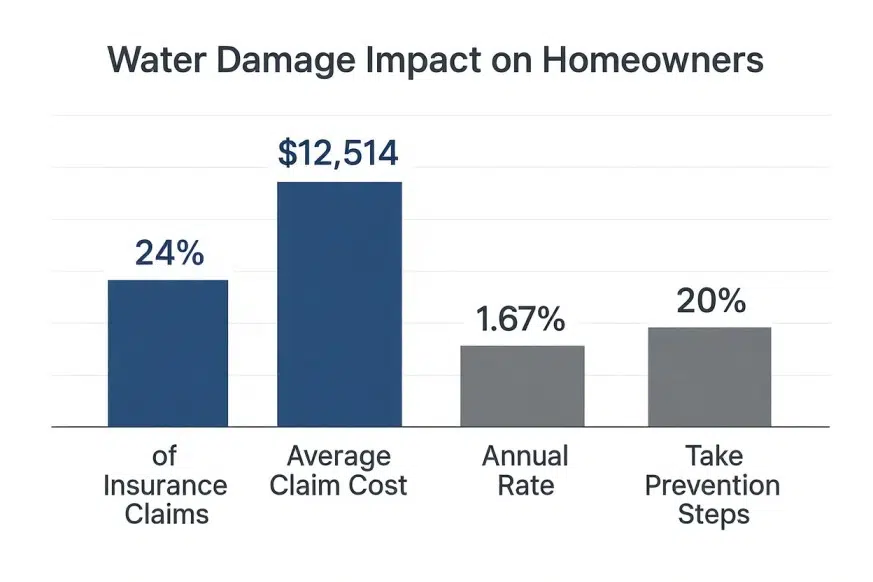
Category,Percentage,Description
Water Damage Claims,24,Percentage of all homeowners insurance claims
Average Claim Cost,12514,Average household water damage claim in dollars
Annual Claim Rate,1.67,Percentage of homes filing water damage claims annually
Preventive Maintenance,20,Percentage of homeowners taking preventive steps
The data reveals a concerning prevention gap that directly correlates with increased claim frequency. Industry estimates suggest that 20-30% of water heater failures result from improper installation or inadequate maintenance compliance with building codes[4]. This statistic becomes particularly significant when considering that emergency or anticipated water heater failures drive approximately 75% of water heater replacements in existing homes, often at premium costs due to the urgent nature of the replacement[5].
Insurance coverage limitations compound these financial risks. Standard homeowners insurance policies typically exclude damage from gradual leaks, poor maintenance, or flooding from external sources. Claims may be denied if water damage is deemed caused by homeowner negligence, including failure to perform reasonable maintenance or address known issues promptly[1]. This coverage gap makes preventive maintenance not just a matter of convenience, but a critical financial protection strategy.
Identifying Water Heater Leak Warning Signs and Root Causes
Early identification of water heater problems can prevent minor issues from escalating into major failures requiring emergency replacement. Government safety experts from the Texas Office of Public Insurance Counsel have identified five critical warning signs that indicate potential water heater failure[3]. Understanding these indicators allows homeowners to take proactive measures before catastrophic failure occurs.
Age-Related Failure Patterns
Water heater age represents the primary predictor of failure risk. Both electric and gas water heaters typically maintain optimal performance for 8-12 years under normal operating conditions[2][3]. However, this lifespan can vary significantly based on water quality, usage patterns, and maintenance consistency. Hard water areas may experience reduced lifespans due to accelerated mineral buildup, while proper maintenance can extend operational life toward the upper range of expectations.
Determining water heater age requires locating the manufacturer’s label, typically found on the upper portion of the tank. If installation dates are not clearly marked, homeowners can research the manufacturer and serial number online to determine manufacturing date. This information becomes critical for insurance claims and replacement planning, as units approaching or exceeding their expected lifespan may not be covered for certain types of failures.
Physical Leak Indicators and Assessment
Visible water leakage represents the most obvious sign of water heater problems, but proper assessment requires understanding the difference between minor maintenance issues and major system failures. Water pooling under the unit may indicate tank failure requiring immediate replacement, but it could also result from loose valve connections or improperly closed drain valves—issues that can be resolved through simple adjustments[3].
| Leak Location | Potential Cause | Severity Level | Recommended Action |
|---|---|---|---|
| Tank bottom | Internal tank corrosion | Critical | Immediate replacement required |
| T&P valve discharge | Excessive pressure/temperature | High | Professional inspection needed |
| Drain valve | Loose connection or worn valve | Moderate | Tighten or replace valve |
| Pipe connections | Loose fittings | Low | Tighten connections |
| Anode rod port | Corroded anode rod | Moderate | Replace anode rod |
The Texas Office of Public Insurance Counsel emphasizes the importance of using flashlights to inspect areas around and under the water heater, as early-stage leaks may not be immediately visible[3]. Checking surrounding walls for dampness or discoloration can reveal slow leaks that have not yet created obvious pooling. This thorough inspection approach can identify problems weeks or months before they become emergency situations.
Performance Degradation Symptoms
Inconsistent water temperature and pressure often indicate sediment buildup within the tank, a condition that reduces both efficiency and available hot water capacity. When calcium carbonate and other minerals settle at the tank bottom, they create an insulating layer that forces the heating element to work harder while reducing the effective volume available for hot water storage[2]. This condition manifests as shorter hot water duration during showers and increased energy consumption.
Sediment buildup can be addressed through regular tank draining and flushing procedures, but excessive accumulation may require professional intervention. The National Board of Boiler and Pressure Vessel Inspectors recommends draining water heater tanks 2-4 times annually, with increased frequency in hard water areas where mineral content accelerates sediment formation[2]. Water appearing rusty or brown during initial draining is normal and indicates successful sediment removal.
Auditory Warning Signs
Unusual sounds from water heaters often indicate internal problems requiring immediate attention. Hissing, popping, banging, or rumbling noises typically result from sediment buildup causing uneven heating, steam formation, or thermal expansion issues[3]. These sounds may intensify during heating cycles and can indicate conditions that stress tank integrity and reduce operational lifespan.
Popping or crackling sounds specifically indicate water trapped beneath sediment layers rapidly converting to steam during heating cycles. This condition creates pressure fluctuations that can accelerate tank wear and increase the risk of catastrophic failure. Professional evaluation becomes essential when these sounds persist despite sediment removal efforts, as they may indicate internal tank damage or heating element problems.
Water Quality Changes
Rust-colored or discolored water from hot water taps signals advanced corrosion within the water heater tank. This condition indicates that the protective coating inside the tank has deteriorated, allowing direct contact between water and steel tank walls[3]. Once this corrosion process begins, it typically accelerates rapidly, making water heater replacement necessary within months rather than years.
The sacrificial anode rod system is designed to prevent this corrosion through electrochemical protection. When the magnesium or aluminum anode rod completely corrodes, the electrochemical process begins attacking the steel tank itself[2]. Regular anode rod replacement every 2-5 years can prevent this corrosion cascade, but once tank corrosion begins producing discolored water, replacement becomes the only viable solution.
Comprehensive Water Heater Maintenance Protocols
Systematic maintenance represents the most effective strategy for preventing water heater leaks and extending operational lifespan. Government safety agencies and industry experts have established evidence-based maintenance schedules that address both routine homeowner tasks and professional service requirements. Following these protocols can prevent the majority of premature failures while ensuring optimal energy efficiency and safety compliance.
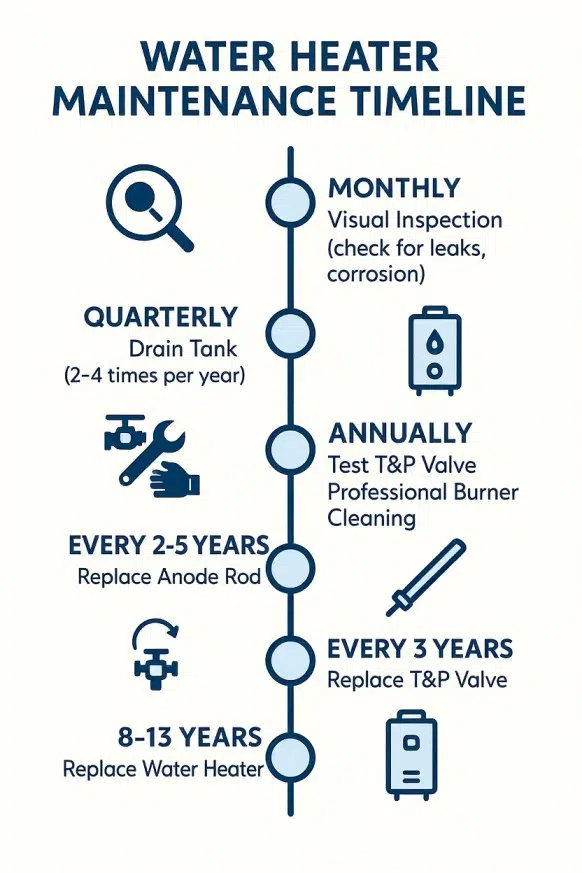
The maintenance timeline shows: Monthly visual inspection for leaks and corrosion; Quarterly tank draining (2-4 times per year); Annual T&P valve testing and professional burner cleaning; Anode rod replacement every 2-5 years; T&P valve replacement every 3 years; Complete water heater replacement at 8-13 years.
Monthly Visual Inspection Procedures
Monthly visual inspections form the foundation of effective water heater maintenance, allowing early detection of problems before they escalate into emergency situations. The Texas Office of Public Insurance Counsel recommends using flashlights to thoroughly examine areas around and under the water heater, as early-stage leaks may not create obvious pooling[3]. This inspection should include checking the floor and surrounding walls for signs of dampness, discoloration, or mineral deposits that indicate slow leaks.
During monthly inspections, homeowners should examine all visible pipe connections, valve assemblies, and the tank exterior for signs of corrosion, rust, or mineral buildup. The temperature-pressure relief valve discharge pipe should be checked to ensure it remains unobstructed and properly positioned. Any signs of water discharge from this pipe require immediate professional evaluation, as they indicate potentially dangerous pressure or temperature conditions within the tank[2].
Documentation of inspection findings helps establish maintenance patterns and provides valuable information for insurance claims or professional service calls. Photographing any concerning conditions creates a visual record that can help professionals diagnose problems more efficiently and may support insurance coverage decisions if claims become necessary.
Quarterly Tank Draining and Sediment Removal
Regular tank draining represents one of the most critical maintenance procedures for preventing premature water heater failure. The National Board of Boiler and Pressure Vessel Inspectors recommends draining water heater tanks 2-4 times annually, with increased frequency in hard water areas where mineral content accelerates sediment formation[2]. This procedure removes calcium carbonate and other mineral deposits that reduce efficiency and storage capacity while potentially causing tank damage.
The draining procedure requires turning off the water heater power source—either the circuit breaker for electric units or the gas supply for gas units. After allowing the tank to cool, homeowners should attach a garden hose to the drain valve near the tank bottom and direct the discharge to a floor drain or suitable outdoor location. Opening the drain valve and a hot water faucet elsewhere in the home creates the necessary airflow for complete drainage.
Initial water discharge typically appears rusty or brown, indicating successful sediment removal. The draining process should continue until water runs clear, which may require several gallons of discharge. Sediment occasionally lodges within the drain valve after use, preventing proper resealing. Opening and closing the valve several times usually flushes this sediment, but persistent leakage may require valve replacement[2].
Annual Temperature-Pressure Relief Valve Testing
The temperature-pressure relief valve represents the most critical safety component in residential water heaters, designed to prevent catastrophic tank explosions by releasing excess pressure or temperature. Annual testing ensures this vital safety system functions properly and can prevent both property damage and personal injury. The National Board emphasizes that this valve must never be capped or obstructed, as doing so eliminates the primary safety protection for the entire system[2].
Testing procedures involve lifting the valve handle to verify that water flows freely through the discharge pipe. Proper function is indicated by immediate water flow when the handle is lifted and complete cessation when released. If water continues flowing after handle release, sediment may have lodged under the valve seat, requiring several additional handle operations to flush the obstruction. Persistent leakage after multiple attempts indicates valve failure requiring immediate professional replacement[2].
The service life of temperature-pressure relief valves typically ranges around three years, even when they appear externally functional. Manufacturers recommend removal and visual inspection for internal corrosion deposits, as external appearance may not reflect internal condition. Professional replacement ensures proper installation and compliance with local building codes, which may specify particular valve ratings or installation requirements[2].
Professional Maintenance Requirements
Certain maintenance tasks require professional expertise to ensure safety and compliance with manufacturer warranties and local building codes. Gas and oil-fired water heaters require annual burner cleaning and flue system inspection to prevent carbon monoxide hazards and ensure efficient combustion. The Consumer Product Safety Commission reports that carbon monoxide poisoning from faulty appliances kills 200 people annually and requires hospitalization for another 10,000 individuals[2].
Professional service should include inspection of flue pipes and venting systems for cracks, loose connections, or obstructions that could allow deadly exhaust gases to enter living spaces. Gas appliance technicians can also verify proper combustion air supply and test for gas leaks throughout the system. These inspections become particularly critical for units located in garages or enclosed spaces where ventilation may be limited.
| Maintenance Task | Frequency | Skill Level | Safety Considerations |
|---|---|---|---|
| Visual inspection | Monthly | Homeowner | Use flashlight, avoid electrical hazards |
| Tank draining | Quarterly | Homeowner | Turn off power, allow cooling time |
| T&P valve testing | Annual | Homeowner | Expect hot water discharge |
| Anode rod replacement | 2-5 years | Professional | Requires specialized tools |
| Burner cleaning | Annual | Professional | Gas safety, carbon monoxide risk |
| T&P valve replacement | 3 years | Professional | Code compliance, proper installation |
Anode Rod Replacement Strategy
The sacrificial anode rod represents perhaps the most neglected yet critical component in water heater longevity. This magnesium or aluminum rod suspended within the steel tank undergoes controlled corrosion to protect the tank walls through electrochemical action. When the anode rod completely corrodes, the electrochemical process begins attacking the water heater tank itself, leading to rust-colored water and eventual tank failure[2].
Professional anode rod inspection and replacement every 2-5 years can prevent this corrosion cascade and significantly extend water heater lifespan. The replacement interval depends on water chemistry, with hard water and high mineral content accelerating anode rod consumption. Some localities require licensed plumbers to perform this service, making professional evaluation essential for compliance and warranty protection.
Signs indicating anode rod replacement needs include rust-colored hot water, metallic taste or odor, and visible corrosion around the anode rod access port. Once tank corrosion begins producing discolored water, anode rod replacement may no longer prevent continued deterioration, making early replacement critical for effectiveness.
Emergency Response Procedures for Water Heater Failures
When water heater emergencies occur, proper response procedures can prevent catastrophic damage and ensure personal safety. Government safety agencies have established specific protocols for different types of water heater emergencies, emphasizing that improper intervention attempts can worsen situations and create additional hazards. Understanding these procedures before emergencies occur enables homeowners to respond effectively while avoiding dangerous mistakes.
Overheating and Pressure Relief Situations
Water heater overheating represents one of the most dangerous emergency conditions, potentially leading to tank explosions if not properly managed. When the temperature-pressure relief valve begins discharging water or steam, it indicates that internal conditions have exceeded safe operating parameters. The National Board of Boiler and Pressure Vessel Inspectors emphasizes that the only safe intervention is removing the heat source by cutting off the unit’s fuel supply[2].
For electric water heaters, homeowners should immediately trip the circuit breaker controlling the unit. Gas water heaters require shutting off the gas supply valve, typically located on the gas line leading to the unit. Under no circumstances should individuals approach the overheating unit to attempt manual pressure relief, add cool water to the tank, or spray the unit with water for cooling. These actions can cause violent steam explosions or other dangerous reactions[2].
After removing the heat source, the area around the water heater should be evacuated and professional assistance requested immediately. The unit must be allowed to cool naturally, which may take several hours depending on the severity of overheating. Attempting to accelerate cooling through external means can create thermal shock conditions that may cause tank rupture even after the immediate emergency has passed.
Gas Leak Response Protocols
Gas leaks around water heaters create immediate explosion and carbon monoxide hazards requiring swift but careful response. If gas odors are detected, individuals should exit the building immediately without operating electrical switches, lighting matches, or creating any potential ignition sources. The slightest spark can trigger explosions when gas concentrations reach dangerous levels[2].
Emergency calls to the fire department and gas utility company should be made from outside the building using a neighbor’s telephone or mobile device. Natural gas, being lighter than air, typically disperses upward and outward, while propane gas is heavier than air and collects in low areas such as basements. This difference affects evacuation strategies and emergency response approaches, making accurate identification of gas type important for emergency responders[2].
Carbon monoxide detection becomes critical in homes with gas water heaters, as incomplete combustion or venting problems can create this odorless, colorless poison. The Consumer Product Safety Commission warns that carbon monoxide exposure kills 200 people annually and requires hospitalization for 10,000 others, making detection equipment essential rather than optional[2]. Battery-powered carbon monoxide detectors should be installed near gas appliances and tested regularly to ensure proper function.
Water Damage Mitigation Procedures
When water heater leaks create flooding conditions, immediate water damage mitigation can significantly reduce repair costs and prevent secondary problems such as mold growth. The first priority involves stopping water flow by shutting off the water supply to the unit, typically accomplished through a valve located on the cold water inlet pipe. If this valve is not accessible or functional, the main water supply to the building may need to be shut off[3].
Electrical safety becomes paramount when water and electrical systems interact. If water has reached electrical outlets, appliances, or the water heater’s electrical connections, the electrical supply to the affected area should be shut off at the circuit breaker panel before entering the flooded area. Standing water and electricity create electrocution hazards that can be fatal, making professional electrical evaluation necessary before restoration efforts begin.
Documentation of damage through photographs and detailed written records supports insurance claims and helps restoration professionals assess the scope of required repairs. Water damage restoration should begin within 24-48 hours to prevent mold growth, which can create additional health hazards and significantly increase remediation costs. Professional water extraction and drying equipment may be necessary for extensive flooding situations.
Insurance Claim Procedures
Prompt insurance notification following water heater failures can significantly impact claim outcomes and coverage decisions. Most insurance policies require immediate notification of losses, with delays potentially affecting coverage eligibility. Initial claim reports should include the date and time of discovery, suspected cause of failure, and extent of visible damage[1].
Insurance adjusters typically investigate whether water heater failures result from covered perils or excluded maintenance issues. Evidence of regular maintenance, including receipts for professional service and documentation of routine inspections, can support coverage decisions when failures occur despite proper care. Conversely, evidence of neglect or deferred maintenance may result in claim denials based on homeowner negligence provisions[1].
Temporary repairs necessary to prevent additional damage are typically covered expenses, but permanent repairs should not begin until insurance adjusters complete their investigations. Keeping receipts for emergency services, temporary lodging if necessary, and mitigation efforts helps ensure reimbursement for covered expenses. Professional restoration companies familiar with insurance procedures can often assist with claim documentation and communication with adjusters.
Cost-Benefit Analysis of Preventive Maintenance
The financial benefits of systematic water heater maintenance far exceed the costs of routine service when compared to emergency replacement and water damage remediation expenses. Analysis of maintenance costs versus failure consequences demonstrates that preventive care represents one of the most cost-effective home maintenance investments available to property owners.
Annual maintenance costs typically range from $150-300 for professional service including anode rod inspection, burner cleaning, and safety system testing. This investment compares favorably to emergency replacement costs averaging $1,500-3,000 for standard residential units, plus potential water damage remediation costs averaging $12,514 per incident[1]. The mathematics clearly favor preventive maintenance over reactive replacement strategies.
| Maintenance Approach | Annual Cost | Expected Lifespan | Total Cost (15 years) | Risk of Major Damage |
|---|---|---|---|---|
| Comprehensive maintenance | $250 | 12-15 years | $6,250 | Low (5%) |
| Basic maintenance | $100 | 8-12 years | $3,500 | Moderate (15%) |
| Minimal maintenance | $25 | 6-8 years | $2,875 | High (35%) |
| No maintenance | $0 | 4-6 years | $0 | Very High (60%) |
The analysis reveals that comprehensive maintenance, while requiring higher annual investment, provides the lowest total cost of ownership when major damage risks are factored into calculations. Units receiving minimal or no maintenance face significantly higher risks of catastrophic failure, potentially resulting in total costs exceeding $15,000 when water damage remediation becomes necessary.
Energy efficiency improvements from proper maintenance provide additional financial benefits through reduced utility costs. Sediment removal and proper temperature settings can reduce energy consumption by 10-15%, translating to annual savings of $50-150 depending on local utility rates and usage patterns. These savings help offset maintenance costs while providing environmental benefits through reduced energy consumption.
Practical Action Plan for Water Heater Leak Prevention
Implementing an effective water heater maintenance program requires systematic approach combining routine homeowner tasks with professional service intervals. This action plan provides specific steps homeowners can take immediately to reduce leak risks while establishing long-term maintenance schedules that maximize equipment lifespan and minimize emergency situations.
Immediate Assessment and Setup
Begin by determining your water heater’s age through manufacturer label inspection or serial number research. Units approaching or exceeding 8 years require increased monitoring and should be prioritized for professional evaluation. Document current condition through photographs and establish baseline measurements for future comparison. Install carbon monoxide detectors if gas appliances are present, ensuring battery backup and regular testing schedules.
Create a maintenance log documenting inspection dates, findings, and service performed. This documentation supports warranty claims, insurance coverage decisions, and helps professionals diagnose problems more efficiently. Establish relationships with qualified plumbing professionals before emergencies occur, as emergency service calls typically cost significantly more than scheduled maintenance visits.
Monthly and Quarterly Tasks
Implement monthly visual inspections using flashlights to examine all accessible areas around the water heater. Check for water pooling, dampness on surrounding walls, corrosion on pipes and fittings, and proper operation of safety systems. Document any changes from previous inspections and address minor issues promptly before they escalate.
Schedule quarterly tank draining during seasonal transitions to establish consistent timing. This procedure removes sediment buildup while providing opportunities to inspect drain valve function and water quality. Coordinate draining with other seasonal maintenance tasks to maximize efficiency and ensure consistent completion.
Annual Professional Service
Schedule annual professional inspections during spring or fall when HVAC contractors typically have greater availability and competitive pricing. Professional service should include anode rod inspection, burner cleaning for gas units, flue system evaluation, and comprehensive safety system testing. Request written reports documenting findings and recommendations for future reference.
Use annual service visits to discuss replacement timing and options before emergency situations arise. Professional contractors can provide accurate assessments of remaining equipment life and help plan replacement timing to avoid emergency premium pricing. This planning approach allows for competitive bidding and optimal timing coordination with other home improvement projects.
Future Outlook and Emerging Technologies
The residential water heating industry continues evolving toward improved efficiency, enhanced safety features, and smart monitoring capabilities that can prevent many traditional failure modes. Understanding these developments helps homeowners make informed decisions about maintenance strategies and replacement timing while preparing for future technology adoption.
Smart Monitoring and Leak Detection
Advanced leak detection systems now provide real-time monitoring of water heater conditions with smartphone alerts for temperature anomalies, pressure variations, and moisture detection. These systems can identify problems days or weeks before they become visible to homeowners, enabling proactive intervention that prevents major damage. Integration with home automation systems allows automatic water shutoff when leaks are detected, minimizing damage even when homeowners are absent.
Predictive maintenance algorithms analyze operational patterns to forecast component failures and optimize service timing. This technology promises to transform reactive maintenance approaches into proactive strategies that prevent failures rather than responding to them. Early adoption of these systems may provide insurance premium discounts as insurers recognize their damage prevention potential.
Regulatory and Safety Developments
Building codes increasingly require enhanced safety features including seismic restraints in earthquake-prone areas, improved venting systems for gas units, and mandatory leak detection systems in high-risk installations. These requirements reflect growing recognition of water heater failure risks and the effectiveness of preventive measures in reducing property damage and personal injury.
Energy efficiency standards continue tightening, driving development of heat pump water heaters, solar integration systems, and improved insulation technologies. While these advances improve long-term operating costs, they also increase system complexity and may require specialized maintenance expertise. Homeowners should consider these factors when planning replacement timing and service provider selection.
Key Takeaways
- Water damage from water heater failures costs homeowners an average of $12,514 per incident, representing 24% of all homeowners insurance claims, yet fewer than 20% of homeowners take preventive measures[1].
- Regular maintenance can extend water heater lifespan from 8-13 years to maximum efficiency while preventing 75% of premature failures that drive emergency replacements at premium costs[2][5].
- Monthly visual inspections and quarterly tank draining represent the most cost-effective preventive measures, requiring minimal investment while providing early warning of developing problems before they become emergencies[2][3].
- Professional maintenance every 2-5 years for anode rod replacement and annual burner cleaning prevents the majority of catastrophic failures while ensuring compliance with safety codes and warranty requirements[2].
References
- ConsumerAffairs. “Water Damage Insurance Claims Statistics 2025.” https://www.consumeraffairs.com/homeowners/water-damage-insurance-claims-statistics.html. March 28, 2024.
- National Board of Boiler and Pressure Vessel Inspectors. “Residential Water Heater Safety.” https://www.nationalboard.org/index.aspx?pageID=164&ID=247. Accessed August 18, 2025.
- Texas Office of Public Insurance Counsel. “Preventing Damage from Water Heaters.” https://www.opic.texas.gov/news/water-heaters/. November 4, 2021.
- DRFTPS. “What Percentage of Water Heaters Fail Due to Not Being Installed to Code?” https://drftps.com/what-percentage-of-water-heaters-fail-due-to-not-being-installed-to-code/. Accessed August 18, 2025.
- CalNEXT. “Emergency Replacement Heat Pump Water Heater Market Study.” https://calnext.com/wp-content/uploads/2024/07/ET23SWE0020_Emergency-Replacement-HPWH-Market-Study_Final-Report.pdf. 2024.
- Ohio Department of Commerce. “Residential Water Heater Safety.” https://com.ohio.gov/divisions-and-programs/industrial-compliance/boilers/guides-and-resources/residential-water-heater-safety. April 21, 2021.