


Connecting your property to a municipal storm sewer system is a critical step in protecting your home from water damage and contributing to the overall health of your community’s watershed. With the U.S. Environmental Protection Agency (EPA) estimating a need of over $67 billion for stormwater infrastructure investments, understanding your role as a homeowner is more important than ever [1]. This guide provides a comprehensive overview of the storm sewer connection process, from understanding the costs, which can range from $5,000 to over $12,000 for private plumbing work alone [2], to navigating the complex web of permits and regulations. By the end of this article, you will have the knowledge and confidence to tackle this important home improvement project.
The Importance of Storm Sewer Connections
Modern urban and suburban landscapes are characterized by a high percentage of impervious surfaces, such as rooftops, driveways, and roads. When it rains, these surfaces prevent water from soaking into the ground naturally. Instead, the runoff flows into storm drains, which are part of a larger municipal separate storm sewer system (MS4). The primary purpose of an MS4 is to collect and convey stormwater to prevent flooding and protect property. However, this runoff can also pick up a variety of pollutants, including trash, chemicals, oils, and sediment, which can then be discharged directly into local waterways without treatment. The EPA’s National Pollutant Discharge Elimination System (NPDES) program regulates these discharges to protect water quality [3]. As a homeowner, your property is a critical component of this system. A proper storm sewer connection ensures that runoff from your property is managed effectively, preventing localized flooding and protecting the environment.
The stakeholders in this process are numerous and varied. Homeowners are directly responsible for the connection on their property and bear the associated costs. Municipalities are responsible for maintaining the public portion of the storm sewer system and enforcing regulations. Licensed contractors are responsible for performing the installation work according to code. Finally, the entire community benefits from a well-maintained storm sewer system through reduced flooding, improved water quality, and enhanced public health.
The primary constraints homeowners face when dealing with storm sewer connections are cost and complexity. As noted earlier, the costs can be substantial, and navigating the permit process can be daunting. Additionally, the technical requirements for a proper connection can be complex, requiring the expertise of a licensed professional. This guide aims to demystify this process and provide homeowners with the information they need to make informed decisions.
Understanding the Costs of Storm Sewer Connections
One of the most significant considerations for any homeowner undertaking a storm sewer connection project is the cost. As our research indicates, these costs can vary widely depending on your location, the complexity of the installation, and the specific requirements of your municipality. In Portland, for example, private plumbing costs for a storm sewer connection can range from $5,000 to $12,000, with an additional $295 inspection fee as of 2025 [2]. In San Jose, connection fees can range from $270 for a small single-family home to over $1,815 per acre for a larger property [4]. These figures highlight the importance of obtaining detailed quotes from licensed contractors and understanding the specific fee structure in your area.
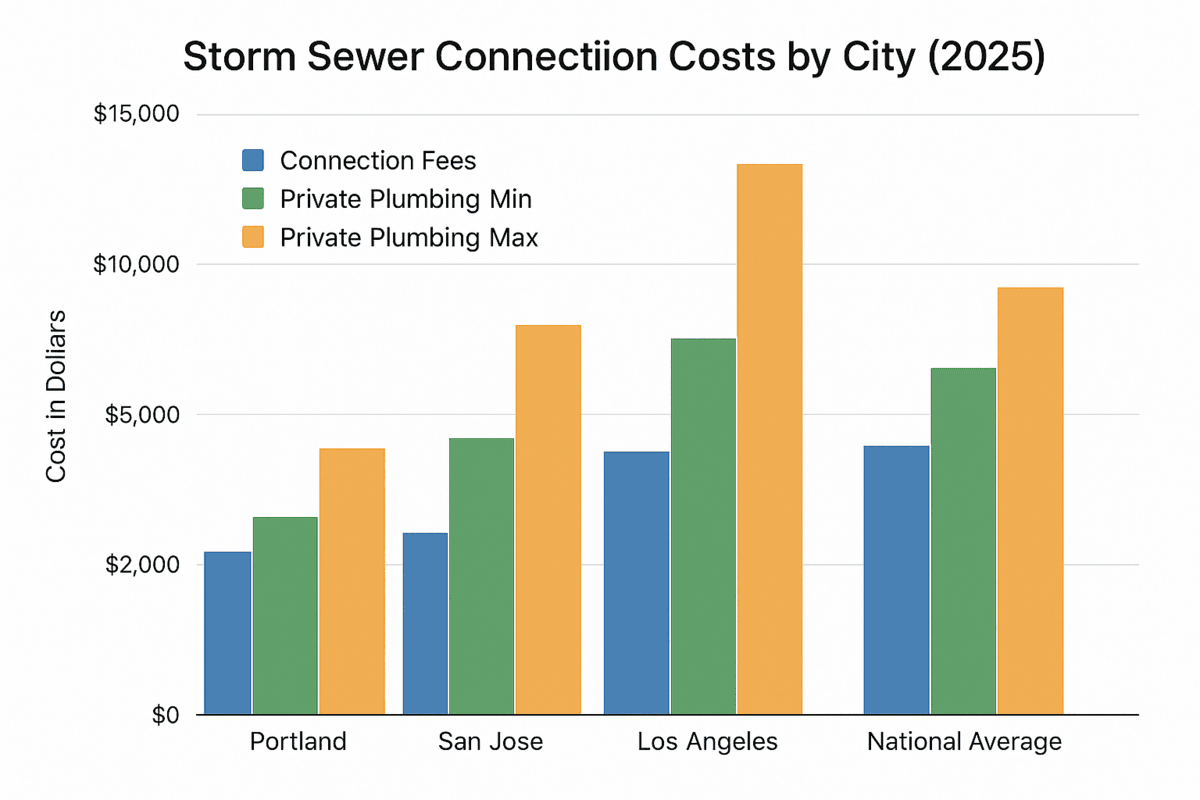
label,Connection Fees,Private Plumbing Min,Private Plumbing Max
Portland,2500,5000,12000
San Jose,2700,4500,8500
Los Angeles,4000,8000,13500
National Average,4200,6500,9500
Cost Breakdown Table
| Cost Component | Description | Typical Range |
|---|---|---|
| Permit Fees | Fees charged by the municipality to review and approve the connection plans. | $200 – $1,000+ |
| System Development Charges | Fees to cover the cost of maintaining and expanding the public sewer system. | $1,000 – $5,000+ |
| Contractor Labor | The cost of hiring a licensed professional to perform the installation work. | $3,000 – $10,000+ |
| Materials | The cost of pipes, fittings, and other materials needed for the connection. | $500 – $2,000+ |
| Inspection Fees | Fees for the final inspection of the completed work by the municipality. | $100 – $500+ |
Case Example: The Miller Family’s Connection Project
The Miller family in suburban Minneapolis recently undertook a storm sewer connection project. Their property had an old, failing septic system and was not connected to the municipal storm sewer. They received three quotes from licensed contractors, ranging from $8,500 to $11,000 for the private plumbing work. They chose the mid-range quote of $9,500. In addition, they had to pay $750 in permit fees and $3,500 in system development charges to the city. Their total cost for the project was $13,750. While this was a significant investment, the Millers were able to secure a low-interest loan from the city to finance the project over 10 years. The primary limitation they faced was the unexpected discovery of a large rock during excavation, which added an additional $1,200 to the cost. This case highlights the importance of having a contingency fund for unexpected issues.
Navigating the Permit and Regulation Process
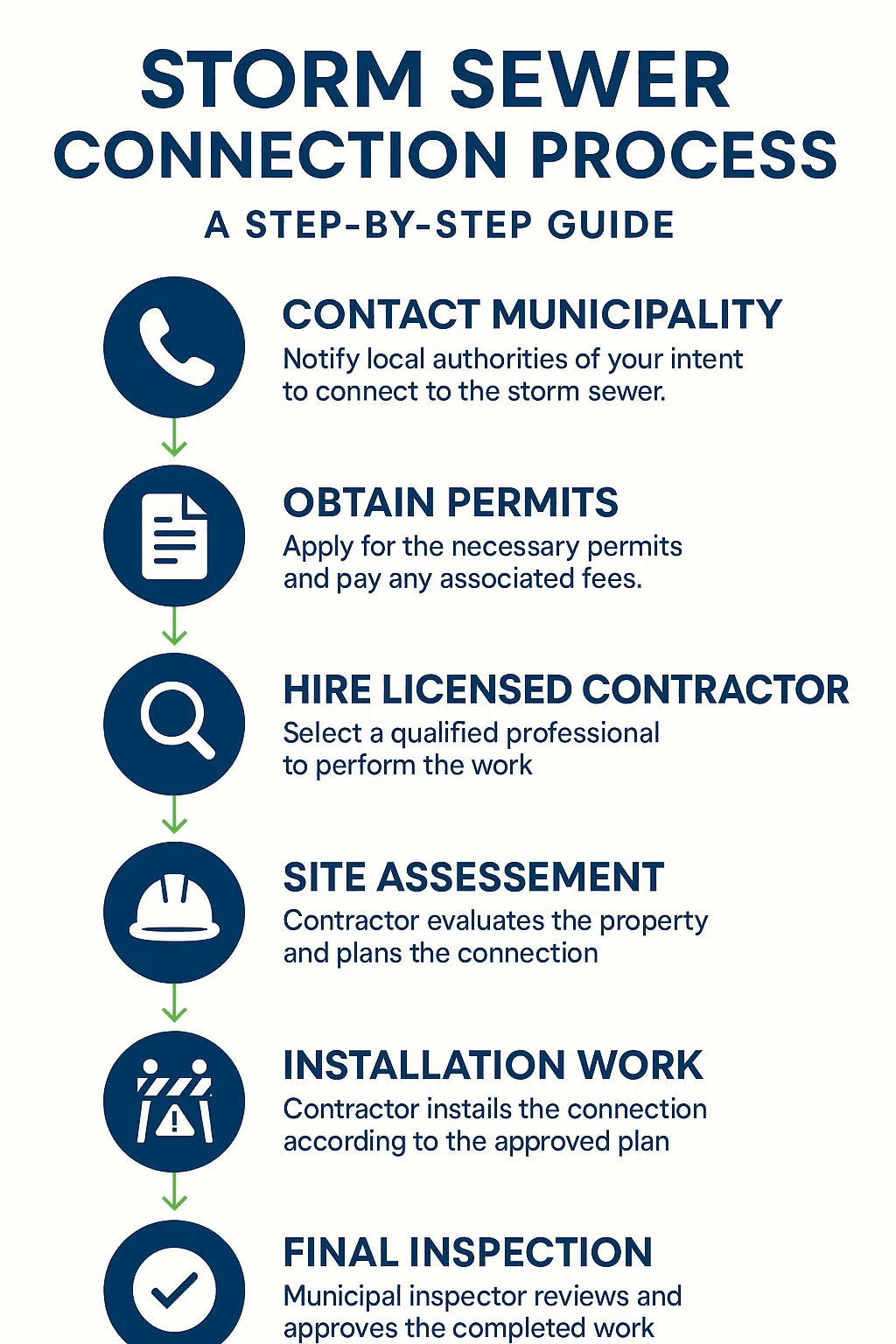
The permit and regulation process is often the most intimidating aspect of a storm sewer connection project for homeowners. However, with a clear understanding of the steps involved, it can be a manageable process. The first step is always to contact your local municipality. They will be able to provide you with the specific requirements and forms for your area. In Los Angeles, for example, property owners must obtain a Storm Drain Connection Permit from the Bureau of Engineering [5]. This permit ensures that the connection is made according to code and that the discharge will not harm the public sewer system.
Key Regulatory Considerations
- Licensed Contractors: Most municipalities require that all work be performed by a licensed and bonded contractor. This protects the homeowner and ensures that the work is done to code.
- Best Management Practices (BMPs): You may be required to implement BMPs on your property to manage stormwater runoff. These can include rain gardens, permeable pavements, and other green infrastructure solutions.
- Discharge Prohibitions: It is illegal to discharge anything other than stormwater into the storm sewer system. This includes sanitary waste, hazardous materials, and other pollutants.
- Inspections: The municipality will conduct a final inspection of the completed work to ensure that it meets all code requirements.
Case Example: The Garcia Family and the Permit Maze
The Garcia family in a rapidly growing Texas suburb decided to add a new garage to their property. This new impervious surface triggered a requirement for a new storm sewer connection. They initially tried to navigate the permit process themselves but quickly became overwhelmed by the technical jargon and complex forms. After two weeks of frustration, they decided to hire a local engineering firm to handle the permit application for them. The firm charged them $1,500, but they were able to get the permit approved in just one week. The primary lesson from this case is that for complex projects, it is often worth the extra cost to hire a professional to handle the permitting process. This can save you time, frustration, and potential delays.
Your Action Plan for a Successful Storm Sewer Connection
Now that you have a comprehensive understanding of the storm sewer connection process, it’s time to create a clear action plan. This step-by-step checklist will help you navigate the project from start to finish, ensuring a smooth and successful outcome.
- Initial Research and Budgeting (1-2 weeks):
- Contact your local municipality’s public works or engineering department to get their specific requirements, forms, and fee schedules.
- Research licensed and bonded contractors in your area. Check their references and online reviews.
- Based on your research, create a preliminary budget for the project, including a 10-15% contingency fund for unexpected costs.
- Contractor Selection and Permitting (2-4 weeks):
- Get at least three detailed quotes from licensed contractors. Ensure the quotes include a clear breakdown of all costs.
- Select a contractor and sign a detailed contract that outlines the scope of work, timeline, and payment schedule.
- Work with your contractor to complete and submit the permit application to the municipality.
- Site Assessment and Planning (1 week):
- The contractor will conduct a thorough site assessment to determine the best location for the connection and identify any potential obstacles.
- The contractor will create a detailed plan for the installation, which will be submitted to the municipality for approval.
- Installation Work (1-2 weeks):
- The contractor will begin the excavation and installation work according to the approved plan.
- Ensure that the contractor takes appropriate safety precautions and minimizes disruption to your property.
- Final Inspection and Project Completion (1 week):
- Once the installation is complete, the contractor will schedule a final inspection with the municipality.
- The municipal inspector will review the work to ensure that it meets all code requirements.
- Once the inspection is passed, you will receive a certificate of completion, and the project is officially finished.
Future Outlook: The Evolving Landscape of Stormwater Management
The field of stormwater management is constantly evolving, driven by the dual challenges of climate change and aging infrastructure. Homeowners can expect to see several key trends emerge in the coming years. First, there will be an increased emphasis on green infrastructure solutions. These are nature-based approaches that mimic the natural water cycle, such as rain gardens, permeable pavements, and green roofs. Many municipalities are now offering incentives for homeowners who implement these solutions on their properties. Second, we can expect to see more advanced and data-driven approaches to stormwater management.
This includes the use of smart sensors to monitor water flow and quality in real-time, as well as predictive models to forecast flooding and other risks. Finally, there will be a growing need for investment in our nation’s aging stormwater infrastructure. The American Society of Civil Engineers (ASCE) has given our nation’s wastewater infrastructure a D+ grade, highlighting the urgent need for upgrades and repairs [6]. As a homeowner, staying informed about these trends will help you make smart decisions about your property and contribute to a more resilient and sustainable future.
Key Takeaways
- Storm sewer connection costs can vary significantly, with private plumbing work alone ranging from $5,000 to over $12,000.
- The permit and regulation process is a critical step that requires careful attention to detail and often the expertise of a licensed professional.
- A clear action plan, from initial research to final inspection, is essential for a smooth and successful project.
- The future of stormwater management will be defined by an increased emphasis on green infrastructure, data-driven solutions, and investment in aging infrastructure.
References
- Balancing Stormwater Infrastructure Costs – National Governors Association
- Connecting to the Sewer Costs | Portland.gov
- NPDES Stormwater Program | US EPA
- Storm Drain Connection Fees | City of San José
- 1 – What is a Storm Drain Connection Permit (SD Permit) | Bureau of Engineering
- Wastewater Infrastructure | ASCE’s 2021 Infrastructure Report Card