


Protecting your property from water damage is a critical responsibility for any homeowner. Excess water can lead to a host of problems, from a soggy lawn to a flooded basement and even a compromised foundation. In fact, studies have shown a strong correlation between rising water levels and property damage in residential areas, with French drains significantly mitigating these issues since their widespread adoption in the 1990s. This article provides a comprehensive guide to French drains and other popular drainage systems, helping you understand the costs, benefits, and installation processes to make an informed decision for your home. We will explore the engineering principles behind these systems, drawing on authoritative sources like the USDA and FEMA to provide you with expert, objective, and non-promotional advice.
Why Proper Drainage Matters
Water, while essential for life, can be a destructive force when not properly managed. For homeowners, uncontrolled water can lead to a cascade of problems that are both costly and stressful to resolve. The primary issue is often groundwater intrusion, where the water table rises and forces water into basements, crawl spaces, and even through the foundation itself. This can cause significant structural damage over time, including cracks in the foundation, weakened support beams, and even soil erosion around the property. In fact, the Federal Emergency Management Agency (FEMA) has published extensive reports on the importance of proper drainage, particularly in relation to dam safety, which highlights the critical role that drainage plays in preventing catastrophic failures. While a residential property is not a dam, the same engineering principles apply: managing water pressure is key to maintaining structural integrity.
Beyond the structural risks, poor drainage can also create a host of other problems. A waterlogged yard is not only unsightly but can also be a breeding ground for mosquitoes and other pests. It can also lead to the death of plants and trees, as their roots are deprived of oxygen. Inside the home, excess moisture can lead to the growth of mold and mildew, which can have serious health consequences for you and your family.
These issues are not just an inconvenience; they can also significantly impact your property value. A home with a history of water problems will be much harder to sell, and you may be required to make costly repairs before a sale can be completed. The stakeholders in this situation are not just the homeowners themselves, but also their families, their neighbors, and even the community as a whole. A well-maintained property contributes to the overall health and safety of the neighborhood, while a neglected one can become a liability.
The primary constraint that homeowners face when dealing with drainage issues is cost. As we will explore in more detail later in this article, the cost of installing a drainage system can range from a few thousand dollars to tens of thousands of dollars, depending on the type of system and the complexity of the installation. This can be a significant financial burden for many families. Another constraint is the lack of knowledge. Many homeowners are not familiar with the different types of drainage systems available, and they may not know how to choose the right one for their property. This is where this article comes in. By providing you with clear, concise, and authoritative information, we aim to empower you to make the best decision for your home and your budget.
Comparing Drainage Systems
When it comes to choosing a drainage system for your property, it’s important to understand the different options available and how they compare in terms of cost, effectiveness, and maintenance. The three most common types of drainage systems are French drains, sump pumps, and surface drains. Each has its own set of pros and cons, and the best choice for your property will depend on your specific needs and budget.
French Drains: The Subsurface Solution
A French drain is a subsurface drainage system that is designed to collect and redirect groundwater away from your home’s foundation. It consists of a perforated pipe that is installed in a trench filled with gravel. The gravel allows water to flow into the pipe, which then carries it away to a designated drainage area. French drains are highly effective at preventing groundwater intrusion, and they are a popular choice for homeowners who are dealing with wet basements or soggy yards.

One of the biggest advantages of French drains is their low maintenance requirements. Once installed, they typically require very little upkeep, which can save you money in the long run. They are also very versatile and can be installed in a variety of soil types and terrain. However, the installation process can be disruptive, as it involves digging a trench around your property. The cost of installation can also be a factor, with prices ranging from $10 to $35 per linear foot for an exterior drain, and $40 to $85 per linear foot for an interior basement drain.
Sump Pumps: The Mechanical Solution
A sump pump is a mechanical device that is designed to pump water out of a basement or crawl space. It is installed in a sump pit, which is a hole that is dug in the lowest part of your basement or crawl space. When the water level in the pit rises, the sump pump turns on and pumps the water out to a designated drainage area. Sump pumps are very effective at preventing basement flooding, but they do have some drawbacks. They require electricity to operate, so they will not work during a power outage unless you have a battery backup system. They also require regular maintenance to ensure that they are working properly, and they will eventually need to be replaced, typically every 10-15 years.
Surface Drains: The Surface-Level Solution
A surface drain, also known as a trench drain or channel drain, is a type of drainage system that is designed to collect and redirect surface water. It consists of a long, narrow trench that is covered with a grate. The trench is sloped to allow water to flow into it, and it is connected to a drainage pipe that carries the water away. Surface drains are effective at draining water from flat areas, such as driveways and patios, but they are not as effective at dealing with groundwater intrusion. They are also prone to clogging from leaves and other debris, which means they require regular cleaning and maintenance.
| System | Installation Cost Per LF | Maintenance Level | Lifespan (Years) | Effectiveness Rating |
|---|---|---|---|---|
| French Drain | $10-$35 | Low | 30+ | 9/10 |
| Sump Pump | $50-$100 | High | 10-15 | 8/10 |
| Surface Drain | $15-$40 | High | 15-20 | 6/10 |
| Dry Well | $40-$80 | Medium | 20-25 | 7/10 |
| Trench Drain | $25-$60 | Medium | 20-25 | 7/10 |
Analysis: Understanding the Costs
The cost of installing a French drain can vary widely depending on a number of factors, including the type of drain, the length of the drain, the depth of the trench, and the type of soil on your property. In general, you can expect to pay anywhere from $10 to $100 per linear foot for a professionally installed French drain. For a typical 100-foot drain, this works out to a total cost of $1,000 to $10,000. While this may seem like a significant investment, it’s important to remember that a French drain can save you thousands of dollars in the long run by preventing costly water damage to your home.

| Type | Cost per linear foot | Average total cost |
|---|---|---|
| Surface-level French drain in yard | $10 – $30 | $500 – $5,300 |
| Curtain drain / shallow French drain | $10 – $35 | $1,500 – $8,800 |
| Exterior French drain / weeping tile around house | $30 – $90 | $1,200 – $4,500 |
| Interior perimeter French drain for basement | $40 – $85 | $4,000 – $17,000 |
| Interior French drain for crawl space | $20 – $40 | $2,000 – $8,000 |
Factors Affecting Cost
There are a number of factors that can affect the cost of a French drain installation. These include:
- Type of drain: As you can see from the infographic above, the cost of a French drain can vary significantly depending on the type of drain you choose. An interior basement drain will typically be more expensive than an exterior yard drain, as it is a more complex installation.
- Length of drain: The longer the drain, the more it will cost. This is because you will need more materials and it will take longer to install.
- Depth of trench: The deeper the trench, the more it will cost. This is because it will take longer to excavate and you will need more gravel to fill it.
- Type of soil: If you have rocky or clay soil, it will be more difficult to excavate the trench, which will increase the cost of the installation.
- Labor costs: Labor costs can vary depending on where you live. In general, you can expect to pay more for labor in urban areas than in rural areas.
Case Example: A Tale of Two Drains
To illustrate how the cost of a French drain can vary, let’s consider two different scenarios. In the first scenario, a homeowner wants to install a 50-foot exterior French drain in their yard to deal with a soggy lawn. The soil is loamy and easy to excavate, and the homeowner is able to do some of the work themselves. In this case, the cost of the installation might be as low as $500. In the second scenario, a homeowner wants to install a 150-foot interior French drain in their basement to deal with a serious water intrusion problem.
The basement has a concrete floor that needs to be broken up, and the soil is rocky and difficult to excavate. In this case, the cost of the installation could be as high as $15,000. As you can see, the cost of a French drain can vary dramatically depending on the specific circumstances.
Analysis: The Installation Process
The installation of a French drain is a complex process that requires careful planning and execution. While it is possible for a homeowner to install a French drain themselves, it is generally recommended to hire a professional contractor to ensure that the job is done correctly. A professional contractor will have the experience and expertise to properly design and install the drain, and they will also be able to obtain the necessary permits and inspections. The USDA Natural Resources Conservation Service has published detailed standards for the installation of subsurface drains, which highlights the importance of following proper procedures to ensure the long-term effectiveness of the system.
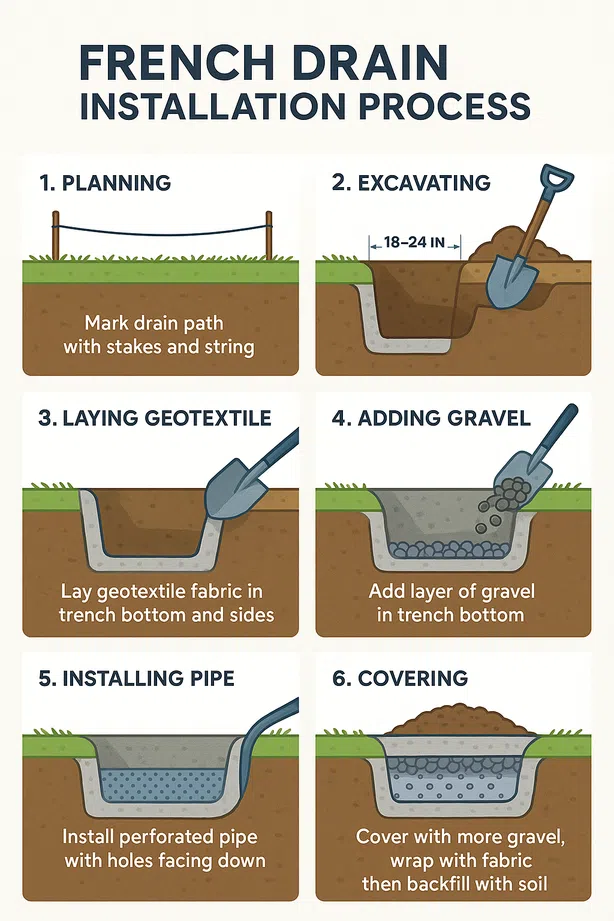
- Planning and marking the drain path with stakes and string
- Excavating trench 18-24 inches deep with proper slope
- Laying geotextile fabric in trench bottom and sides
- Adding layer of gravel in trench bottom
- Installing perforated pipe with holes facing down
- Covering with more gravel and wrapping with fabric, then backfilling with soil
Case Example: The DIY vs. Pro Decision
A homeowner in a suburban neighborhood decides to install a French drain to deal with a perpetually soggy backyard. They are considering doing the work themselves to save money. After researching the process, they realize that they will need to rent a trencher, purchase all the materials, and spend a significant amount of time and effort on the project. They also realize that if they make a mistake, they could end up causing more damage to their property. After weighing the pros and cons, they decide to hire a professional contractor.
The contractor is able to complete the job in a fraction of the time it would have taken the homeowner, and they are also able to obtain all the necessary permits and inspections. The homeowner is happy with the results, and they are confident that the drain will protect their property from water damage for years to come. This case study illustrates the importance of carefully considering the DIY vs. pro decision before undertaking a major home improvement project like a French drain installation.
Action Plan: Choosing the Right Drainage Solution
Now that you have a better understanding of the different types of drainage systems available, it’s time to choose the right one for your property. The best way to do this is to carefully assess your needs and budget, and then consult with a professional contractor. A professional contractor will be able to inspect your property, identify the source of your drainage problems, and recommend the best solution for your specific situation.
Step-by-Step Checklist
- Assess Your Drainage Problems: The first step is to carefully assess your drainage problems. Do you have a wet basement? A soggy yard? Water pooling around your foundation? Make a list of all the problems you are experiencing.
- Determine Your Budget: The next step is to determine your budget. How much are you willing to spend on a drainage system? Be realistic about what you can afford, and be sure to get multiple quotes from different contractors.
- Research Your Options: Once you have a better understanding of your needs and budget, it’s time to research your options. This article is a great place to start, but you should also do your own research online and talk to friends and neighbors who have had similar problems.
- Consult with a Professional: The final step is to consult with a professional contractor. A professional contractor will be able to inspect your property, identify the source of your drainage problems, and recommend the best solution for your specific situation. Be sure to get multiple quotes from different contractors, and be sure to check their references.
If/Then Scenarios
- If you have a wet basement, then you will likely need an interior French drain or a sump pump.
- If you have a soggy yard, then you will likely need an exterior French drain or a surface drain.
- If you have water pooling around your foundation, then you will likely need an exterior French drain.
- If you have a limited budget, then you may want to consider a DIY French drain installation, but be sure to do your research and be realistic about your abilities.
Future Outlook: The Future of Drainage
As our climate continues to change, we can expect to see more extreme weather events, including heavy rainfall and flooding. This will put an even greater strain on our drainage systems, and it will make it more important than ever to have a properly designed and installed drainage system on your property. In the future, we can expect to see more innovative drainage solutions that are designed to be more effective, more affordable, and more environmentally friendly. For example, we may see the development of new types of permeable pavements that allow water to seep into the ground instead of running off into our storm drains. We may also see the development of more sophisticated rainwater harvesting systems that allow homeowners to collect and reuse rainwater for irrigation and other purposes.
Scenarios and Risks
- Increased Rainfall: As rainfall becomes more intense, we can expect to see more flooding and water damage. This will make it more important than ever to have a properly designed and installed drainage system on your property.
- Aging Infrastructure: Much of our country’s drainage infrastructure is aging and in need of repair. This could lead to more frequent and more severe flooding in the future.
- New Technologies: As new technologies are developed, we can expect to see more innovative and effective drainage solutions. However, these new technologies may also come with new risks and challenges.
Key Takeaways
- French drains are a highly effective and cost-effective solution for managing groundwater and preventing water damage, with a typical lifespan of 30+ years.
- The cost of a French drain installation can range from $10 to $100 per linear foot, depending on the type of drain, the length of the drain, and the complexity of the installation.
- The installation of a French drain is a complex process that is best left to a professional contractor to ensure that it is done correctly and in accordance with local regulations.
- As our climate continues to change, it will become more important than ever to have a properly designed and installed drainage system on your property to protect it from flooding and water damage.