


In the average American home, about 20 to 30 percent of the air that moves through the duct system is lost due to leaks, holes, and poorly installed ducts, according to the U.S. Environmental Protection Agency (EPA) [1]. This significant air loss not only inflates energy bills but also poses serious safety risks, including the potential for carbon monoxide backdrafting. Proper duct sealing is a critical home maintenance task that enhances indoor air quality, improves energy efficiency, and, most importantly, protects your family’s health and safety. This comprehensive guide provides expert insights into duct sealing safety, drawing from authoritative sources like the EPA, ENERGY STAR, and leading industry organizations. We will explore the fundamental principles of safe duct sealing, delve into the critical aspects of combustion safety testing, compare the safety and effectiveness of different sealing materials, and outline the significant energy and air quality benefits you can achieve. By understanding the nuances of duct sealing safety, homeowners and property managers can make informed decisions to create a safer, healthier, and more efficient living environment.
Context: Why Duct Sealing Safety Matters Now
In an era of rising energy costs and growing awareness of indoor air quality, the importance of a well-maintained HVAC system has never been more pronounced. Duct sealing, once considered a minor home improvement task, is now recognized as a critical component of a safe and efficient home. The U.S. Department of Energy (DOE) estimates that leaky ducts can reduce heating and cooling system efficiency by as much as 20 percent, leading to significant energy waste and higher utility bills [2]. Beyond the financial implications, however, lies a more pressing concern: safety. The same leaks that allow conditioned air to escape can also draw in harmful pollutants from attics, crawlspaces, and garages, including dust, mold spores, and insulation particles. For individuals with allergies or respiratory issues, this can lead to a significant decline in indoor air quality and an increase in health problems.
The most serious safety risk associated with leaky ductwork is the potential for carbon monoxide (CO) backdrafting. Gas-fired appliances such as furnaces, water heaters, and clothes dryers are designed to vent combustion gases, including the odorless and colorless poison carbon monoxide, to the outdoors. However, when a home’s ductwork is not properly sealed, the pressure imbalances created by the HVAC system can cause these dangerous gases to be drawn back into the living space. The consequences of CO backdrafting can be fatal, making duct sealing a non-negotiable aspect of home safety. As such, industry standards from organizations like the American Society of Heating, Refrigerating and Air-Conditioning Engineers (ASHRAE) and the Sheet Metal and Air Conditioning Contractors’ National Association (SMACNA) now emphasize the importance of comprehensive combustion safety testing both before and after any duct sealing work is performed [3, 4]. These standards, along with guidelines from the EPA and ENERGY STAR, are driving a shift in the HVAC industry towards a more holistic approach to duct sealing—one that prioritizes safety alongside energy efficiency. This guide will provide you with the knowledge and tools you need to navigate this complex landscape and ensure that your home’s ductwork is not only efficient but also safe for you and your family.
Understanding Duct Sealing Safety Fundamentals
A foundational understanding of duct sealing safety begins with the guidelines and standards set forth by authoritative bodies. The EPA, a primary source for environmental and health-related information, provides crucial recommendations for homeowners. While the EPA does not recommend routine duct cleaning, it emphasizes the importance of addressing specific issues such as visible mold growth, vermin infestation, or excessive dust and debris that could be released into the home [1]. The agency also cautions against the use of chemical biocides and sealants within ductwork, as their effectiveness and potential health effects have not been fully established. This underscores a key principle of duct sealing safety: prevention is paramount. Keeping ducts clean and dry is the most effective way to prevent contamination and the associated health risks.
Building on the EPA’s recommendations, industry organizations like ASHRAE and SMACNA provide more technical standards for duct sealing. ASHRAE Standard 90.1, for instance, mandates leakage tests for ductwork operating at higher static pressures, while ASHRAE Standard 152 provides a method for calculating the distribution of duct leakage in residential buildings [3]. SMACNA’s HVAC Air Duct Leakage Test Manual offers detailed protocols for testing and sealing ductwork, with different seal classes (A, B, and C) based on the operating pressure of the system [4]. These standards are designed to ensure that duct sealing is performed in a way that maximizes energy efficiency without compromising safety. For homeowners, this means that any professional duct sealing work should be performed in accordance with these industry best practices. A qualified contractor will be familiar with these standards and will be able to perform the necessary tests to ensure that your ductwork is properly sealed and safe.
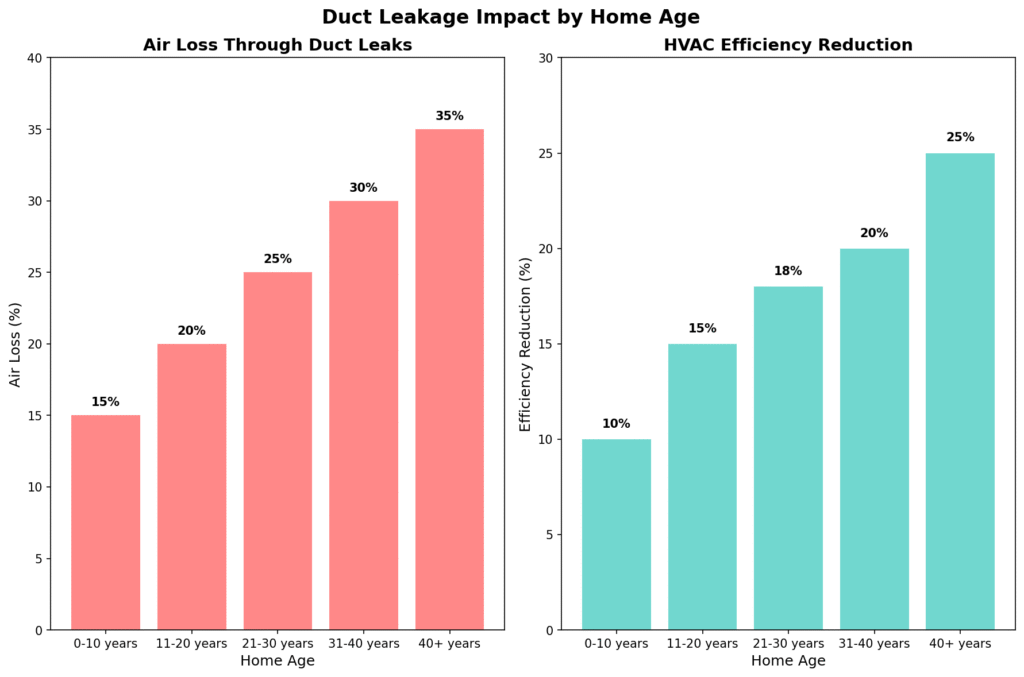
Home_Age,Air_Loss_Percentage,Efficiency_Reduction_Percentage
0-10 years,15,10
11-20 years,20,15
21-30 years,25,18
31-40 years,30,20
40+ years,35,25
Common Safety Hazards and Risks
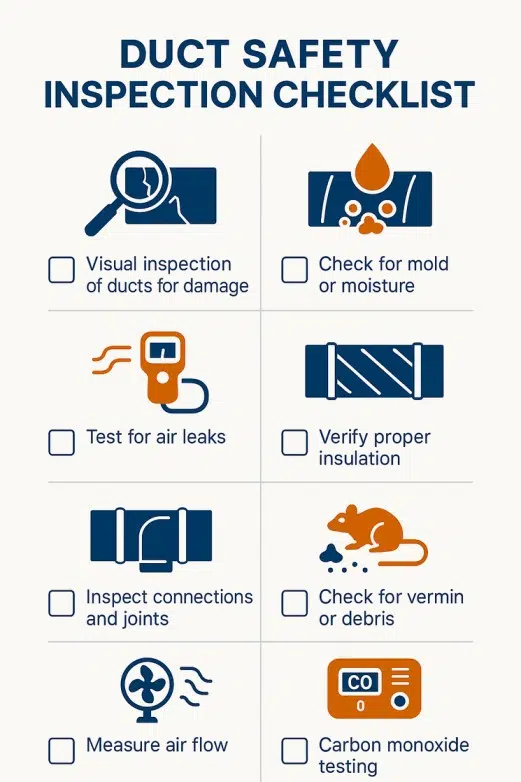
Beyond the technical standards, it is essential for homeowners to be aware of the common safety hazards associated with poorly sealed ducts. Poor indoor air quality represents one of the most significant risks, as leaky ducts can draw in dust, pollen, mold spores, insulation fibers, and other contaminants from attics, crawlspaces, and wall cavities. These pollutants are then circulated throughout the home, exacerbating allergies and asthma and potentially causing other respiratory problems. Mold growth presents another serious concern, particularly in humid climates where duct leaks can lead to condensation problems. When warm, moist air from the outside comes into contact with cold ductwork, condensation can form, creating a breeding ground for mold that can release spores into the air, posing a serious health risk.
Vermin infestation is another common problem associated with leaky ductwork. Gaps and holes in ducts can provide an entry point for rodents, insects, and other pests, which can build nests in the ducts and leave behind droppings and other contaminants that are then circulated through the home. While less common, severe duct leakage can, in some cases, contribute to fire hazards. For example, if a duct leak is located near a source of ignition, such as a faulty electrical wire, it could potentially draw in flammable materials and create a fire risk.
| Safety Standard | Key Focus | Primary Recommendation |
|---|---|---|
| EPA | Health and Environmental Protection | Address specific contamination issues; avoid routine cleaning and unproven sealants. |
| ASHRAE | Engineering and Technical Standards | Mandatory leakage testing for high-pressure systems; standardized calculation methods. |
| SMACNA | Contractor Best Practices | Detailed protocols for testing and sealing based on system pressure and seal class. |
Carbon Monoxide Prevention and Combustion Safety
The most critical safety aspect of duct sealing is the prevention of carbon monoxide (CO) poisoning. CO is a colorless, odorless gas produced by the incomplete combustion of fuels such as natural gas, propane, oil, and wood. In the home, common sources of CO include furnaces, water heaters, clothes dryers, and fireplaces. Under normal operating conditions, these appliances are designed to vent CO and other combustion gases safely to the outdoors. However, a leaky duct system can create a dangerous situation known as backdrafting.
Backdrafting occurs when the pressure in the home becomes negative relative to the outdoors, causing combustion gases to be drawn back into the living space instead of being vented outside. This can happen when the HVAC system’s return ducts leak, pulling air from the same space where a combustion appliance is located. The depressurization of the combustion appliance zone can overwhelm the natural draft of the flue, leading to a backflow of CO into the home. The risk of backdrafting is particularly high in tightly sealed homes with powerful exhaust fans, such as those found in modern kitchens and bathrooms. This is why combustion safety testing is not just a recommendation but a critical requirement for any duct sealing project.

Duct_Condition,Backdrafting_Risk_Percentage,CO_Incidents_Per_1000_Homes
Properly Sealed,5,2
Minor Leaks,15,8
Moderate Leaks,35,20
Major Leaks,60,35
Severely Damaged,85,55
Professional Combustion Safety Testing
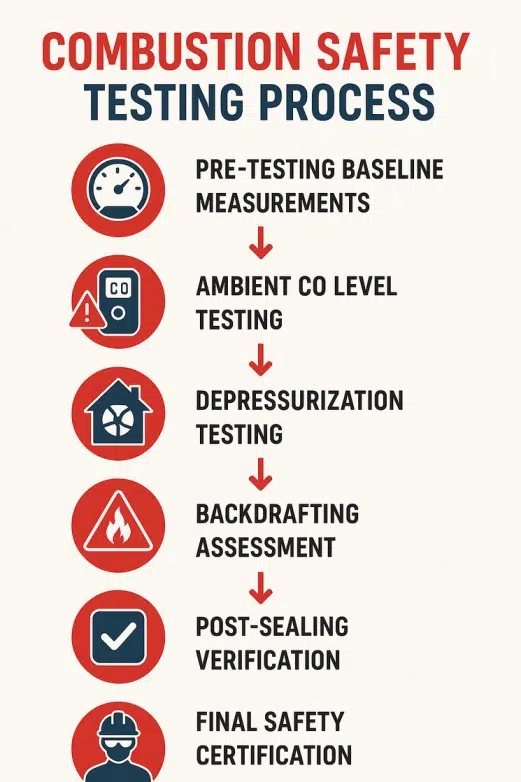
To mitigate the risk of CO backdrafting, professional HVAC contractors follow a strict protocol for combustion safety testing, as outlined by organizations like the Building Performance Institute (BPI) [5]. This testing should be performed both before and after any duct sealing work is done. The key steps in a combustion safety test include ambient CO measurement, where the contractor uses a calibrated CO detector to measure the ambient levels of carbon monoxide in the home, both with the HVAC system off and on, helping to identify any existing CO problems.
Worst-case depressurization testing involves creating a scenario by turning on all exhaust fans in the home and closing all exterior doors and windows, simulating the maximum negative pressure that the combustion appliances are likely to experience. During this worst-case depressurization state, the contractor will test each combustion appliance for spillage and proper draft, often using a smoke pencil or a digital manometer. After the duct sealing work is complete, the contractor will repeat the combustion safety tests to ensure that the changes to the duct system have not created any new safety hazards.
| Risk Factor | Description | Mitigation Strategy |
|---|---|---|
| Leaky Return Ducts | Return leaks in the combustion appliance zone can cause depressurization. | Seal all return duct leaks with mastic or metal tape. |
| Powerful Exhaust Fans | Kitchen and bathroom fans can create negative pressure. | Ensure that the combustion appliance zone has an adequate supply of makeup air. |
| Blocked or Damaged Flues | A blocked flue can prevent the safe venting of combustion gases. | Inspect and clean all flues and chimneys regularly. |
| Improperly Sized Ductwork | Undersized return ducts can increase the risk of depressurization. | Ensure that the duct system is properly sized for the HVAC equipment. |
Materials and Methods for Safe Duct Sealing
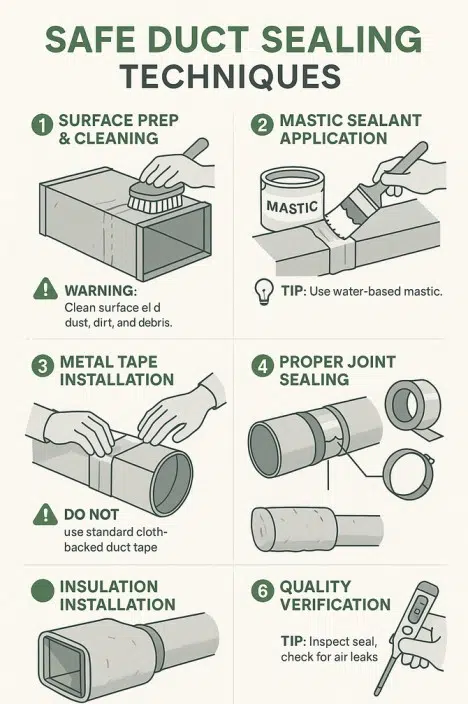
The choice of materials and methods for duct sealing has a significant impact on both the effectiveness and the safety of the project. While it may be tempting to reach for a roll of duct tape, this is one of the worst materials you can use for sealing ducts. Despite its name, standard cloth-backed duct tape is not designed to withstand the temperature changes and humidity levels found in a typical duct system. It will quickly degrade, lose its adhesion, and fail to provide a lasting seal. Instead, professional HVAC contractors use specialized materials that are designed for long-term performance and safety.
The two most common and effective materials for duct sealing are mastic sealant and metal tape. Mastic is a gooey, water-based substance that is applied with a brush or a caulking gun. It is highly effective at sealing large gaps and irregular surfaces, and it remains flexible even after it dries, allowing it to accommodate the expansion and contraction of the ductwork. Metal tape, as its name suggests, is a tape with a foil backing and a strong, pressure-sensitive adhesive. It is ideal for sealing flat, smooth surfaces and for providing a rigid, durable seal. Both mastic and metal tape are approved for use in duct sealing by major industry organizations, including SMACNA and the International Code Council (ICC) [4].

Material,Effectiveness_Percentage,Durability_Years,Safety_Rating
Mastic Sealant,95,20,9
Metal Tape,85,15,8
Fabric Tape,60,3,6
Duct Putty,80,10,7
Aerosol Sealant,90,15,8
Professional vs. DIY Safety Concerns
While it is possible for a handy homeowner to perform some basic duct sealing, it is important to be aware of the potential safety risks involved. Working in attics and crawlspaces can be hazardous, with risks of falls, exposure to dust and insulation, and encounters with pests. More importantly, a DIY duct sealing project that is not performed correctly can create serious safety hazards, including the risk of CO backdrafting. For this reason, it is generally recommended that homeowners hire a qualified professional for any comprehensive duct sealing project. A professional contractor will have the training, experience, and specialized equipment to do the job safely and effectively. They will also be able to perform the necessary combustion safety tests to ensure that your home is safe after the work is complete.
| Material | Pros | Cons | Best Use Case |
|---|---|---|---|
| Mastic Sealant | Highly effective, flexible, long-lasting | Messy to apply, longer drying time | Sealing large gaps, irregular surfaces, and joints |
| Metal Tape | Easy to apply, provides a rigid seal | Not as effective on irregular surfaces, can be difficult to remove | Sealing flat, smooth surfaces and longitudinal seams |
| Fabric Tape | Inexpensive, readily available | Not durable, not approved for duct sealing | Not recommended for duct sealing |
| Aerosol Sealant | Can seal hard-to-reach leaks from the inside | Requires specialized equipment, potential for overspray | Sealing entire duct systems, especially those with inaccessible leaks |
Energy Efficiency and Indoor Air Quality Benefits
Beyond the critical safety improvements, proper duct sealing offers significant benefits in terms of energy efficiency and indoor air quality. As previously mentioned, the U.S. Department of Energy estimates that leaky ducts can reduce heating and cooling system efficiency by as much as 20 percent [2]. This means that for every dollar you spend on heating and cooling your home, 20 cents could be going to waste. By sealing your ducts, you can significantly reduce this energy loss, leading to lower utility bills and a smaller carbon footprint. In fact, ENERGY STAR estimates that the average homeowner can save up to $150 per year on their energy bills by sealing and insulating their ducts [6]. In some cases, the energy savings can be even greater, especially in homes with older, poorly maintained ductwork.
The indoor air quality benefits of duct sealing are equally impressive. By preventing the infiltration of dust, pollen, mold spores, and other contaminants, duct sealing can create a healthier living environment for you and your family. This is particularly important for individuals with allergies, asthma, or other respiratory conditions. A study by the Lawrence Berkeley National Laboratory found that duct sealing can reduce the concentration of airborne particles in the home by up to 50 percent [7]. This can lead to a significant reduction in allergy and asthma symptoms, as well as a lower risk of other respiratory problems. In addition, by preventing the entry of moisture into the duct system, duct sealing can help to prevent the growth of mold and mildew, which can also have a negative impact on indoor air quality.

Month,Before_Sealing_Cost,After_Sealing_Cost,Monthly_Savings
Jan,180,144,36
Feb,160,128,32
Mar,140,112,28
Apr,100,80,20
May,80,64,16
Jun,120,96,24
Jul,200,160,40
Aug,220,176,44
Sep,140,112,28
Oct,100,80,20
Nov,140,112,28
Dec,170,136,34

Long-Term Safety and Efficiency Gains
The benefits of duct sealing are not just immediate; they also provide long-term value. A properly sealed duct system can extend the life of your HVAC equipment by reducing its workload. When your ducts are leaky, your furnace and air conditioner have to work harder to maintain the desired temperature in your home. This can lead to increased wear and tear on the equipment, resulting in more frequent repairs and a shorter lifespan. By sealing your ducts, you can reduce the strain on your HVAC system, helping it to last longer and operate more reliably. This can save you thousands of dollars in premature replacement costs over the life of your system.
| Benefit | Short-Term Impact | Long-Term Impact |
|---|---|---|
| Energy Savings | Lower monthly utility bills | Significant cumulative savings over time |
| Improved Comfort | More even temperatures throughout the home | Consistent comfort year-round |
| Better Indoor Air Quality | Reduced allergens and pollutants | Healthier living environment for your family |
| Increased HVAC Lifespan | Reduced strain on your equipment | Fewer repairs and a longer-lasting system |
Action Plan: A Step-by-Step Guide to Duct Sealing Safety
Now that you understand the importance of duct sealing safety, it’s time to take action. This step-by-step guide will help you navigate the process of sealing your ducts safely and effectively. First, schedule a professional energy audit before beginning any duct sealing work. An energy auditor will use specialized equipment, such as a blower door and a duct blaster, to identify all of the air leaks in your home, including those in your ductwork. This will give you a clear picture of where your home is losing energy and help you to prioritize your sealing efforts.
Next, hire a qualified HVAC contractor. Unless you have extensive experience with HVAC systems, it is highly recommended that you hire a qualified professional for your duct sealing project. Look for a contractor who is certified by a reputable organization, such as the North American Technician Excellence (NATE) or the Building Performance Institute (BPI). A qualified contractor will have the knowledge, skills, and equipment to do the job safely and effectively. Insist on combustion safety testing before hiring a contractor, making sure that they include this critical step in their proposal. The contractor should perform a worst-case depressurization test both before and after the duct sealing work is done.
Discuss materials and methods with your contractor about the materials and methods they plan to use for sealing your ducts. Make sure that they are using approved materials, such as mastic sealant and metal tape, and that they are following industry best practices. Finally, verify the work after the duct sealing work is complete by asking your contractor to show you the results of the post-sealing tests. This should include a duct leakage test to confirm that the leaks have been sealed and a combustion safety test to ensure that your home is safe.
Future Outlook: The Evolving Landscape of Duct Sealing Safety
The field of duct sealing safety is constantly evolving, with new technologies, materials, and standards emerging all the time. One of the most promising new technologies is aerosol-based duct sealing. This method involves injecting a fine mist of sealant into the duct system, which then finds and seals all of the leaks from the inside. Aerosol sealing can be particularly effective for sealing hard-to-reach leaks that would be difficult or impossible to seal with traditional methods. However, it is important to note that aerosol sealing is a relatively new technology, and its long-term effectiveness and safety are still being studied.
In terms of standards, we can expect to see a continued emphasis on combustion safety testing and a move towards more stringent leakage requirements. As our understanding of the health and safety risks associated with leaky ducts grows, so too will the demand for more effective and reliable sealing methods. For homeowners, this means that it will be more important than ever to stay informed about the latest developments in the field and to work with qualified professionals who are up-to-date on the latest standards and best practices.
Key Takeaways
- 20-30% Air Loss: Leaky ducts can account for 20-30% of a home’s energy loss, leading to higher bills and a larger carbon footprint [1].
- Up to 20% Efficiency Reduction: A leaky duct system can reduce the efficiency of your HVAC system by as much as 20%, putting unnecessary strain on your equipment [2].
- Carbon Monoxide Risk: Leaky return ducts can cause CO backdrafting, a potentially fatal condition where combustion gases are drawn back into the home.
- Professional Testing is Key: Combustion safety testing, performed by a qualified professional, is essential for ensuring the safety of your home after any duct sealing work.
References
- U.S. Environmental Protection Agency (EPA). (1997). Should You Have the Air Ducts in Your Home Cleaned?
- U.S. Department of Energy (DOE). (n.d.). Ducts.
- American Society of Heating, Refrigerating and Air-Conditioning Engineers (ASHRAE).
- Sheet Metal and Air Conditioning Contractors’ National Association (SMACNA).
- Building Performance Institute (BPI).
- ENERGY STAR. (n.d.). Duct Sealing.
- Lawrence Berkeley National Laboratory. (2004). Duct Sealing and Improved Indoor Air Quality.