


The air inside our homes, where we spend up to 90% of our time, can be significantly more polluted than the air outdoors [1]. This invisible threat, known as indoor air pollution, poses a serious risk to our health and well-being. The U.S. Environmental Protection Agency (EPA) reports that indoor air can be two to five times more polluted than outdoor air, and in some cases, the levels of specific pollutants can be more than 100 times higher [2]. These pollutants, which come from a wide range of sources within our homes, can trigger a variety of health problems, from minor irritations like headaches and allergies to more severe conditions like asthma, respiratory diseases, and even cancer [3]. Understanding the common air quality problems in homes is the first step toward creating a healthier indoor environment for you and your family. This article provides a comprehensive guide to identifying and addressing these issues, with expert insights and actionable solutions from Northern Services.
Context: Why Indoor Air Quality Matters More Than Ever
In our modern, energy-efficient homes, the emphasis on sealing our living spaces to conserve energy has had an unintended consequence: trapping pollutants indoors. While well-insulated homes are great for our energy bills, they can also lead to a buildup of contaminants, turning our homes into reservoirs of unhealthy air. This issue is particularly pressing in regions like Minnesota, where long winters mean more time spent indoors with windows tightly sealed. The Minnesota Department of Health has found that over 40% of homes in the state have radon levels that pose a significant health risk, a statistic that underscores the importance of indoor air quality in our region [4].
The health implications of poor indoor air quality are far-reaching and can affect anyone, but some populations are more vulnerable than others. Children, the elderly, and individuals with pre-existing respiratory conditions like asthma or cardiovascular disease are at a higher risk of experiencing adverse health effects from indoor pollutants [3]. For these individuals, a seemingly harmless home environment can become a source of chronic health problems. The COVID-19 pandemic has also brought a renewed focus on the importance of indoor air quality, as we have all become more aware of the air we breathe and the potential for airborne transmission of viruses. As we continue to spend more time in our homes, ensuring the air we breathe is clean and healthy is not just a matter of comfort—it’s a critical component of our overall health and well-being.
Analysis: Uncovering the Sources of Indoor Air Pollution
Combustion and Chemical Pollutants: The Silent Intruders
Some of the most dangerous indoor air pollutants are the ones we can’t see or smell. Combustion byproducts and chemical off-gassing from everyday products can silently contaminate our homes, leading to a range of health problems. These pollutants are often the result of normal household activities, making them particularly insidious. Understanding their sources and effects is crucial for mitigating their impact.
Common Combustion Pollutants
Combustion appliances, such as furnaces, water heaters, and gas stoves, are common sources of indoor air pollution. When these appliances are not properly ventilated or maintained, they can release harmful gases into your home. The most common combustion pollutants include:
| Pollutant | Primary Sources | Health Effects | Recommended Action |
|---|---|---|---|
| Carbon Monoxide (CO) | Gas furnaces, water heaters, fireplaces, wood stoves, gas stoves, generators | Headaches, dizziness, nausea, confusion, and at high concentrations, death | Install CO alarms, ensure proper ventilation, and have combustion appliances professionally inspected annually |
| Nitrogen Dioxide (NO2) | Gas stoves, unvented kerosene or gas space heaters | Irritation of the respiratory system, increased risk of respiratory infections | Use exhaust fans when cooking with gas, ensure proper ventilation |
| Particulate Matter (PM2.5) | Wood stoves, fireplaces, candles, cooking, smoking | Respiratory problems, cardiovascular disease, and other serious health issues | Use high-efficiency air filters, improve ventilation, and limit the use of candles and wood-burning appliances |
The Dangers of Volatile Organic Compounds (VOCs)
Volatile Organic Compounds (VOCs) are a large group of chemicals that are found in many products we use to build and maintain our homes. Once these products are in our homes, they can release these chemicals into the air, a process called off-gassing. The EPA has found that concentrations of many VOCs are consistently higher indoors (up to ten times higher) than outdoors [5]. Common sources of VOCs include:
- Paints, varnishes, and solvents
- Cleaning supplies and disinfectants
- Air fresheners and scented candles
- Building materials and furnishings
- Pesticides
The health effects of VOCs can vary widely, from eye, nose, and throat irritation to more severe health problems like liver damage, kidney damage, and cancer. Some VOCs, like formaldehyde, are known human carcinogens. Formaldehyde is commonly found in pressed wood products, such as particleboard, plywood, and fiberboard, as well as in some insulation materials.

Pollutant,Indoor_Level_Multiplier,Outdoor_Baseline
VOCs,5.0,1.0
Particulate Matter,2.5,1.0
Carbon Monoxide,3.0,1.0
Nitrogen Dioxide,2.0,1.0
Formaldehyde,8.0,1.0
Case Example: The Hidden Dangers of a New Kitchen
A family in Minneapolis recently renovated their kitchen, installing new cabinets, countertops, and flooring. Shortly after the renovation, the homeowners began experiencing persistent headaches and their young son’s asthma symptoms worsened. Concerned, they had their indoor air quality tested. The results revealed high levels of formaldehyde and other VOCs, which were off-gassing from the new building materials. The family had to invest in a high-capacity air purifier and increase ventilation in their home to reduce the pollutant levels. This case highlights the importance of choosing low-VOC building materials and ensuring adequate ventilation during and after home renovations.
Biological Contaminants: The Unseen Inhabitants
Biological contaminants are another major category of indoor air pollutants. These living organisms or their byproducts can thrive in our homes, especially in areas with high humidity, and can trigger a range of health problems, particularly for individuals with allergies and asthma. Common biological contaminants include mold, dust mites, pet dander, and bacteria.
The Problem with Mold and Moisture
Mold is a type of fungus that can grow indoors in damp or wet areas. It reproduces by releasing spores into the air, which can then be inhaled. Mold growth is often a sign of a moisture problem, such as a leak, high humidity, or condensation. The key to preventing mold is to control moisture. The CDC recommends keeping humidity levels in your home between 30% and 50% to prevent mold growth [6]. Common sources of moisture that can lead to mold growth include:
- Leaky pipes or roofs
- High humidity in bathrooms and basements
- Condensation on windows or walls
- Flooding or water damage
The health effects of mold exposure can range from allergic reactions, such as sneezing, runny nose, and skin rash, to more severe respiratory problems, such as asthma attacks and hypersensitivity pneumonitis.
Dust Mites, Pet Dander, and Other Allergens
Dust mites are microscopic creatures that thrive in warm, humid environments and feed on dead skin cells. They are a common trigger for allergies and asthma. Pet dander, which is composed of tiny flecks of skin shed by cats, dogs, and other animals with fur or feathers, is another common allergen. Other biological contaminants that can be found in homes include bacteria and viruses, which can be spread through the air and cause infectious diseases.

Health_Effect,Percentage_Affected
Respiratory Issues,65
Eye/Throat Irritation,45
Headaches,38
Fatigue,42
Allergic Reactions,55
Asthma Triggers,70
Case Example: A Hidden Mold Problem
A family in St. Paul noticed a musty odor in their basement and found that their daughter’s allergies were getting worse. They couldn’t see any visible mold, but they suspected a problem. They hired an indoor air quality specialist who discovered a hidden mold colony behind a wall, caused by a slow, undetected pipe leak. The family had to have the mold professionally remediated and the leak repaired. After the remediation, the musty odor disappeared, and their daughter’s allergy symptoms improved significantly. This case illustrates how biological contaminants can be hidden and the importance of professional testing if you suspect a problem.
Radon: The Radioactive Threat from Below
Radon is a colorless, odorless, radioactive gas that is naturally released from the decay of uranium in soil and rock. It can enter homes through cracks and openings in the foundation, and can accumulate to dangerous levels. Radon is the second leading cause of lung cancer in the United States, after smoking, and is responsible for an estimated 21,000 lung cancer deaths each year [7]. The EPA recommends that all homes be tested for radon, and that homes with radon levels of 4 picoCuries per liter of air (pCi/L) or higher be fixed.
Radon in Minnesota: A Serious Concern
Radon is a particularly serious problem in Minnesota. The Minnesota Department of Health has found that more than two in five homes in the state have radon levels that pose a significant health risk [4]. This is due to the state’s geology, which is rich in uranium-bearing rocks. The risk of radon is not limited to any particular part of the state; high radon levels have been found in homes in every county. The only way to know if your home has high radon levels is to test for it.

Category,Percentage
US Homes with High Radon,6.7
Minnesota Homes with High Radon,40
Homes Should Test,100
Homes Actually Test,15
Case Example: A Radon Success Story
A family in Duluth, MN, decided to test their home for radon after hearing about the high levels in the state. The test results came back at 12 pCi/L, three times the EPA action level. The family was concerned, but they learned that radon problems can be fixed. They hired a qualified radon mitigation contractor who installed a radon mitigation system in their home. After the system was installed, the radon level dropped to less than 1 pCi/L. The family was relieved to know that they had taken action to protect their health. This case shows that while radon is a serious threat, it is a solvable problem.
Ventilation Problems: The Hidden Culprit
One of the most overlooked aspects of indoor air quality is proper ventilation. Modern homes are built to be energy-efficient, which often means they are tightly sealed to prevent air leaks. While this is excellent for energy conservation, it can create a significant problem for indoor air quality. Without adequate ventilation, pollutants can accumulate to dangerous levels, creating what experts call “sick building syndrome.”
Understanding Natural vs. Mechanical Ventilation
There are two primary types of ventilation: natural and mechanical. Natural ventilation relies on air movement through windows, doors, and other openings in the building envelope. This type of ventilation is unpredictable and depends heavily on weather conditions, wind patterns, and temperature differences. Mechanical ventilation, on the other hand, uses fans and ductwork to control air movement and ensure consistent air exchange rates.
The American Society of Heating, Refrigerating and Air-Conditioning Engineers (ASHRAE) recommends a minimum ventilation rate of 0.35 air changes per hour for residential buildings. This means that the entire volume of air in your home should be replaced with fresh outdoor air at least once every three hours. However, many homes fall short of this standard, particularly during winter months when windows remain closed for extended periods.
Signs of Poor Ventilation
Poor ventilation can manifest in several ways that homeowners often overlook or attribute to other causes. Persistent odors that don’t dissipate, even after cleaning, are often a sign of inadequate air exchange. Excessive humidity, evidenced by condensation on windows or walls, indicates that moisture is not being properly removed from the indoor environment. Stale or stuffy air, particularly noticeable when returning home after being away, is another clear indicator of ventilation problems.
Health symptoms can also point to ventilation issues. If family members experience headaches, fatigue, or respiratory irritation that improves when they leave the house, poor indoor air quality due to inadequate ventilation may be the culprit. These symptoms are particularly common in tightly sealed homes during winter months when natural ventilation is minimal.
The Role of HVAC Systems in Air Quality
Your heating, ventilation, and air conditioning (HVAC) system plays a crucial role in maintaining indoor air quality. However, many homeowners don’t realize that their HVAC system can either improve or worsen air quality, depending on its condition and maintenance. Dirty air filters, clogged ductwork, and poorly maintained equipment can actually circulate pollutants throughout your home rather than removing them.
Regular HVAC maintenance is essential for good indoor air quality. This includes changing air filters every 1-3 months, depending on the type of filter and household conditions. High-efficiency particulate air (HEPA) filters can remove 99.97% of particles that are 0.3 micrometers or larger, making them highly effective at capturing dust, pollen, pet dander, and other airborne allergens.
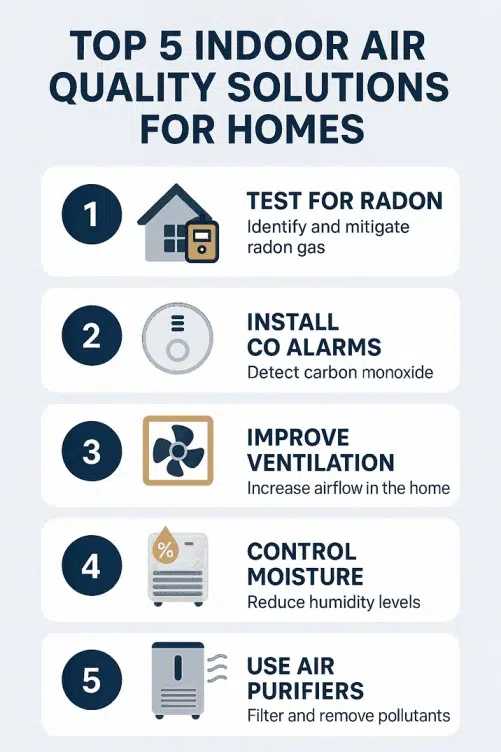
- Test for radon to identify and mitigate this invisible radioactive gas
- Install carbon monoxide alarms to detect this deadly combustion byproduct
- Improve ventilation to increase fresh air circulation throughout the home
- Control moisture levels to prevent mold growth and biological contamination
- Use air purifiers to filter and remove airborne pollutants and allergens
Case Example: The Importance of Balanced Ventilation
A family in Rochester, MN, lived in a newly constructed, energy-efficient home that met all current building codes. However, they began experiencing persistent respiratory issues and noticed that their home always felt stuffy. An indoor air quality assessment revealed that while the home was excellently sealed for energy efficiency, it lacked adequate mechanical ventilation. The family installed a heat recovery ventilator (HRV) system, which brought in fresh outdoor air while recovering heat from the outgoing stale air. Within weeks of installation, the family noticed a significant improvement in air quality and their respiratory symptoms subsided. This case demonstrates the importance of balancing energy efficiency with adequate ventilation.
Household Products and Chemical Contamination
Many common household products contribute significantly to indoor air pollution through the release of volatile organic compounds (VOCs) and other harmful chemicals. These products, which we use daily for cleaning, personal care, and home maintenance, can create a cocktail of airborne pollutants that accumulate in our homes over time.
The Hidden Dangers in Cleaning Products
Conventional cleaning products are among the worst offenders when it comes to indoor air pollution. Many contain ammonia, chlorine bleach, and various solvents that can cause immediate health effects like eye and throat irritation, headaches, and respiratory problems. Long-term exposure to these chemicals has been linked to more serious health issues, including asthma development and other chronic respiratory conditions.
A study published in the American Journal of Respiratory and Critical Care Medicine found that regular use of cleaning sprays was associated with accelerated decline in lung function equivalent to smoking 20 cigarettes per day. The study followed over 6,000 participants for 20 years and found that women who worked as cleaners or regularly used cleaning products at home experienced faster decline in lung function compared to those who didn’t use these products regularly.
Personal Care Products and Air Quality
Personal care products, including perfumes, hair sprays, deodorants, and nail polish, are significant sources of VOCs in the home environment. These products often contain phthalates, which are used as solvents and fixatives, and can disrupt the endocrine system. Formaldehyde, a known carcinogen, is also found in many personal care products, particularly those that claim to be “long-lasting” or “anti-bacterial.”
The cumulative effect of using multiple personal care products can create a significant burden of chemical exposure. A typical morning routine involving shampoo, conditioner, soap, deodorant, perfume, and hair styling products can expose an individual to dozens of different chemicals, many of which become airborne and contribute to indoor air pollution.
Building Materials and Furnishings
The materials used to build and furnish our homes can be significant sources of long-term chemical exposure. Pressed wood products, such as particleboard, plywood, and medium-density fiberboard (MDF), often contain formaldehyde-based resins that can off-gas for years after installation. Carpeting, particularly new carpet, can emit over 40 different chemicals, including toluene, benzene, and formaldehyde.
Paint and finishes are another major source of VOCs in the home environment. Traditional latex and oil-based paints can continue to emit chemicals for months or even years after application. Low-VOC and zero-VOC paints are now available and can significantly reduce chemical emissions, though they may still contain other potentially harmful substances.
Strategies for Reducing Chemical Contamination
Reducing chemical contamination in your home requires a multi-faceted approach. First, choose products carefully by reading labels and selecting those with fewer harmful ingredients. Look for cleaning products that are certified by third-party organizations like Green Seal or EcoLogo. For personal care products, choose those that are fragrance-free and contain fewer synthetic chemicals.
When renovating or furnishing your home, select materials and products that are certified as low-emitting. The GREENGUARD certification program tests products for chemical emissions and certifies those that meet strict standards for indoor air quality. When painting, choose low-VOC or zero-VOC paints and ensure adequate ventilation during and after application.
Timing is also important when introducing new products or materials into your home. If possible, allow new furniture, carpeting, or other furnishings to off-gas in a garage or other well-ventilated area before bringing them into your living space. When this isn’t possible, increase ventilation in your home for several days or weeks after installation.
Action Plan: A Step-by-Step Guide to Improving Your Home’s Air Quality
Improving the air quality in your home doesn’t have to be overwhelming. By taking a systematic approach, you can significantly reduce your exposure to indoor pollutants. Here is a step-by-step action plan to help you get started:
- Test Your Home for Radon: The first step is to test your home for radon. You can purchase a do-it-yourself test kit or hire a qualified professional. If your radon level is 4 pCi/L or higher, you should take action to reduce it.
- Install and Maintain Carbon Monoxide Alarms: Install CO alarms on every level of your home and outside sleeping areas. Test them monthly and replace them according to the manufacturer’s instructions.
- Improve Ventilation: Increase the amount of outdoor air coming into your home. Use exhaust fans in your kitchen and bathrooms, and consider installing a whole-house ventilation system.
- Control Moisture and Prevent Mold: Keep the humidity in your home between 30% and 50%. Fix any leaks promptly, and use a dehumidifier in damp areas like basements.
- Choose Low-VOC Products: When painting, renovating, or buying new furniture, choose products that are certified as low-VOC.
- Upgrade Your Air Filtration: Use high-efficiency air filters in your furnace and air conditioner, and change them regularly. Consider using a portable air purifier in bedrooms or other high-traffic areas.
- Clean Regularly: Dust and vacuum your home regularly to remove dust mites, pet dander, and other allergens. Use a vacuum with a HEPA filter for best results.
- Schedule Professional Maintenance: Have your HVAC system professionally inspected and maintained annually. This will ensure that it is operating efficiently and not contributing to indoor air pollution.
Future Outlook: The Future of Healthy Homes
The focus on indoor air quality is only going to grow in the coming years. We can expect to see continued innovation in smart home technology, with sensors that can monitor indoor air quality in real-time and automatically adjust ventilation and filtration systems. We will also see a greater emphasis on building materials that are not only energy-efficient but also low-emitting and non-toxic. As our understanding of the health effects of indoor air pollution continues to grow, we can expect to see more stringent regulations and standards for indoor air quality in homes. The home of the future will be a healthy home, where the air we breathe is as clean and pure as the water we drink.
Key Takeaways
- Indoor air can be 2-5 times more polluted than outdoor air, and we spend about 90% of our time indoors.
- The most common indoor air pollutants are combustion byproducts, chemical off-gassing (VOCs), biological contaminants (mold, dust mites), and radon.
- Poor indoor air quality can cause a wide range of health problems, from allergies and asthma to more serious conditions like respiratory diseases and cancer.
- You can improve your home’s air quality by testing for radon, installing CO alarms, improving ventilation, controlling moisture, choosing low-VOC products, upgrading your air filtration, cleaning regularly, and scheduling professional maintenance.
References
- EPA Report on the Environment: Indoor Air Quality
- CPSC Guide to Indoor Air Quality
- CDC Air Quality Page
- Minnesota Department of Health – Radon Information
- EPA on Volatile Organic Compounds
- CDC Mold Prevention Tips
- EPA Health Risk of Radon