


Protecting your HVAC system’s lifeline, the humble filter, is no trivial matter; it demands a shield as robust as the hvac filter cover. With homes and buildings relying on clean air, these covers are more than just accessories—they’re a central piece in the efficiency puzzle. The global HVAC filters market was valued at $3.45 billion in 2021 and is projected to reach $5.13 billion by 2030, growing at a CAGR of 4.5% [1]. This growth underscores the increasing awareness of indoor air quality and the critical role of filtration. As we dive into the world of HVAC maintenance, you’ll discover how a simple cover can be your ally against dirt and wear, saving you time and money down the line.
Context: Why HVAC Filter Covers Matter Now More Than Ever
In an era where indoor air quality (IAQ) is a paramount concern, with people spending approximately 90% of their time indoors [2], the effectiveness of HVAC systems has come under intense scrutiny. The COVID-19 pandemic further amplified this focus, highlighting the importance of clean air in preventing the spread of airborne viruses. The EPA recommends using filters with a Minimum Efficiency Reporting Value (MERV) of 13 or higher to capture these microscopic particles [3]. However, high-efficiency filters can only do their job if they are protected from large debris that can cause them to clog prematurely and reduce airflow. This is where HVAC filter covers play a crucial role. They act as a pre-filter, capturing larger particles before they reach the main filter, thereby extending its life and maintaining system efficiency. This is particularly important given that HVAC systems often run less than 25% of the time during heating and cooling seasons [2], making every moment of filtration count. Furthermore, with the North America HVAC filters market projected to grow at a CAGR of 5.5% between 2025 and 2034 [4], the demand for solutions that enhance filter performance and longevity is set to increase. This article will provide a deep dive into the world of HVAC filter covers, exploring their types, benefits, and how to select the right one for your system.
Analysis: A Closer Look at HVAC Filter Covers
Understanding Filter Efficiency: MERV Ratings Explained
The Minimum Efficiency Reporting Value (MERV) is a standard that rates the overall effectiveness of air filters. The higher the MERV rating, the finer the filtration, meaning fewer dust particles and other airborne contaminants can pass through the filter. As the chart below illustrates, MERV ratings range from 1 to 16, with higher ratings indicating greater efficiency in capturing smaller particles. For example, a MERV 13 filter is at least 85% efficient at capturing particles in the 1-3 μm size range, which includes many common allergens and airborne viruses [5]. This is why the EPA recommends a MERV 13 filter as a minimum for residential use [3].

label,value
MERV 6,35
MERV 8,50
MERV 11,65
MERV 13,85
MERV 14,90
MERV 16,95
HEPA,99.97
The Growing Market for Clean Air Solutions
The increasing demand for clean air is driving significant growth in the HVAC filters market. As the following chart shows, the global market is projected to grow steadily, with North America being a key contributor. This growth is fueled by a combination of factors, including rising awareness of the health impacts of poor indoor air quality, stricter government regulations, and technological advancements in filtration technology. The data underscores the importance of investing in high-quality filtration solutions to meet the growing demand for healthier indoor environments.

label,value
Global Market (2021),$3.45B
Global Market (2030),$5.13B
North America Market (2024),$2.4B
North America Market (2034),$3.7B
Types and Benefits of HVAC Filter Covers
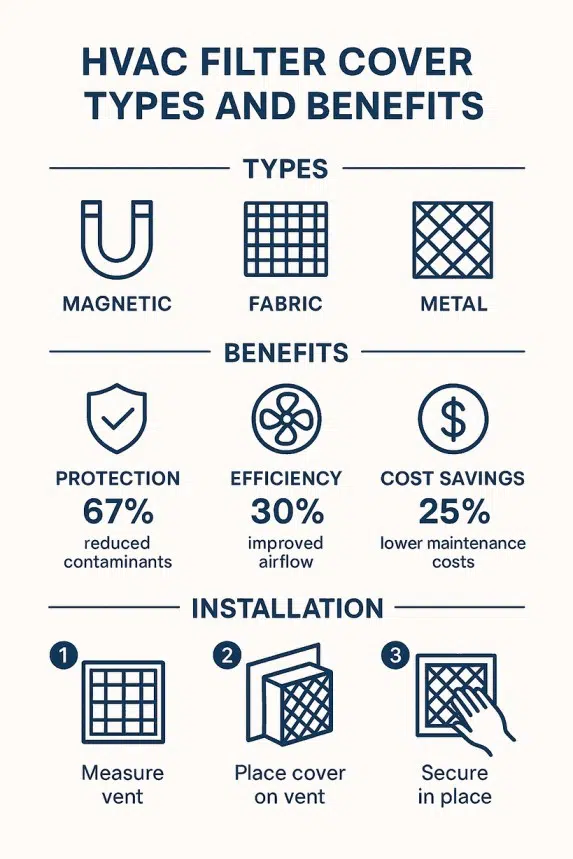
HVAC filter covers come in various types, each offering unique benefits. The infographic below provides a quick overview of the most common types—magnetic, fabric, and metal—and their key advantages, including improved protection, efficiency, and cost savings. Magnetic covers are popular for their ease of installation, while fabric covers offer a lightweight and affordable option. Metal covers provide the most durable solution, ideal for industrial or commercial settings. Understanding these options will help you choose the best cover for your specific needs.
A Visual Comparison of Filter Cover Materials
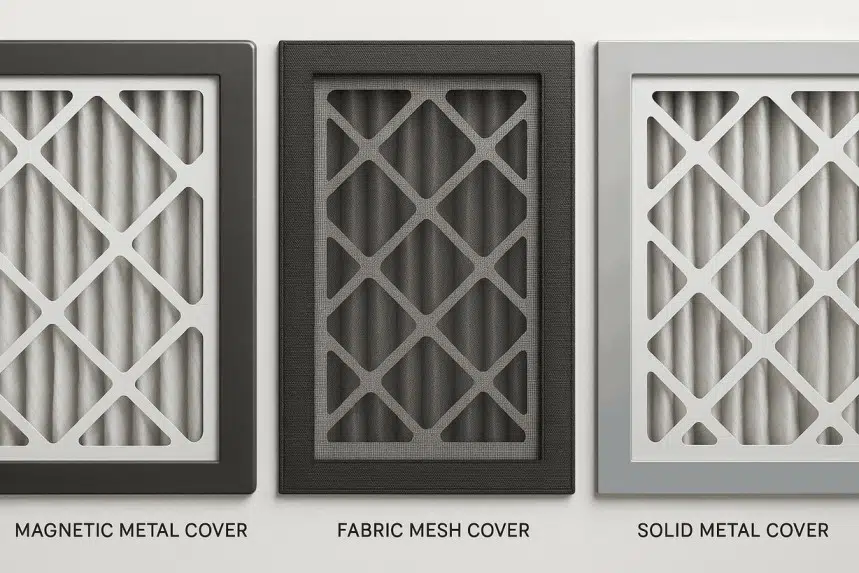
To further illustrate the differences between filter cover materials, the image below provides a side-by-side comparison of a magnetic metal cover, a fabric mesh cover, and a solid metal cover. This visual guide helps to highlight the design and construction of each type, providing a clearer understanding of how they protect the underlying air filter. The choice of material will depend on the specific application and the level of protection required.
Action Plan: Choosing and Installing Your HVAC Filter Cover
Now that you understand the importance of HVAC filter covers, here is a step-by-step guide to selecting and installing the right one for your system:
- Measure Your Filter: Carefully measure the length, width, and depth of your existing HVAC filter to ensure a proper fit.
- Choose the Right Type: Based on your needs and budget, select the appropriate type of filter cover. For most residential applications, a magnetic or fabric cover will suffice. For commercial or industrial settings, a more durable metal cover may be necessary.
- Check for Certifications: Look for filter covers that have been tested and certified by reputable organizations like ASHRAE to ensure they meet industry standards for performance and safety.
- Install the Cover: Follow the manufacturer’s instructions for installation. For magnetic covers, simply snap the cover into place over the filter. For fabric covers, you may need to cut the material to size and secure it with adhesive strips.
- Inspect and Clean Regularly: Just like your main HVAC filter, the filter cover should be inspected and cleaned regularly to ensure optimal performance. Check it monthly and clean or replace it as needed.
Future Outlook: The Evolving Landscape of Air Filtration
The air filtration industry is constantly evolving, with new technologies and standards emerging to meet the growing demand for cleaner, healthier indoor environments. We can expect to see continued innovation in filter materials, with a focus on developing more efficient and sustainable solutions. The integration of smart technology is also on the horizon, with the potential for sensors that can monitor filter performance and alert homeowners when it’s time for a replacement. As our understanding of the health impacts of indoor air quality continues to grow, so too will the importance of advanced filtration solutions like HVAC filter covers.
Key Takeaways
- HVAC filter covers protect your main filter from large debris, extending its life and improving system efficiency.
- The EPA recommends using a MERV 13 or higher filter for residential use to capture fine particles and airborne viruses.
- The global HVAC filters market is projected to reach $5.13 billion by 2030, driven by increasing awareness of indoor air quality.
- Choosing the right type of filter cover—magnetic, fabric, or metal—depends on your specific needs and budget.